Introduction: Domain data as a core component of enterprise DNS resilience
For modern enterprises, domain data is more than a catalog of names - it's a critical control surface for security, compliance, and operational reliability. Many security teams and DNS operators encounter a common friction: the idea that you can simply "download" lists of domains by TLD (for example, .pro, .biz, or DK) and drop them into a firewall, DNS filter, or monitoring system. In practice, enterprise-grade DNS orchestration relies on trusted data feeds, clear licensing, and robust data governance. This article examines what it means to obtain and use domain lists in a responsible, scalable way, with practical guidance tailored to DNS infrastructure engineering and security teams.
We’ll also explore how enterprises should think about data provenance, especially as registration data policy and data-access practices evolve under ICANN’s governance framework. Central to this shift is the move toward structured, machine-readable data (RDAP) and carefully managed access to zone data via sanctioned channels, rather than ad-hoc scraping. For context, the Centralized Zone Data Service (CZDS) provides a formal path to obtain zone files from participating registries, under established agreements and governance. This is a foundational piece of the modern data landscape for domain lists. (czds.icann.org)
Understanding the data landscape: what kinds of domain data exist and how they’re accessed
There are multiple, complementary data sources that organizations use to populate DNS-security workflows. Two of the most common are zone files and registration data services. Zone files are authoritative snapshots of all domains delegated under a given TLD, maintained by the registry. Access to these zone files is governed by registry agreements and often provided to qualified parties through CZDS (Centralized Zone Data Service) with a formal Zone File Access Agreement. This access path helps ensure that data is shared in a controlled, auditable manner, with appropriate protections and usage terms. For organizations that need bulk access to zone data, CZDS represents a primary, legitimate channel rather than unlicensed scraping. (czds.icann.org)
In parallel, the data that underpins whois-like records - historically known as WHOIS, now evolving toward RDAP (Registration Data Access Protocol) - is undergoing policy and privacy-driven changes. ICANN has published policy and background materials outlining how registration data should be processed, protected, and made accessible for legitimate uses, including cybersecurity and incident response. This evolving landscape means practitioners should design their data pipelines with privacy, governance, and compliance in mind rather than relying on raw, scraped registrant details. (icann.org)
Why enterprise teams pursue domain lists - and the pitfalls of chasing simplistic keywords
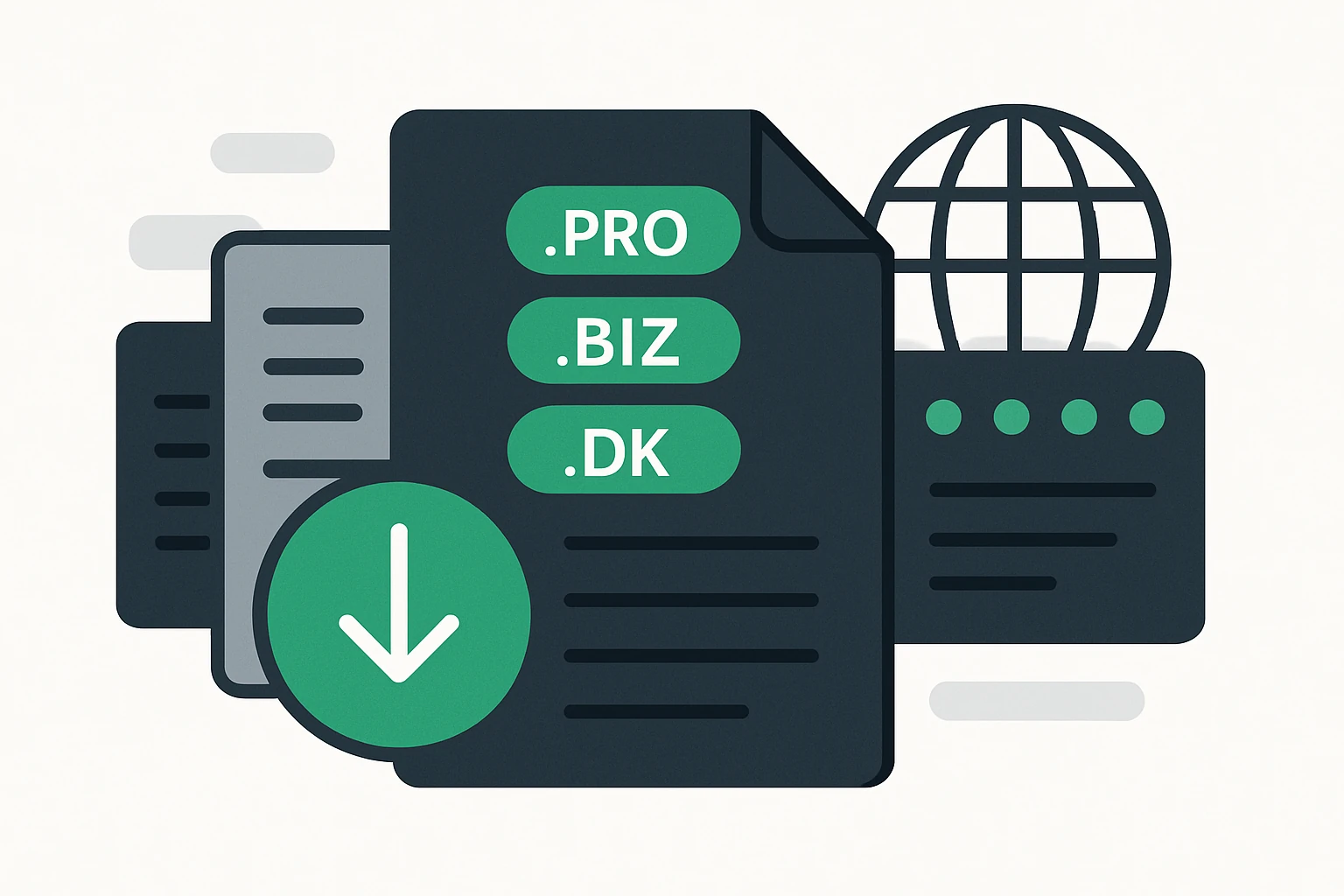
The search terms download list of .pro domains, download list of .biz domains, and download list of .dk domains reflect a real curiosity: can you quickly obtain wholesale domain data to feed security tooling? In reality, bulk access to domain data is typically limited to licensed feeds or registry-provided zone files under formal agreements. The impulse to “download” a list must be balanced with governance: licensing terms, data accuracy, update frequency, and the risk of stale or incomplete data. A practical pathway emphasizes sourcing from legitimate feeds and regularly refreshing data to minimize gaps in coverage while respecting privacy and contractual constraints. As zone-file access policies illustrate, the content you can legally obtain and how you can use it varies by TLD and registry agreement, which is why an advisory, framework-driven approach matters. (icann.org)
Key considerations when sourcing domain lists for DNS security and monitoring
Before committing to a data source, teams should clarify several core questions:
- Data provenance and licensing. Is the data provided under a license that supports your use case (security monitoring, threat intel, analytics, and incident response) and does it permit redistribution within your organization? Zone-file access typically comes with explicit terms and audit controls. (icann.org)
- Data freshness and coverage. How often is the data updated, and which domains are included in the feed? Zone files reflect delegated domains at a point in time, you’ll want a cadence that aligns with your security needs and DNS operations. (verisign.com)
- Privacy considerations. With RDAP and GDPR-era privacy norms, you may not receive full registrant details. Plan for redaction or aggregated data and design analyses that don’t rely on personal identifiers. ICANN’s policy discussions and guidance highlight the ongoing balance between privacy and legitimate use. (icann.org)
- Data quality and normalization. Domain lists from different sources often require deduplication, normalization (canonical domain formats), and handling of DNS aliasing and wildcard implications. These steps are essential to avoid false positives in security tooling and DNS policies.
- Operational integration. How will you feed the list into your DNS infrastructure, enforcement points (e.g., authoritative servers, recursive resolvers, or DDoS protection layers), and monitoring dashboards without creating performance bottlenecks? The practical integration mindset is a core part of DNS infrastructure engineering.
Domain List Intake Framework: a practical, defensible approach
The following framework is designed for enterprise DNS teams seeking to responsibly source, validate, and operationalize domain lists for security and compliance. It emphasizes governance, data quality, and seamless integration with DNS infrastructure (including authorities like authoritative DNS and cloud DNS solutions).
Domain List Intake Framework
- Clarify use-cases and approvals. Define the exact security or compliance goals you want to achieve with domain lists (e.g., blocklist for malicious domains, threat-intel enrichment, or alert triage) and obtain formal approvals from security, legal, and governance teams.
- Select sources with licensing in mind. Prioritize sanctioned sources (e.g., CZDS zone files, licensed threat-intel feeds) over ad-hoc scrapes. For zone data, use the CZDS path and comply with Zone File Access Agreements. Pro-domain lists or the general domain lists by TLD pages can illustrate available avenues from your vendor partner.
- Validate data quality and format. Normalize domain case, remove wildcards where appropriate, and deduplicate across feeds. Validate against your existing DNS inventory to avoid false positives that could disrupt legitimate traffic.
- Enrich with context. Attach metadata such as registration velocity signals, historical DNS records, and threat-intel indicators. Enrichment helps distinguish false positives from genuine risk and supports risk scoring in security operations.
- Normalize integration with DNS infrastructure. Map domains to your DNS policies (e.g., authoritative zone controls, DNSWAF rules, or recursive-resolver policies) so lists influence policy without introducing latency. Consider cloud-native DNS architectures to scale policy enforcement.
- Governance, auditing, and change management. Implement change controls, access auditing, and periodic reviews of licenses and usage to ensure continued compliance with data-use terms.
This framework emphasizes that data sourcing should be as deliberate as the engineering decisions behind your DNS stack - especially in enterprise contexts where regulatory requirements and data-protection norms matter. As an example, you may use Pro-domain lists from a trusted partner as part of a broader, license-bound data feed that also includes TLD-domain coverage for security analytics. Pro-domain lists represent one possible source in a larger portfolio of data strategies.
Practical notes on integrating domain lists with DNS infrastructure
To turn domain lists into measurable, operational security benefits, teams should align the data with their DNS architecture. For example:
- Authoritative DNS setup. Use lists to inform zone-based policies and to complement DNSSEC deployment for tamper-resistance. A strong authoritative DNS posture reduces the impact of misconfigurations and enhances domain integrity across enterprise domains.
- Anycast and cloud DNS considerations. Large-scale deployments often rely on Anycast for resilience and cloud-native DNS for elasticity. Domain lists, when integrated thoughtfully, can influence edge policy decisions without compromising performance.
- Monitoring and logging. Capture requests and verdicts (e.g., blocks, redirects) in a centralized logging pipeline to support SOC2/ISO-compliant monitoring, alerting, and forensics. Refer to the broader DNS security services landscape for best practices in telemetry and analytics.
For teams evaluating data sources, a practical starting point is to review available TLD data portals and licensing pages as you plan your data ecosystem. For example, you can inspect procurement pages and TLD-specific lists on the vendor’s site to understand what’s available and under what terms. As you build out your DNS stack, ensure your data strategy remains aligned with enterprise security controls and regulatory expectations.
Limitations and common mistakes: what to watch out for
- Assuming bulk downloads exist for every TLD. Not all registries offer freely downloadable bulk zone files. Access is typically regulated, and in many cases requires a Zone File Access Agreement or similar licensing. This is a practical constraint that shapes how you source data. (icann.org)
- Relying on outdated lists. Domain space is dynamic, domains are registered, deleted, and reissued frequently. Without an automated refresh cadence, security tooling can drift toward obsolescence.
- Over-customizing beyond license terms. Using data in ways beyond what the license permits can expose your organization to legal risk. Always map usage to the license scope and document permissible uses.
- Privacy and compliance gaps. As RDAP evolves, PII exposure can be mitigated by design (e.g., redaction, aggregation). Plan to design analytics that tolerate partial data while still delivering actionable insights.
- Quality misalignment across feeds. Mismatched formats, inconsistent domain representations, or missing metadata can degrade the value of the data and complicate automation. Invest in normalization and quality checks.
One structured follow-through: a quick framework recap
Unified, practical steps you can adopt today to start responsibly leveraging domain lists in enterprise DNS:
- Define use-case and secure approvals
- Choose sanctioned sources (CZDS, licensed feeds) and confirm licensing
- Establish a data quality and normalization process
- Enrich with context and map to DNS policies
- Integrate into authoritative and cloud DNS environments
- Implement governance, auditing, and ongoing reviews
Real-world considerations for DNS infrastructure teams
In enterprise environments, domain lists serve as inputs to multiple parts of the DNS stack - from policy decisions at the edge to monitoring backends that track DNS-resolution activity. A mature approach treats domain data as an integrated part of the security fabric, not a one-off input. When you pair domain lists with a strong DNS infrastructure - such as robust authoritative DNS configurations, DNSSEC for integrity, and cloud-native DNS architectures for scale - you improve both defensive posture and operational visibility. A disciplined data strategy reduces false positives and helps your SOC workflows triage incidents faster, while supporting regulatory requirements (for example, SOC 2 and ISO standards).
If you’re exploring how to scale this approach, consider how your data sourcing aligns with the kinds of domain data your DNS stack actually needs. In many cases, domain lists are most effective when used as part of a layered defense: threat-intelligence-enriched feeds feeding into DNS policies, validated against zone data via CZDS where available, and continuously tested in staging before production rollout.
Conclusion: thoughtful sourcing enables stronger DNS resilience
Downloading bulk domain lists for enterprise DNS is not as simple as clicking a button. It requires careful consideration of licensing, data quality, privacy, and integration with your DNS architecture. By using sanctioned data channels (such as CZDS for zone files) and aligning data strategy with your security and compliance goals, you can leverage domain lists to strengthen DNS monitoring, threat detection, and overall infrastructure resilience. The practical path is to view domain lists as data feeds - part of a broader, governed data ecosystem that drives better decision-making in DNS infrastructure engineering. For teams ready to explore concrete data paths, consider starting with domain list options on your vendor partner’s TLD pages and licensing portals, such as the Pro-domain lists page, and explore general TLD listings to understand available sources. Pro-domain lists and the broader domain lists by TLD page can provide a concrete picture of what exists and how licensing typically shapes use.
As a final note, the data landscape around DNS registration is evolving. ICANN’s ongoing governance discussions around registration data and the shift toward RDAP underscore the importance of designing data pipelines that respect privacy and regulatory considerations while delivering practical security value. Enterprises that embed these considerations into their DNS engineering playbooks will be better positioned to maintain security, compliance, and high availability in a rapidly changing Internet.
For organizations seeking a concrete starting point on licensing and data access, see the CZDS portal and related policy guidance, which provide the formal path to zone-file data access and the governance framework that underpins responsible data use. CZDS and the associated registry rules illustrate the kinds of controls that balance transparency with privacy and security.