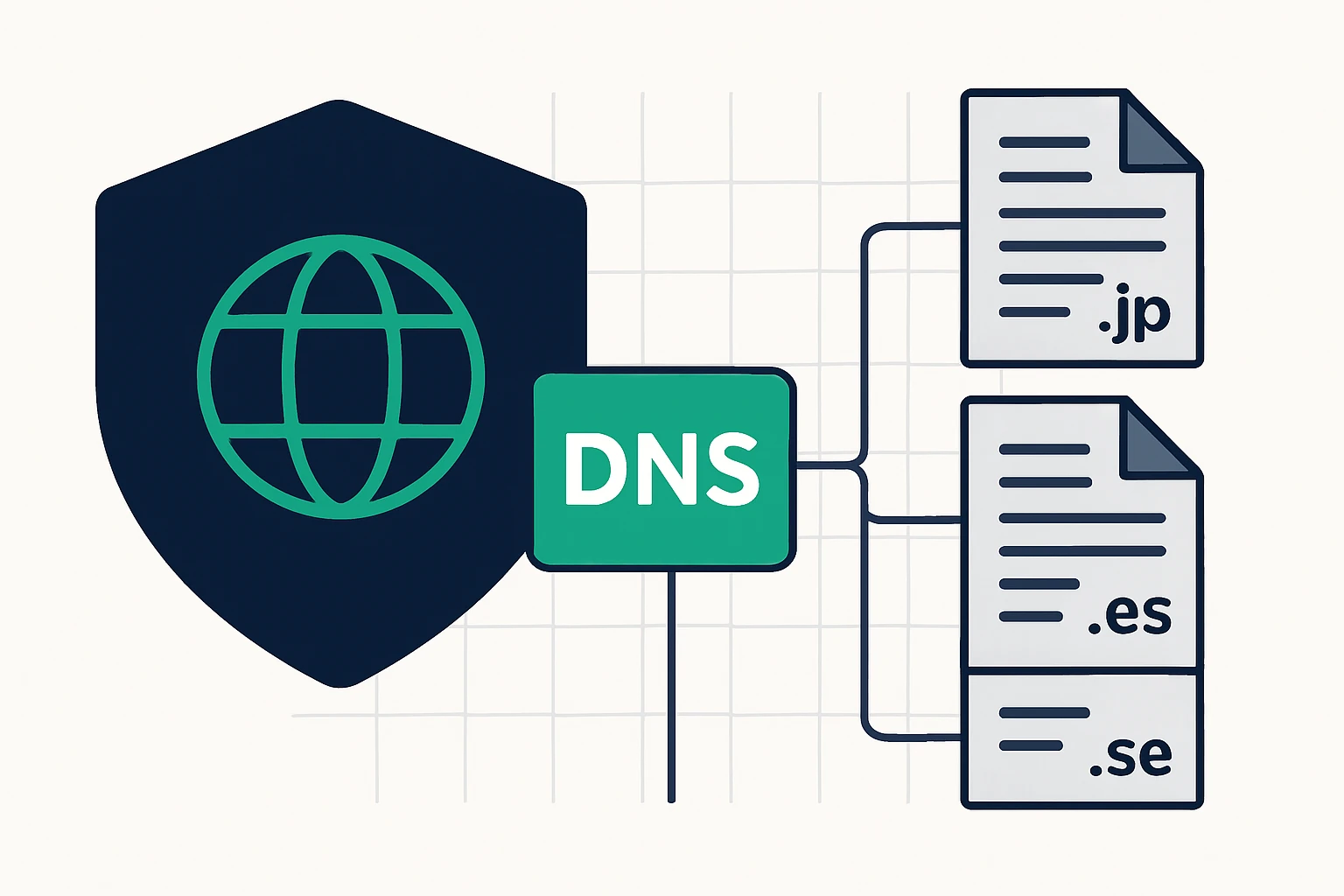
In large, security‑conscious organizations, visibility into the universe of registered domains under target top‑level domains (TLDs) matters as much for risk management as for operational agility. For enterprise DNS teams, bulk domain data is a foundational input - used for inventory, threat hunting, and compliance reporting. A common request is to obtain downloadable lists of domains for specific ccTLDs and gTLDs, such as .jp, .es, and .se. This article unpacks how to approach bulk domain data responsibly, what zone files are, how access to them is governed, and how enterprises can put the data to work within a robust DNS infrastructure without compromising security or privacy. For teams evaluating sources, remember that access mechanisms differ across registries, and staying compliant is as important as obtaining data quickly.
What zone files are and why they matter for enterprise DNS
A zone file is a text representation of a DNS zone that enumerates the resource records for domain names within that zone. Historically, zone files have been a primary method to obtain a snapshot of registered domain names within a given TLD or ccTLD, enabling researchers and operators to understand the size and distribution of domains under a registry’s authority. For enterprise DNS operations, zone files can support inventory management, DNS threat modeling, and auditability - provided they are used in combination with other data streams and governance controls. Zone files are a widely referenced concept in DNS, and understanding their limitations is essential for an accurate data picture. (en.wikipedia.org)
Access models: how enterprises typically obtain zone files
Access to zone files is not uniform across all TLDs. The Internet Corporation for Assigned Names and Numbers (ICANN) maintains a centralized mechanism for gTLDs called the Centralized Zone Data Service (CZDS). Through CZDS, registry operators can grant bulk access to zone data to approved applicants, under formal agreements and ongoing governance requirements. For organizations, this means a structured process to request, manage, and consume zone data, with the registry and ICANN providing controls to protect security and privacy. See ICANN’s CZDS program for details on access, agreements, and transfer methods. CZDS overview, About Zone File Access. (newgtlds.icann.org)
In practice, most enterprise workflows start with gTLDs via CZDS. ccTLDs (for example .jp in Japan, .es in Spain, or .se in Sweden) are typically governed by the national registries. These registries can require direct arrangements, specific data formats, or alternative data products, and their policies may not mirror CZDS exactly. The ICANN Operations Handbook and related registry operator guidance outline how registries implement access controls, authentication, and data transfer security, which is critical for a compliant enterprise data program. Operations Handbook for Registry Operators, Zone File Access policy. (icann.org)
Quality, freshness, and the right use of domain data
Zone files capture a view of registered domains at a point in time, but they are not a real‑time registry feed. They require careful handling to ensure data remains useful for security and compliance workflows. Because zone files are large and dynamic, teams must implement data validation, de-duplication, and normalization steps before ingestion into DNS inventory, monitoring dashboards, or defense workflows. Reliable processing often includes filtering out test domains, regenerating lists on a schedule, and enriching with WHOIS or RDAP data where appropriate. Guidance on how to work with zone data, including its benefits and limitations, is discussed in ICANN publications and community resources. CZDS portal, Zone file basics. (zfa.icann.org)
A practical workflow to obtain and use bulk domain lists
The following framework is designed for enterprise DNS teams seeking a defensible path to bulk domain data for .jp, .es, and .se, while aligning with security and compliance requirements.
- Define the data scope and goals: Identify target ccTLDs and gTLDs, the cadence for updates, and the downstream use cases (inventory, threat modeling, compliance reporting). This prevents data bloat and focuses efforts on the domains most relevant to your environment.
- Choose the access path: For gTLDs, begin with ICANN’s CZDS to request zone data, guided by registry policies and your contractual rights. For ccTLDs, engage with the national registry or operator to understand data products, access controls, and any registration requirements. ICANN’s CZDS and registry documentation provide the starting point for these conversations. CZDS overview, Zone File Access policy. (newgtlds.icann.org)
- Submit and manage access: Complete the required agreements, provide the necessary organizational details, and set up authentication and transfer mechanisms. Expect a review period and potential testing before full access is granted. Registry operators and ICANN emphasize governance controls to protect data and privacy. Registry operators handbook. (icann.org)
- Ingest, normalize, and validate: Normalize to a common format (for example, one domain per line, with or without zone metadata), deduplicate overlaps, and validate against you internal inventory standards. Treat zone data as a core input that should be enriched with the organization’s internal context (ownership, contact, and DNS role). This step reduces downstream confusion and improves accuracy in inventory and threat modeling. See Zone File concepts for context. Zone file basics. (en.wikipedia.org)
- Integrate with DNS security and monitoring workflows: Feed the data into authoritative DNS workflows, threat detection pipelines, and change‑control processes. Establish log‑and‑monitor traces so that you can demonstrate governance during audits and SOC 2/ISO 27001 assessments. Citing industry guidance on integrating security controls with data workflows can help frame the program. ISO 27001 and SOC 2 integration pitfalls. (censinet.com)
- Governance, privacy, and retention: Define data retention windows, encryption practices for data at rest/in transit, and access reviews. Zone data contains sensitive signals about domain ownership and infrastructure, so governance is essential for SOC 2/ISO compliance, third‑party risk management, and customer trust. Zone File Access policy. (icann.org)
Limitations, trade‑offs, and common mistakes
Bulk domain data is powerful, but it is not a silver bullet. Being aware of its limitations helps prevent misinterpretation and misapplication:
- Not a real‑time feed: Zone files reflect a state at the moment of the last update and may not capture imminent changes or newly registered domains in near real time. Rely on supplementary data streams (e.g., DNS telemetry, passive DNS, or RDAP data) for comprehensive visibility. Zone file basics. (en.wikipedia.org)
- ccTLD access varies by registry: While CZDS provides centralized access for gTLDs, ccTLDs often operate under separate registry policies, which can limit availability or require direct engagement. This means planning for multiple access channels and timelines. ICANN’s policy and registry guidance provide the framework for these expectations. Zone File Access policy. (icann.org)
- Data quality and staleness: Zone files can contain stale entries or gaps, and deduplication across many sources is non‑trivial. A practical program pairs zone data with internal ownership records and ongoing validation routines. See general guidance on zone data handling for best practices. CZDS data considerations. (zfa.icann.org)
A simple, repeatable framework you can trust
To help keep the process reliable and auditable, here is compact, repeatable guidance you can apply within an enterprise DNS program. Use it as a quick reference when scoping new bulk data initiatives.
- Scope clarity - define target domains and update cadence.
- Policy alignment - ensure registry agreements and CZDS terms align with your security and privacy policies.
- Data hygiene - normalize formats, deduplicate, and validate against internal inventories.
- Security controls - encrypt data in transit, restrict access, and document governance for audits.
- Operational integration - integrate zone data into DNS inventory, threat models, and change controls.
- Continuous improvement - review the process after each update cycle to reduce latency and improve accuracy.
How DNS Enterprises can help you navigate bulk domain data
Pushing zone file data into production DNS workflows demands not just access, but secure, scalable integration with your infrastructure. DNS Enterprises can help by providing governance‑driven data pipelines, validated data formats, and integrated monitoring that aligns with industry standards such as SOC 2 and ISO 27001. We can also assist with the contextualization of bulk domain data into your authoritative DNS deployments, ensuring that you maintain high availability and compliance while reducing operational risk. See our overview of TLD resources and domain listings to orient how bulk domain data can be incorporated into your security and infrastructure plans. List of domains by TLDs and download list of .jp domains for concrete examples of how registries present zone data and related domain lists. (zfa.icann.org)
For teams seeking a practical, enterprise‑grade approach, DNS Enterprises offers a secure data pipeline, automated normalization, and integrated monitoring to support large‑scale DNS operations across multiple TLDs. This approach complements other DNS security services such as DNSSEC deployment, authoritative DNS management, and cloud DNS architectures - enabling a cohesive, auditable DNS program. If you’re evaluating options, start with the general zone file access framework and then align to your organization’s governance and data strategy.
Expert insight
Expert insight: Industry practitioners emphasize that zone data is a valuable baseline but must be paired with telemetry, threat intelligence, and rigorous governance. The most effective programs treat zone lists as a component of a broader DNS security and inventory strategy, not as a stand‑alone source. This perspective echoes governance guidance around SOC 2, ISO 27001, and data handling best practices in enterprise environments. ISO 27001 and SOC 2 integration. (censinet.com)
Takeaways and next steps
Bulk domain data for enterprise DNS is a powerful input when approached with governance, data hygiene, and complementary data streams. Start by understanding CZDS for gTLDs, and prepare for direct registry engagement for ccTLDs. Normalize and validate data before feeding it into inventory and security workflows, and align your approach with SOC 2/ISO 27001 requirements to ensure auditable controls. For organizations considering scalable, compliant handling of zone data, partnering with a capable DNS engineering program is a practical, risk‑aware path. If you’re exploring solutions, the following resources provide starting points: the CZDS program, and the general TLD resource pages on the client site.
To see concrete examples of domain lists and TLD resources, visit the client pages: .jp domain list and List of domains by TLDs. These references illustrate how zone data is structured and how enterprises can align procurement with technical and compliance needs.
Internal resources and related concepts
- enterprise dns solutions
- dns security services
- dns monitoring and logging
- dnssec implementation
- authoritative dns setup