Introduction: why ccTLD portfolios matter for enterprise DNS
Global enterprises increasingly manage domain portfolios that span many country-code top-level domains (ccTLDs). For large organizations, the DNS surface is not just a matter of uptime, it represents regulatory risk, brand integrity, and security posture across multiple jurisdictions. A reliable inventory of active domains, plus timely visibility into new registrations, is essential for risk management, incident response, and ongoing compliance. In practice, that inventory often starts with zone data - a structured dump of the active domains within a given TLD - and then translates into how you design, monitor, and secure your authoritative DNS footprint. DNS Enterprises specializes in enterprise-grade DNS infrastructure engineering, including authoritative DNS, DNSSEC, and cloud-native solutions, which makes it easier to translate ccTLD data into resilient operations.
What zone files are and why they matter for DNS infrastructure
A zone file is essentially a snapshot of a TLD’s domain names and their associated DNS records at a point in time. In other words, zone files offer a practical way to inventory which domains are active under a given extension, which is invaluable when you're trying to understand exposure, plan migrations, or audit compliance across a multinational footprint. Zone files are not a universal, one-size-fits-all feed, but where available they provide a concrete basis for mapping a domain portfolio to DNS configurations. This concept - zone data containing active domains - serves as the anchor for any enterprise-grade inventory and risk assessment. Note that zone files reflect the active set of domains in a TLD and are updated regularly by registries and coordinated through ICANN’s CZDS program. (icann.org)
Accessing cz.me.at domain lists: CZDS as the centralized gateway
For many gTLDs and a growing subset of ccTLDs, ICANN’s Centralized Zone Data Service (CZDS) provides a centralized portal to request and download zone files. CZDS streamlines access to zone data from participating registries and can deliver bulk zone files via secure transfer modes. The CZDS framework is designed to reduce friction for researchers, legal teams, and security professionals who need up-to-date domain data while maintaining registry control over who can access the data. If a TLD isn’t listed in CZDS, registries can be contacted directly to arrange access under a registry-specific Zone File Agreement. This model underpins how enterprises can assemble a multi-TLD inventory without negotiating dozens of separate data-sharing arrangements. (icann.org)
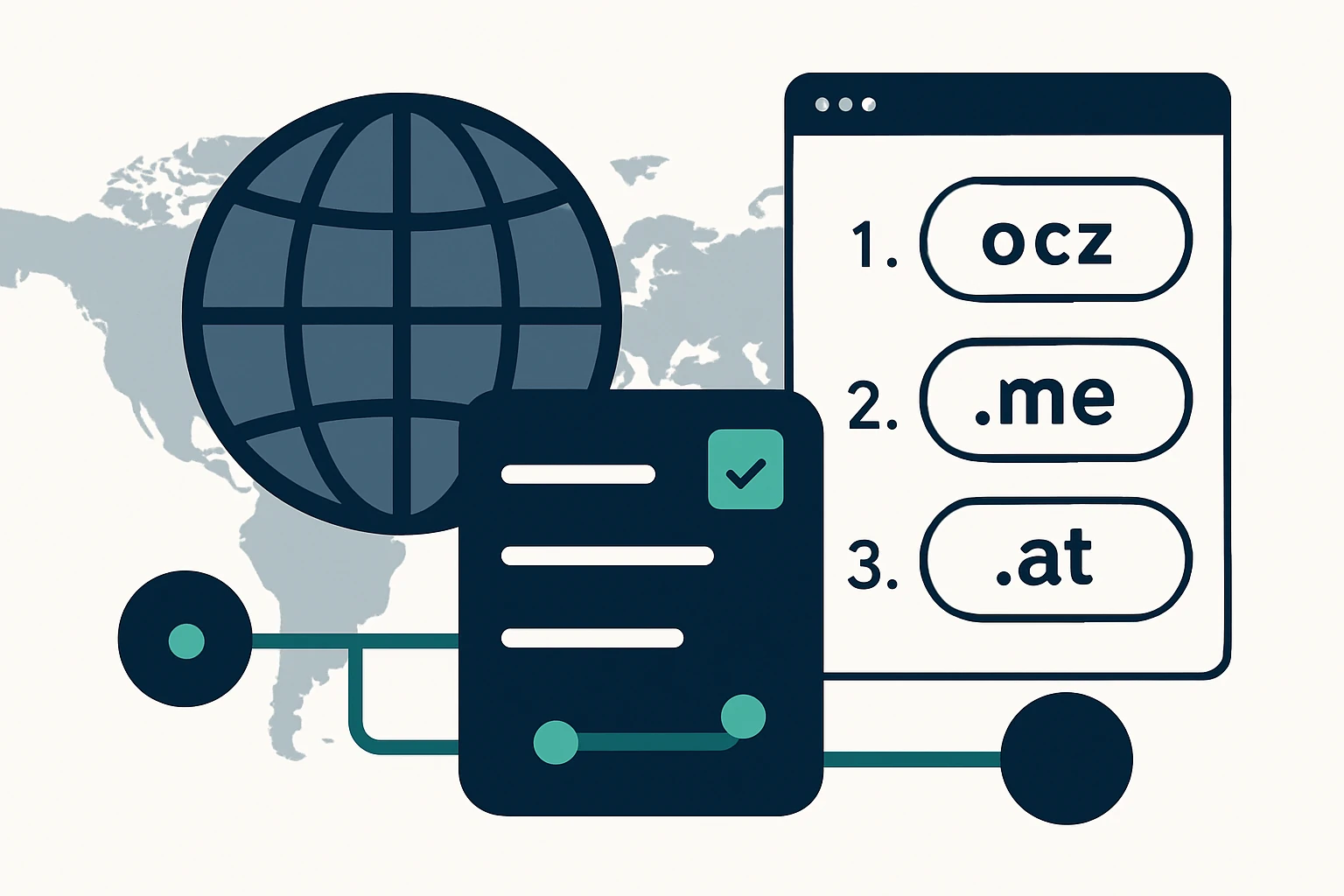
Step-by-step, the typical CZDS workflow looks like this: create a CZDS account, identify the TLDs you need (for example cz, me, or at), submit a data-access request, have registries review and approve the request, and then download the zone files once access is granted. ICANN’s CZDS documentation and help pages outline these steps and emphasize that access can be time-bound and subject to registry policies. If you need to locate zone data for cz or other ccTLDs, start with the CZDS portal and its official guidance. CZDS help and guidance and CZDS overview provide the authoritative framework. (czds.icann.org)
From zone data to DNS infrastructure: translating inventory into resilient operations
Once you have access to zone data for cz.me.at, the next step is turning that inventory into a concrete, secure, and scalable DNS architecture. Zone data helps you identify which domains currently exist in a TLD, enabling you to align DNS authority, zone delegation, and NS records with your global strategy. It also informs risk assessments for brand protection, privacy, and regulatory compliance across regions. In practical terms, zone data supports actions such as prioritizing DNSSEC deployment for high-risk zones, planning anycast deployment to improve latency and resilience, and mapping domains to cloud-native DNS architectures that can scale with demand. The CZDS framework is part of a broader ecosystem that includes zone data access, authoritative DNS design, and continuous monitoring - core pillars of enterprise DNS engineering.
For organizations pursuing a multi-ccTLD strategy, this inventory feeds directly into governance, incident response playbooks, and compliance programs. If you’re evaluating enterprise-grade DNS capabilities, consider how zone data informs not just uptime, but also security posture, audit readiness, and vendor risk. For example, an enterprise may begin with CZDS-derived cz domains to map to an authoritative DNS setup, then layer in DNSSEC and monitoring to complete a robust, compliant DNS regime. For more on enterprise-grade DNS capabilities, see DNS Enterprises’ CZ TLD page. CZ TLD page and their RDAP/WHOIS database resource, which can help you harmonize data across registries, domains, and IP mappings. RDAP & WHOIS Database.
A practical framework for DNS portfolio readiness
Below is a concise framework you can apply to translate zone data into an actionable DNS program. It is designed to be implemented incrementally and to scale with your portfolio.
- Inventory and validation (ccTLD scope)
- Establish a baseline of active domains per TLD using CZDS or registry-provided data.
- Cross-check against internal asset lists and domain registrations to identify gaps.
- Document ownership, registration dates, and renewal windows to prevent outages and expiry-related risks.
- Security and resilience (DNSSEC, anycast, and monitoring)
- Prioritize DNSSEC deployment for critical zones and ensure key management aligns with SOC 2 ISO and internal governance.
- Distribute authoritative DNS across multiple geographic locations using Anycast to reduce latency and improve availability.
- Implement continuous DNS monitoring and logging to detect anomalies, config drift, and potential attacks.
- Governance and compliance (policy, audits, and reporting)
- Map zones to policy controls, incident response procedures, and change-management processes.
- Maintain evidence of compliance with relevant standards (e.g., SOC 2, ISO) and ensure audit trails are complete for DSL/DNS activities.
- Regularly review data-access rights for CZDS and registry data, enforcing the principle of least privilege.
In this framework, CZDS-accessed zone data serves as a starting point for the inventory, while the subsequent steps - secure architecture, monitoring, and governance - define how you turn that inventory into a dependable DNS program. For organizations that want a polished, enterprise-grade implementation, working with a dedicated DNS partner can help translate zone data into a scalable, secure DNS fabric. A practical path is to treat the CZDS-derived data as a living asset within the broader enterprise DNS program rather than a one-off audit artifact.
Limitations and common mistakes to avoid
- Zone data is not a complete universe: zone files capture active domains in a given TLD but may not reflect all subdomains, redirections, or pending registrations. Some ccTLD registries provide zone data only under specific agreements or via CZDS, and access policies vary. If a TLD isn’t listed in CZDS, you must work with the registry directly to obtain data under a registry-specific arrangement. (czds.icann.org)
- Relying on zone data alone for security decisions: zone data informs inventory, but DNS security requires additional controls (DNSSEC, signing practices, monitoring, and incident response). Treat zone data as one input among many in your security and resilience program.
- Assuming public data equals ownership: whois and RDAP data provide ownership details, but they may be restricted in some registries or require separate access. Use zone data in conjunction with registry- and provider-signed data-feeds to confirm ownership and update records.
- Underestimating regulatory and data-usage considerations: cross-border data usage and data retention policies vary by jurisdiction. Align your data-handling practices with applicable laws and your SOC 2/ISO controls.
- Overlooking latency and availability implications of multi-ccTLD setups: spreading authoritative DNS across regions improves resilience but increases operational complexity. Plan capacity, monitoring, and change-control accordingly.
Client integration: how DNS Enterprises can help
enterprises with large international domain estates often need to translate raw zone data into a live, secure DNS fabric. DNS Enterprises offers enterprise-grade solutions that cover authoritative DNS, DNSSEC deployment, Anycast topologies, and cloud-native DNS architectures. When you’re working with cz, me, at, or other ccTLDs, a structured approach helps ensure uptime, security, and compliance across regions. For direct access to ccTLD-related resources and data services, you can visit the CZ TLD page and the RDAP & WHOIS Database resource to anchor your data strategy. These capabilities complement the CZDS framework by providing ongoing operational visibility and governance across your DNS footprint.
Conclusion: turning ccTLD zone data into a resilient enterprise DNS program
For multinational organizations, ccTLD zone data - when accessed through CZDS or registry channels - offers a critical view of the active domain surface you must protect. By pairing zone data with a deliberate DNS architecture (authoritative DNS, DNSSEC, and modern cloud-native solutions) and a disciplined governance model, you can improve uptime, strengthen security, and demonstrate regulatory compliance across jurisdictions. The CZDS framework is not a one-off data pull, it is a gateway to building a scalable, auditable DNS program capable of growing with your domain portfolio. If you’re building or refining an enterprise DNS program, consider how CZDS-driven inventory informs your architecture decisions and ongoing operational practices. To explore how DNS Enterprises can help operationalize this vision, visit their CZ TLD page or their RDAP/WoRLD data resources as a starting point for a secure, compliant DNS infrastructure.