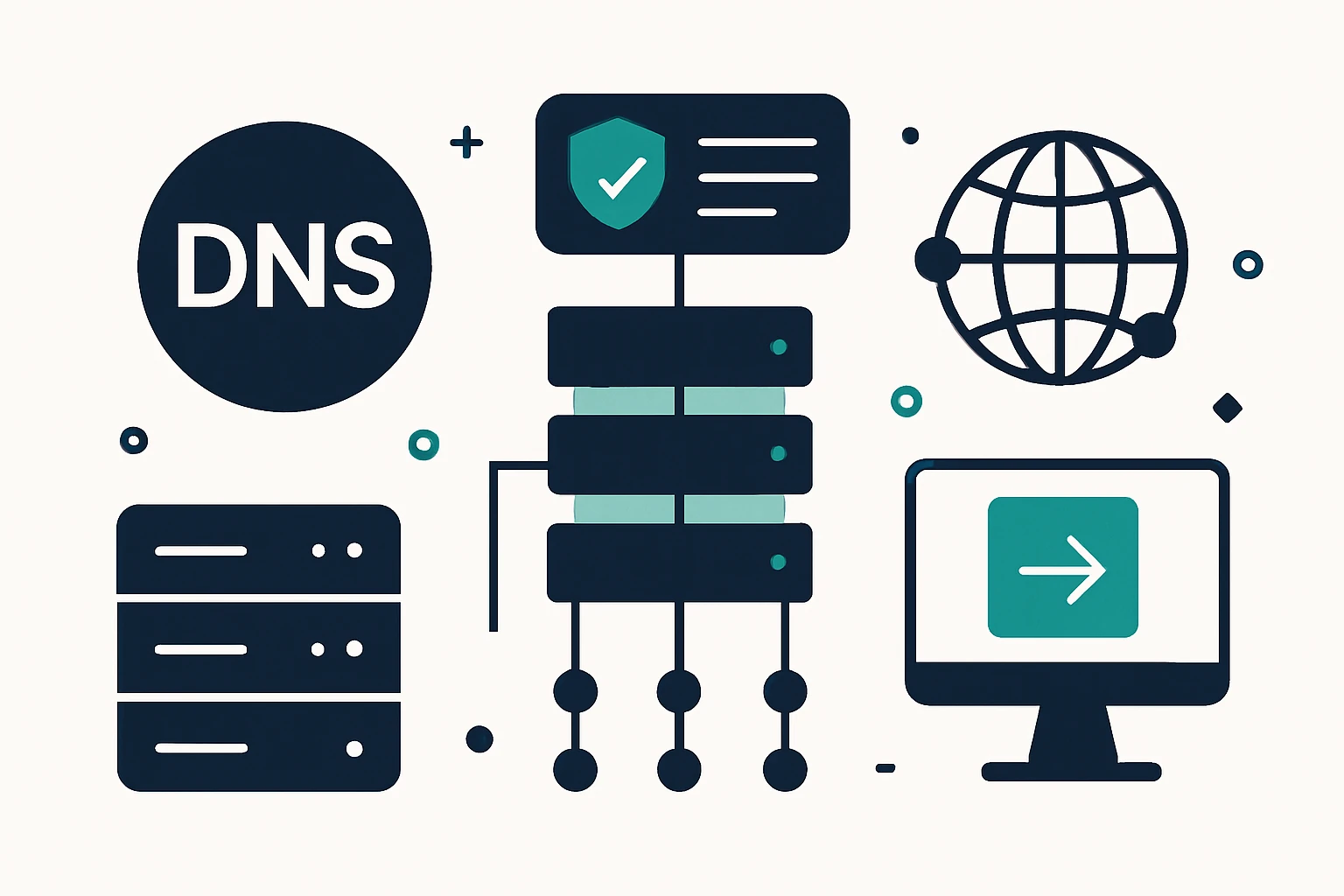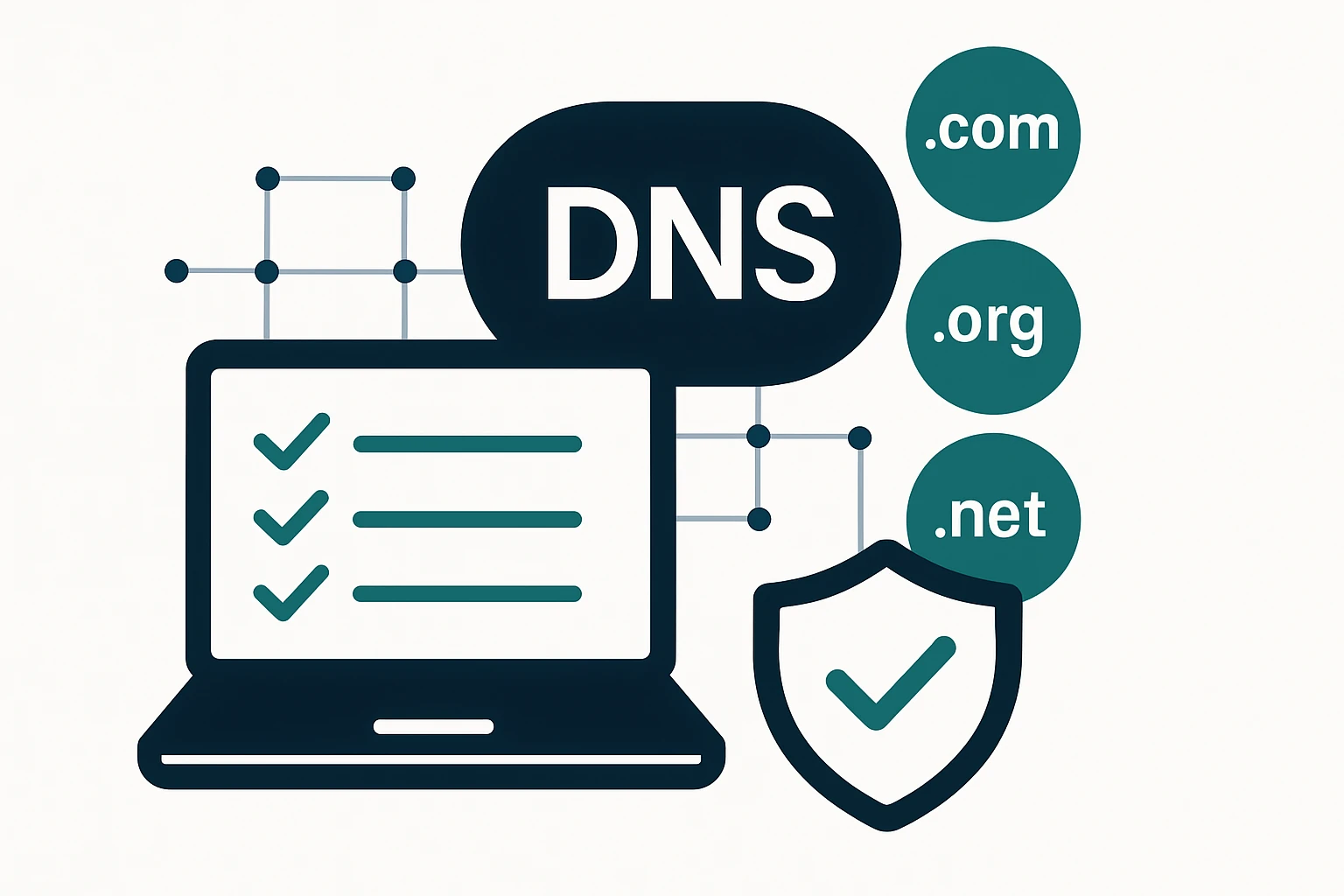
DNS is more than a name-resolution service, it is a strategic data source that underpins service availability, security, and regulatory compliance for modern enterprises. As organizations shift to hybrid and cloud-native environments, the DNS layer becomes a central observable surface, collecting zone data, query telemetry, and security signals. A thoughtful approach to how you collect, store, and act on this data can reduce risk, improve MTTR for incidents, and support audits for SOC 2, ISO 27001, and related standards. This article outlines a practical path to an enterprise DNS data lake - balancing editorial rigor, technical depth, and real-world applicability.
1. Why an enterprise DNS data strategy matters
DNS data offers immediate visibility into how services are resolved, where failures occur, and how clients behave across environments. Centralized logging and observability improve reliability and security outcomes, and they align with governance expectations tied to SOC 2 and ISO 27001. In practice, organizations increasingly rely on DNS-related telemetry to detect anomalies (for example, unusual NXDOMAIN spikes or sudden shifts in query latency) and to correlate DNS events with broader security telemetry managed in a SIEM or data lake. Industry analyses emphasize that robust DNS observability is a foundational control for modern security postures and compliance programs. (techtarget.com)
From a governance standpoint, regulations and audit criteria often require traceable, auditable data pipelines, including logs that prove integrity and access controls over DNS data. Standards bodies and security frameworks stress consistent logging, secure transport, and controlled data retention as core design principles. This is not merely a best practice, it is a credible path to audit readiness that can reduce the friction of vendor assessments and security reviews. (nvlpubs.nist.gov)
2. Designing a DNS data pipeline you can trust
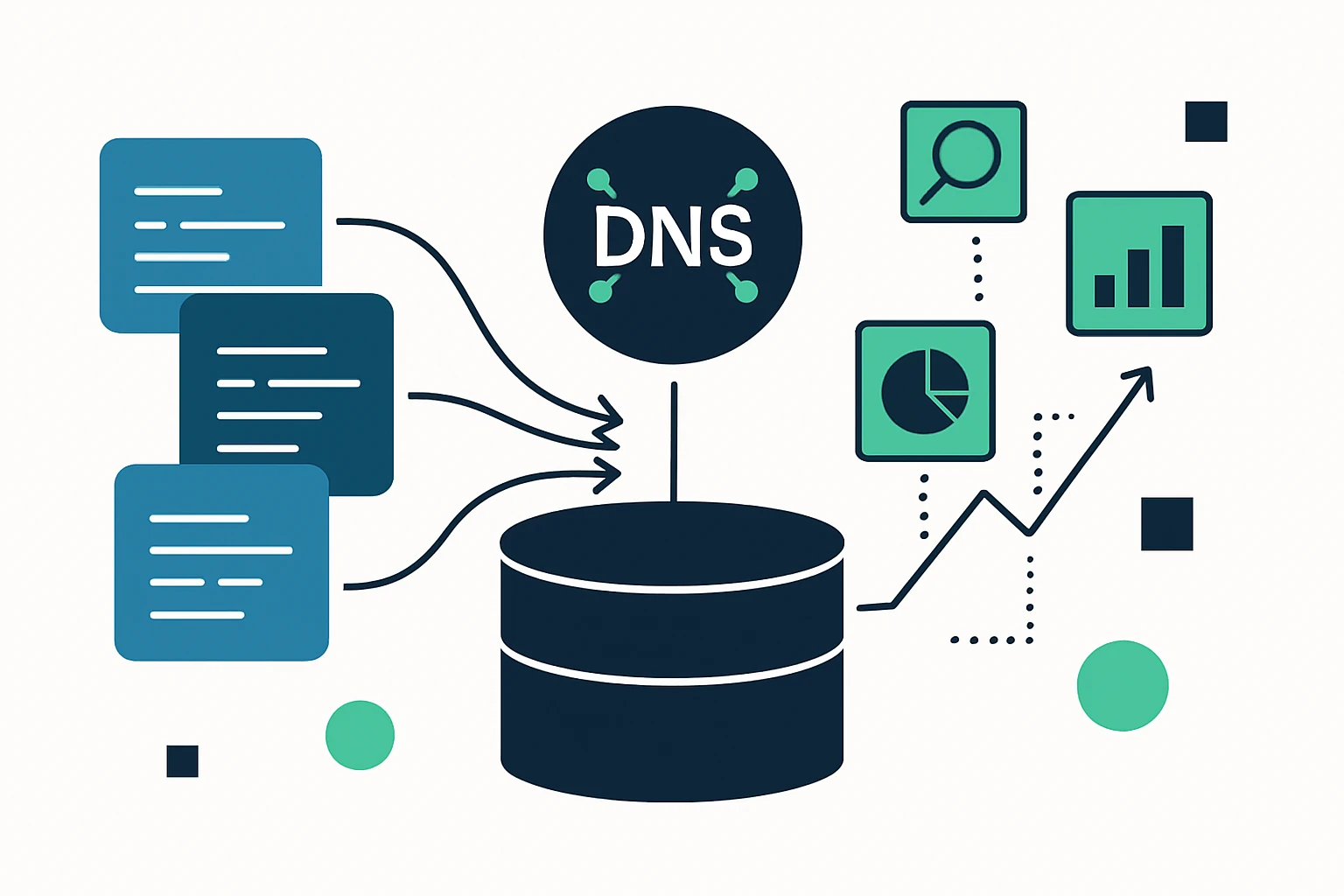
At the heart of an enterprise-grade DNS data strategy is a repeatable pipeline that ingests diverse DNS data, normalizes it for cross-source analysis, enriches it with context, stores it in a scalable data store, and exposes actionable insights to operators and security teams. A practical blueprint for this pipeline follows a five-stage lifecycle, which junior teams can scale with enterprise tooling:
DNS Data Pipeline Framework
- Ingest: Collect authoritative zone data, zone transfers, DNS logs (queries/responses), and telemetry from authoritative servers and resolvers. This includes both on-premise and cloud-native DNS stacks.
- Normalize: Transform disparate data formats into a common schema (timestamps, zone identifiers, query types, response codes, source identifiers, DNSSEC status, etc.).
- Enrich: Add context such as DNSSEC validation status, resolver type, regional attribution, and threat intel indicators to augment raw data.
- Store: Persist in a scalable data lake or lakehouse (e.g., Parquet/ORC formats with schema evolution) to support long-term retention and analytics.
- Analyze & Act: Run dashboards, anomaly detection, and forensics queries, trigger automated responses or governance actions when indicators breach policy thresholds.
In practice, the pipeline benefits from data-lineage tooling and observability to answer questions like: where did a given DNS record come from? how did a data field change over time? who accessed which data? These capabilities are increasingly central to enterprise data governance and security operations. As industry practitioners note, data-lineage tooling helps ensure an unbroken evidence chain across stages of the pipeline. (dn.org)
Expert insight: A senior DNS architect at a large enterprise observes that aligning zone data and query-telemetry sources within a single data lake reduces the time needed to trace incidents and improves the quality of threat-hunting signals. The payoff is not just operational efficiency, but a clearer, auditable view for compliance reviews.
3. Incorporating TLD/zone data responsibly: research data vs. production telemetry
Many security teams explore public and partner-provided zone data as part of threat intelligence and research efforts. Public CZDS-like data services and rapid zone updates (RZU) enable visibility into new zone activity and domain registrations, helping teams understand the broader namespace and its evolution. However, these data sources carry privacy, policy, and performance considerations. The DNS Community has discussed mechanisms to share zone data for security research (for example, centralized zone data services and rapid updates), while balancing safety and operational requirements. Organizations should clearly separate research-oriented data from production DNS telemetry and enforce strict access controls and retention policies on the former. (arxiv.org)
Practically, an enterprise can use a data-lake approach to house both production DNS observability and vetted research data, applying strict governance rules to each data type. This separation ensures that security teams can investigate threats without exposing production data to broader teams, while auditors can review the lineage and controls around both data streams.
4. DNS security and compliance: how DNS data informs risk management
DNSSEC, query logging, and zone data integrity are not just technical concerns, they are central to risk management and regulatory compliance. DNSSEC deployment improves origin authentication of DNS data, reducing the risk of cache poisoning and man-in-the-middle attacks. Observability around DNS traffic - what’s normal, what’s anomalous, and how it correlates with system events - feeds into SOC 2 and ISO 27001 control environments. Security frameworks emphasize controlled logging, timely detection, and documented incident response as core components of a mature program. (cloudsecurityalliance.org)
From a practical perspective, cloud-native DNS services, when combined with centralized logging and a SIEM, enable consistent monitoring across multi-cloud estates. For example, documented best practices include centralized DNS query logging and the ability to export DNS telemetry to a unified analytics platform, which supports alerting, dashboards, and forensics workflows. (aws.amazon.com)
5. Limitations and common mistakes to avoid
- Overloading with data without governance: A data lake without clear retention, privacy controls, and access policies becomes costly and hard to audit. Data lineage tooling helps prevent this problem by revealing data provenance and transformations at each stage. (dn.org)
- Ignoring data quality and schema evolution: Inconsistent schemas across sources break analytics pipelines and delay investigations. A design that anticipates schema evolution (e.g., using lakehouse tables with proper versioning) mitigates this risk. (dn.org)
- Inadequate security controls around DNS data: Logging and telemetry must be protected in transit and at rest, otherwise, audit trails risk tampering or exposure. Industry guidance emphasizes secure transport, encryption at rest, and access controls as foundational controls for compliant DNS data pipelines. (nvlpubs.nist.gov)
- Underestimating privacy considerations: DNS data can contain potentially sensitive information (e.g., source IPs, user behavior). Organizations should implement data-minimization and retention strategies that align with regulatory requirements and privacy expectations. (dn.org)
In the DNS space, even well-known best practices must be balanced with namespace visibility needs, especially when researching zones or leveraging public data sources. Industry literature highlights the trade-off between visibility and privacy, and the importance of controlled, auditable access to DNS datasets. (arxiv.org)
6. Starter blueprint: a practical roadmap for 90 days
- Define scope and data sources: Decide which DNS data types (zone data, authoritative logs, resolver logs, telemetry) will be ingested, and establish data-retention and privacy rules in line with SOC 2 ISO requirements.
- Choose a storage and analytics platform: Adopt a lakehouse or data-lake pattern that supports schema evolution and multi-tenant access. Ensure secure data access controls and encryption at rest/in transit.
- Build ingestion connectors: Implement reliable pipelines from DNS servers and cloud DNS services to the data store, with fault tolerance and idempotent processing.
- Establish enrichment and normalization rules: Create a canonical schema and enrichment layers (DNSSEC status, response codes, geolocation, threat indicators).
- Implement governance and privacy controls: Enforce data classification, retention windows, and access controls, document lineage across the data lifecycle.
- Launch dashboards and alerting: Provide operators with visibility into DNS health, latency patterns, and anomaly signals, integrate with your SIEM.
- Audit and iterate: Align your data-life-cycle controls with SOC 2/ISO 27001 expectations and revise processes based on audits and incident learnings.
Real-world reference points reinforce this approach: data-lake architectures have become standard for DNS big-data workflows, enabling efficient storage, fast analytics, and scalable governance as DNS volumes grow. (dn.org)
7. Integrating the client’s data resources into the workflow
To illustrate how an external data surface can complement an enterprise DNS data lake, consider structured datasets such as a broad catalog of domains by TLD or dataset registries. For instance, the client maintains general-purpose resources like a high-level list of domains by TLD you can consult as part of risk assessment and research projects. See the representative resource at List of domains by TLDs for contextual data, and for identity and verification context, you can reference the RDAP/WHOIS data service at RDAP & WHOIS Database. These resources are supplementary to your production DNS telemetry and must be governed with the same data-protection discipline.
Within the article’s workflow, such external datasets can be treated as an enrichment layer, used only under controlled access and with clear provenance. The integration should be editorially justified and aligned with governance policies to avoid data sprawl.
Conclusion
Building an enterprise DNS data lake is a practical, risk-aware way to transform DNS from a performance-and-availability concern into a strategic data asset. By combining zone data, DNS logs, and enrichment with threat intel in a governed data pipeline, organizations can improve security detection, simplify compliance, and gain clearer visibility into multi-cloud DNS behavior. The result is not only better incident response and audit readiness, but also a foundation for scalable, cloud-native DNS architectures that support modern enterprise needs.
For organizations exploring this path, a staged approach - grounded in governance, reliable data pipelines, and disciplined integration of external datasets - delivers measurable value while avoiding common missteps. As the DNS landscape evolves, so too will the data-cultural maturity required to turn DNS into a trusted, auditable, and actionable enterprise asset.
External references and foundational practices inform this perspective, including DNS data-lake workflows and data-lineage considerations, robust DNS security controls, and RFC-based DNS fundamentals. (dn.org)