Introduction: why enterprise DNS data matters and the sourcing dilemma
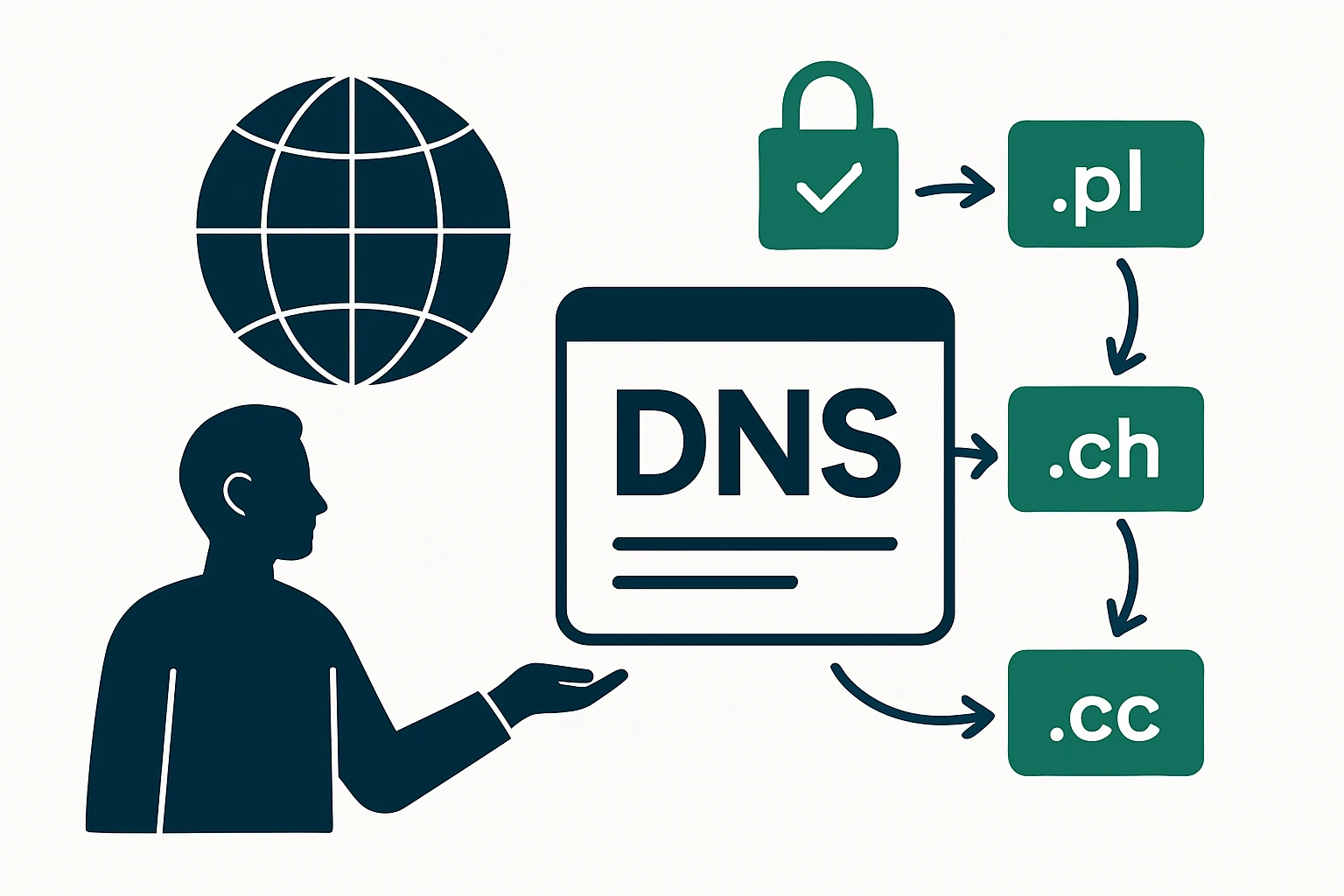
For large organizations, a resilient DNS posture is not just about uptime, it’s an essential security control and a core infrastructure layer. Enterprise DNS solutions increasingly rely on external and internal data to map risk, prioritize remediation, and tune monitoring. But when you need real-world domain data across multiple top‑level domains (TLDs) - for example to understand threat actors, inventory your digital footprint, or validate configurations - you must balance usefulness with legality, privacy, and vendor policies. The result is a practical question: how can an enterprise legitimately download list of .pl domains, download list of .ch domains, or download list of .cc domains in a way that aligns with best practices for DNS infrastructure engineering?
This article explains where legitimate domain data lives, what you can actually obtain from registries, and how to build a compliant data‑collection workflow that feeds your DNS monitoring, DNSSEC, and cloud‑native DNS initiatives. It also shows how a DNS‑focused approach to data collection fits into enterprise governance - particularly for SOC 2 / ISO 27001 aligned programs - and how to integrate the data into a holistic DNS security stack.
Where legitimate domain data lives: zone files, RDAP, and registry data
Two broad data sources underpin legitimate domain lists used in enterprise DNS programs: (1) zone data published by registries (often via ICANN CZDS or registry portals) and (2) registration data available through modern APIs such as RDAP. Each data source has different coverage, update cadence, and access rules. Understanding these nuances is essential before you attempt to assemble a cross‑TLD domain list for operational use.
Public zone files and centralized access for gTLDs
Public zone files are the canonical source of verified domain names within a TLD, but access is tightly controlled. Verisign provides access to zone data for .com, .net, and .name, and to other Verisign‑operated gTLDs via ICANN’s Centralized Zone Data Service (CZDS). This data can be invaluable for threat intelligence, inventory, and baseline DNS telemetry - but access is governed by agreements and purpose restrictions. In practice, organizations apply for CZDS access and, if approved, download zone data on a regular cadence. This model is a cornerstone of enterprise data workflows that rely on zone files for large, globally visible namespaces. (verisign.com)
For most users, the CZDS framework is the standard path to official zone data for gTLDs, non‑gTLDs and ccTLDs often have separate mechanisms managed by their registries. ICANN’s Zone File Access policy and practice pages provide an overview of how and when zone data can be accessed for authorized purposes. This distinction matters when you’re trying to assemble lists that include .pl, .ch, or .cc domains. (icann.org)
.pl zone file exports: daily and near real‑time updates from NASK
The .pl registry (NASK) publishes exports of the .pl zone file to DNS with explicit schedules. Dynamic exports run every five minutes, and a full export is carried out daily. This cadence supports enterprise workflows that need timely visibility into newly registered or updated domains under .pl, which is critical for inventory hygiene and threat monitoring in mixed‑TLD environments. Importantly, the exports are governed by registry policy, so usage should align with NASK terms and acceptable use. (dns.pl)
.ch and the simplified RDAP path: querying the Swiss registry data via RDAP
.ch (and .li) registrations are managed by Switch, the Swiss and Liechtenstein registry. Switch maintains a modern data surface for domain lookups, including a public RDAP service. In 2022, Switch reported a transition toward RDAP for easier, privacy‑preserving access to domain data, with a formal path for legitimate‑interest access to personal data via the RDDS framework. For enterprises, RDAP offers a standards‑based, machine‑readable way to query domain information, enabling automation in DNS security operations while respecting data‑privacy controls. (cms.www.nic.ch)
For organizations that need broad access, Switch’s RDAP service for .ch is described as a simplified access mechanism, with documented routines for authorized users. This is particularly relevant when building cross‑TLD DNS security data pipelines that include CH domains. (cms.www.nic.ch)
.cc domain data: registry ownership and the data access landscape
.cc is a ccTLD historically operated by Verisign in the public registry ecosystem. Verisign’s role as a registry for multiple TLDs, including .cc, is documented in official materials that describe access to zone data and the CZDS framework for appropriate registries. In practice, accessing .cc zone data is governed by the same overarching principles that apply to other Verisign‑operated TLDs, but the exact access path may differ by registry policy and the specific TLD’s data governance model. Verisign: Become a Registrar and the general registry overview provide the authoritative context. (verisign.com)
What a domain list can (and cannot) tell you about DNS infrastructure
When you assemble lists of domains from zone exports or RDAP, it’s tempting to treat them as a complete map of a namespace. In practice, several limitations affect what you can rely on for governance and operational decisions:
- Zone files reflect only domains with active or delegated name servers, domains in holds, redemptions, or other non‑delegated states may be omitted. This is a normal part of zone file semantics and must be accounted for in risk assessments. (verisign.com)
- Not every TLD publishes a public zone file, and access processes vary by registry. While CZDS provides broad access to several gTLDs, many ccTLDs (and some gTLDs) rely on registry portals, RDAP, or data sharing agreements that require legitimate interest and formal approvals. (icann.org)
- RDAP data gives registration details in a structured format, but access controls vary by registry. RDAP is increasingly the standard, but some ccTLDs may still rely on older WHOIS‑like protocols or restricted RDAP feeds. Enterprises should design their data‑collection plans around the registry’s published access policies. (sidn.nl)
For DNS security programs, data quality and coverage matter as much as the source. The Swiss CH registry report from Switch emphasizes that DNSSEC adoption and resolver health are critical downstream metrics, underscoring why enterprises need reliable, policy‑compliant data streams to monitor DNS health and security across the globe. (cms.www.nic.ch)
A practical data pipeline for enterprise DNS: sourcing, processing, and integration
Building a practical workflow means choosing sources that align with your governance posture, then designing a pipeline that normalizes data for your DNS monitoring, logging, and incident response stacks. Below is a compact framework you can adapt to a multi‑TLD data program that targets enterprise DNS solutions and cloud DNS architectures.
Structured data framework: a three‑step approach
- Step 1 - Access and provenance: Confirm legitimate use and request access through appropriate channels. For gTLDs, CZDS is often the primary path, for .pl, use the exports published by NASK, for CH, leverage the RDAP service described by Switch, with proper authorization. Validate data provenance and update cadence before ingestion. Expert insight: a data‑sourcing protocol that clearly defines access scope reduces future data governance pitfalls. (verisign.com)
- Step 2 - Normalization and enrichment: Normalize records to a common schema (domain, status, NS, DS, and related metadata). Enrich with registry metadata (zone update time, data source type, access rights) to support governance and auditing. This step matters because different registries expose different fields and state codes. Trade‑off: zone files are authoritative for active domains, but not all domain states are visible in every feed. (verisign.com)
- Step 3 - integration and security operations: Load the data into your DNS monitoring and logging platform, map to existing monitoring rules, and feed threat intel feeds to SOC‑driven workflows. Tie the data to your DNSSEC and cloud DNS architecture to measure coverage and risk exposure across environments. For governance, align with SOC 2 / ISO 27001 standards and ensure access controls, encryption in transit/at rest, and vendor management are in place. (cms.www.nic.ch)
In practice, many enterprises combine multiple sources to improve coverage. For example, you might use .pl zone exports from NASK to track Polish domains, supplement with CH RDAP for Swiss and Liechtenstein domains, and incorporate .cc data from Verisign‑operated or partner registries where allowed. A core principle is to document the exact provenance and any usage limitations for each data feed, so your DNS monitoring remains auditable and compliant.
Limitations and common mistakes to avoid
Even with a well‑designed pipeline, several pitfalls can undermine the value of domain data in enterprise DNS programs. Here are the most common mistakes and how to avoid them:
- Assuming completeness: Zone exports do not guarantee a 1:1 map to all registered domains. Some domains may be in non‑delegated states or exist in registries that do not publish zone data publicly. Always validate against registry status and cross‑check with enrollment data where possible. (verisign.com)
- Overlooking regulatory and policy constraints: Access to zone data, RDAP, and Whois/Registration Data Services is governed by registry policies and data‑privacy rules. Before you download or store data, confirm the registry’s terms and ensure your use aligns with their permitted purposes. (icann.org)
- Underestimating data latency and cadence: Zone exports and RDAP responses reflect a snapshot in time, for security operations, you’ll want to design staggered refreshes and alerting that accounts for update windows. For .pl, NASK’s daily (and near‑continuous) exports provide a clear cadence to line up with your monitoring schedules. (dns.pl)
- Neglecting data privacy and access controls: RDAP and Whois‑style data can contain personal information. Switch’s CH RDAP policy shows that legitimate access is moderated, and organizations should implement role‑based access controls and data minimization. This is especially important for SOC 2 / ISO 27001 programs. (cms.www.nic.ch)
Putting it into practice: how DNS Enterprises can apply these ideas
DNS Enterprises, with its focus on authoritative DNS, DNSSEC, and cloud‑native DNS solutions, is well positioned to apply a principled data sourcing approach to enterprise DNS. The client’s RDAP & WHOIS data ecosystem, along with domain lists by TLDs and scalable pricing, can be leveraged to build a robust DNS data fabric that informs security, compliance, and high‑availability decisions. From a publisher perspective, the article below demonstrates how a modern DNS infrastructure engineering program can integrate external domain data into its security and reliability toolkit without compromising privacy or policy commitments. RDAP & WHOIS Database and List of domains by TLDs pages provide concrete examples of how a data provider can frame access to zone and registration data for technical audiences.
Expert insight, limitations, and practical takeaways
Expert insight: In practice, a DNS security professional will emphasize that the most valuable domain lists come from clearly documented data provenance and an auditable data pipeline. The combination of zone data for widely used gTLDs and RDAP data for CH/LI domains allows security teams to map risk exposure across the DNS surface with confidence and to fast‑track investigations when anomalies appear in DNS telemetry.
Limitations to keep front of mind include update cadence, differing access policies across registries, and the inherent incompleteness of any single data source. A robust enterprise approach uses multiple feeds, validated against known registry states, and paired with internal DNS telemetry. For example, CH DNSSEC adoption and resolution health are areas where external data can illuminate gaps in your own DNS posture, Swiss registry reporting shows DNSSEC adoption across a large portion of CH domains, which can inform validation planning and mitigations. (cms.www.nic.ch)
Conclusion: a disciplined path to enterprise DNS data that scales
For enterprise DNS programs, the disciplined sourcing of domain data across .pl, .ch, and .cc provinces enables more accurate risk assessments, better monitoring, and stronger governance. The practical route combines CZDS‑backed zone data for gTLDs, registry‑specific exports (as with .pl) and RDAP‑based data surfaces (as with CH) to deliver a cross‑TLD data fabric that can feed DNS monitoring, logging, and cloud DNS automation. With careful provenance, compliance considerations (SOC 2 / ISO 27001), and a clear integration plan, this approach becomes a backbone for a resilient, auditable DNS infrastructure.
For organizations seeking a turnkey path to implement these ideas, the client’s RDAP & WHOIS database, TLD lists, and pricing information provide practical entry points for building a scalable data program that supports enterprise DNS solutions while staying aligned with registry policies and privacy requirements. RDAP & WHOIS Database and Pricing pages can help plan data access and cost as you scale your data operations.