Introduction
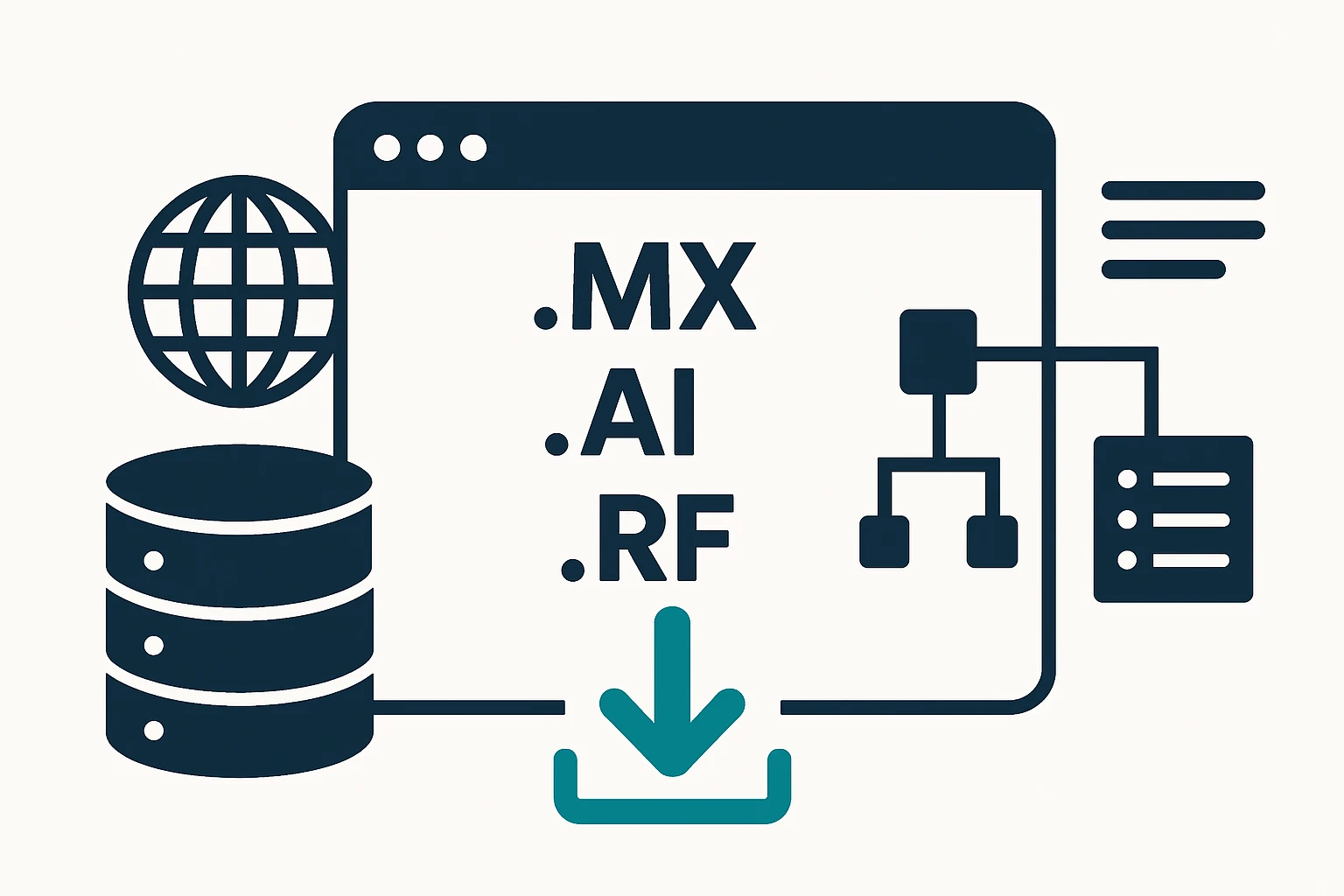
For large organizations, keeping a precise, up-to-date inventory of domains that could affect security, compliance, or service continuity is a foundational capability. Enterprise DNS teams rarely rely on a single source of truth, they blend internal asset inventories with external signals to understand risk exposure, protect brand integrity, and ensure reliable resolution and monitoring across networks, clouds, and hybrid environments. One increasingly practical data source is zone data - the raw domain listings that registries publish as part of the DNS ecosystem. For enterprises, learning how to obtain and use TLD zone data (for example MX, AI, and RF domains) can unlock deeper visibility into domain activity, facilitate proactive risk management, and inform governance programs such as SOC 2 and ISO security controls.
Zone data can be accessed in a controlled, compliant way through established channels like ICANN’s Centralized Zone Data Service (CZDS) and related registry processes. This article explains how to approach downloading TLD domain lists responsibly, what data you can expect, and how to integrate it into modern DNS infrastructure. We’ll also cover practical trade-offs, common mistakes, and a lightweight framework you can adapt to your organization’s governance model. Note: when we discuss concrete data access methods, the most authoritative routes are CZDS and registry-based agreements, which you should confirm before attempting any bulk download.
To illustrate practical options, we reference proven paths used by enterprises to obtain TLD data and show how a vendor like webatla’s MX TLD listing page can fit into broader workflows. MX domain list resources illustrate how teams source domain lists by TLD in a controlled catalog. At the same time, CZDS remains the standard mechanism to access zone data from participating TLDs. The CZDS framework and its zone file access guidelines are described by ICANN and related documentation. (czds.icann.org)
Understanding zone data and why enterprises need it
Zone files are authoritative data sets containing DNS records for a domain’s zone. They include records such as SOA, NS, A/AAAA, MX, and TXT, and they reflect the state of a domain’s DNS configuration at a given point in time. For enterprise DNS operations, zone data can support several critical activities: inventory and risk assessment of external domains, monitoring for new or misconfigured domains that impersonate a brand, and feed-forward into security controls such as allowlists, threat intel pipelines, and compliance evidence. However, zone data comes with caveats: not all TLDs publish full zone files publicly, and access often requires formal authorization and compliance checks. ICANN’s CZDS is the primary mechanism for generic top-level domains (gTLDs) to provide bulk access to zone files, with registries sometimes restricting or licensing access for specific use cases. For more context, CZDS is a centralized portal that enables qualified users to request access to participating TLD zone files, if a TLD isn’t listed there, direct registry contact is typically needed. (czds.icann.org)
Beyond gTLDs, ccTLDs (country-code TLDs) may have varied policies, some registries publish zone files, others do not, or restrict access to licensed partners. The general principle is that data quality and coverage depend on the registry’s policies and the data format provided. As a rule of thumb, consider CZDS as the default path for compliant access, and be prepared to negotiate direct access with registries for specialized needs. The ICANN CZDS program and its governance around zone file access provide a baseline for these workflows. (icann.org)
How to obtain TLD zone data legally and reliably
For enterprise DNS teams, the most reliable, standards-based approach starts with the Centralized Zone Data Service (CZDS). The CZDS portal aggregates access to zone files from participating registries, letting you request bulk data for designated purposes and ensuring you meet data-use requirements. The process typically involves a registration step, an approved data-use plan, and ongoing compliance with registry terms. In many cases, zone file access is granted on a daily or near-daily basis, enabling teams to keep their inventories reasonably fresh. If a desired TLD is not listed in CZDS, you should contact the registry operator directly to discuss access and licensing. This tiered access model is common across registries and is designed to balance openness with security and privacy concerns. (czds.icann.org)
When planning access, you should also map data formats and update cadence to your technical capabilities. Zone files are large and require parsing pipelines, deduplication, and normalization to be useful in enterprise workflows. Depending on your needs, you may receive the full zone data in a conventional zone-file format, or as structured extracts (CSV/JSON) provided by third-party data vendors. In all cases, ensure you have explicit authorization and a documented data-use policy aligned with your security and compliance program. ICANN’s guidance on zone file access emphasizes that registries may provide bulk access for legitimate purposes, but access is not unconditional, you must follow the terms and ensure data handling adheres to privacy and security standards. (icann.org)
Practical steps to start a CZDS-based workflow
- Identify target TLDs: start with the TLDs most relevant to your organization’s footprint and threat model (for example, .mx, .ai, and .рф as case studies).
- Register for CZDS access: complete the CZDS enrollment, submit a data-use plan, and align with registry terms. If a TLD isn’t listed, contact the registry directly.
- Define data formats and cadence: confirm whether you’ll receive zone files in traditional text format or provided extracts, and establish update frequency (daily vs. weekly).
- Set up ingest and normalization: build parsers to extract relevant records (A/AAAA, NS, MX, TXT) and normalize domains to your internal inventory schema.
- Validate data quality: implement validation checks to identify incomplete records, orphaned zones, or stale entitlements, and cross-check with your internal asset registry.
Real-world teams often pair CZDS access with vendor or partner data feeds to fill coverage gaps for ccTLDs. For example, a typical enterprise workflow might combine CZDS zone data for key gTLDs with registry-provided lists or credible third-party databases to approximate a comprehensive domain inventory. When you present this approach to stakeholders, emphasize governance controls, data lineage, and the ability to demonstrate coverage in audits. For further avenues and examples, see the MX domain list resource from webatla and related TLD pages.
From zone data to actionable DNS operations
Having access to MX, AI, or RF zone data is only valuable if you can translate it into operational security, policy enforcement, and reliable resolution. Here are several practical ways to use zone data within a modern DNS program:
- Asset discovery and risk scoring: cross-reference zone data with your internal asset inventory to identify domains that could be used for typosquatting, phishing, or brand impersonation. By tracking new registrations in targeted TLDs, security teams can prioritize monitoring and response efforts.
- Allowlisting and access control: use validated zone data to maintain a controlled allowlist of known domains for internal apps, services, and cloud environments, reducing the risk of misrouting or frat-level exposure to rogue domains.
- DNS monitoring and anomaly detection: feed zone data into monitoring engines to alert on unexpected changes (new NS records, altered A/AAAA records, or new MX servers) that could signal misconfiguration or malicious activity.
- DNSSEC and secure resolution: correlate zone data with DNSSEC deployment plans to surface gaps in trust anchors, ensuring that newly discovered domains or subdomains can be validated and trusted within your resolver fleet.
- Cloud-native DNS architecture alignment: align zone data with your cloud DNS strategy (for example, Google Cloud DNS, AWS Route 53, or Azure DNS) to ensure consistent policy enforcement and visibility across on-prem and cloud environments.
To operationalize, you’ll typically implement a data pipeline that ingests zone data, normalizes domains to your internal catalog, enriches with metadata (registrar, registration date, DNSSEC status), and then routes the data into security tools, SIEMs, and DNS platforms. This pipeline is a core capability for enterprise-grade DNS governance and a solid foundation for SOC 2 and ISO 27001-style controls. Consider how a capable list of tools, including purpose-built monitoring and logging, supports ongoing visibility and incident response. For operational best practices, see the broader concept of DNS monitoring and logging and how it interplays with cloud DNS architecture.
Limitations, trade-offs, and common mistakes
Downloading and using zone data in an enterprise context is powerful but not a silver bullet. Common missteps include over-reliance on a single data source, underestimating data latency, or assuming every TLD provides complete data in every format. Consider these realities:
- Coverage and completeness: zone files may not include every domain, especially for ccTLDs with restrictive access or private zone data. Some registries publish only partial data or offer data via paid feeds. Always verify coverage against your organization’s risk model.
- Update cadence: zone data can be stale if you depend on periodic dumps rather than real-time feeds. Align cadence with your risk tolerance and incident response SLAs.
- Licensing and compliance: CZDS and registry terms govern how you can use the data. Ensure your use-case, storage, and transmission practices meet SOC 2 and ISO standards and document your data-handling controls.
- Data volume and processing: zone files are large, parsing, deduplication, and enrichment require scalable infrastructure. Be prepared to invest in robust data pipelines and storage.
- Data quality vs. operational noise: some entries may be inaccurate or outdated, treat zone data as a signal in a broader telemetry set rather than a single truth source.
An additional pitfall is assuming that all important domains are visible in zone data. Some domains resolve privately within an organization’s internal network or rely on alternate DNS configurations that are not reflected in public zone files. Always supplement zone data with internal telemetry, threat intelligence feeds, and auditing trails to avoid blind spots. For legitimate access strategies and the governance considerations they entail, refer to the CZDS framework and ICANN’s guidance.
A practical framework for obtaining and using TLD zone data
Structured approach - use this lightweight framework to ground decisions about obtaining and using TLD zone data in your DNS program.
- Define scope: determine which TLDs, data fields, and time windows matter for your security, compliance, and operations goals.
- Choose access path: CZDS for participating gTLDs, direct registry contact where CZDS coverage is limited.
- Assess data quality: confirm completeness, accuracy, and update cadence, plan enrichment steps for missing fields (registrar, DNSSEC status, etc.).
- Integrate with workflows: build ingestion pipelines that feed asset inventory, monitoring dashboards, and policy engines.
- Governance and audits: document data-use policies, retention periods, and access controls to satisfy SOC 2, ISO, and internal governance.
As you implement this framework, keep the integration points with the broader DNS program in mind, including cloud DNS architecture and DNSSEC best practices. These anchor topics help ensure that the data you obtain moves seamlessly into secure, scalable operations. For enterprises evaluating external sources or vendor partners, also consider how a provider’s domain lists (like MX domain lists) fit into your governance posture and data provenance strategy.
Putting it all together: a case for disciplined domain data management
In modern enterprise networks, the ability to track and act on external domain activity is not just about blocking threats, it is about informed risk decisions, compliant governance, and resilient service delivery. Zone data, when obtained and used correctly, becomes a part of a broader strategy to protect brand integrity, defend against phishing, and ensure consistent DNS resolution across on-prem and cloud environments. The key is to pair authoritative data with robust processes: secure ingestion pipelines, validated enrichment, auditable access controls, and ongoing monitoring. A mature program will combine CZDS-based zone data with internal asset discovery, threat intelligence, and DNS monitoring to provide a holistic view of the domain landscape.
Operational resources and where to start
To begin experimenting with legitimate access to zone data, consider these concrete steps and resources:
- Register for CZDS and review the registry policies for participating TLDs. If a desired TLD isn’t listed, contact the registry operator directly to explore access options.
- Map data to internal schemas: align zone data fields with your inventory and policy frameworks to support auditing and incident response.
- Leverage vendor resources: use credible domain data feeds to fill gaps in coverage and to accelerate onboarding of zone data into your security stack.
- Security and governance alignment: document data-handling practices to support SOC 2/ISO compliance and to demonstrate control effectiveness during audits.
Client resources and examples
For teams looking to explore practical sources for domain lists by TLD, the MX list page from webatla provides an example of how such data may be cataloged and accessed in a controlled environment: MX domain list resources. To see broader domain cataloging by TLDs, their TLD index page is also useful: List of domains by TLDs. These resources illustrate how organizations partner with data providers to maintain an up-to-date domain inventory while remaining mindful of licensing and governance constraints.
Conclusion
Enterprise-grade DNS requires more than robust resolvers and fast networks, it demands disciplined data governance, accurate inventory, and thoughtful integration of external domain data into security and operations workflows. Accessing TLD zone data through CZDS and registry channels can provide valuable visibility into the external domain landscape, enabling proactive risk management, better policy enforcement, and auditable controls. By combining zone data with DNS monitoring, DNSSEC deployment, and a scalable cloud-native DNS architecture, organizations can strengthen resilience, reduce risk, and support a compliant, secure DNS program. The key is to start with a clear data strategy, respect licensing and privacy constraints, and build a repeatable ingestion and governance process that scales with your organization’s needs.
References and further reading
Key sources on zone file access and CZDS policies include:
- Centralized Zone Data Service (CZDS) overview and access details: What are TLD zone files?
- Zone File Access (ICANN CZDS): Zone File Access
- ICANN guidance on zone file access and use: About Zone File Access
Internal resources
Internal anchors for reference and further internal routing:
- zone file access
- czds portal
- tld zone data
- domain list management
- dns data governance
- registry zone files
- dnssec best practices
- dns monitoring logging
- compliance soc2 iso
- cloud dns architecture