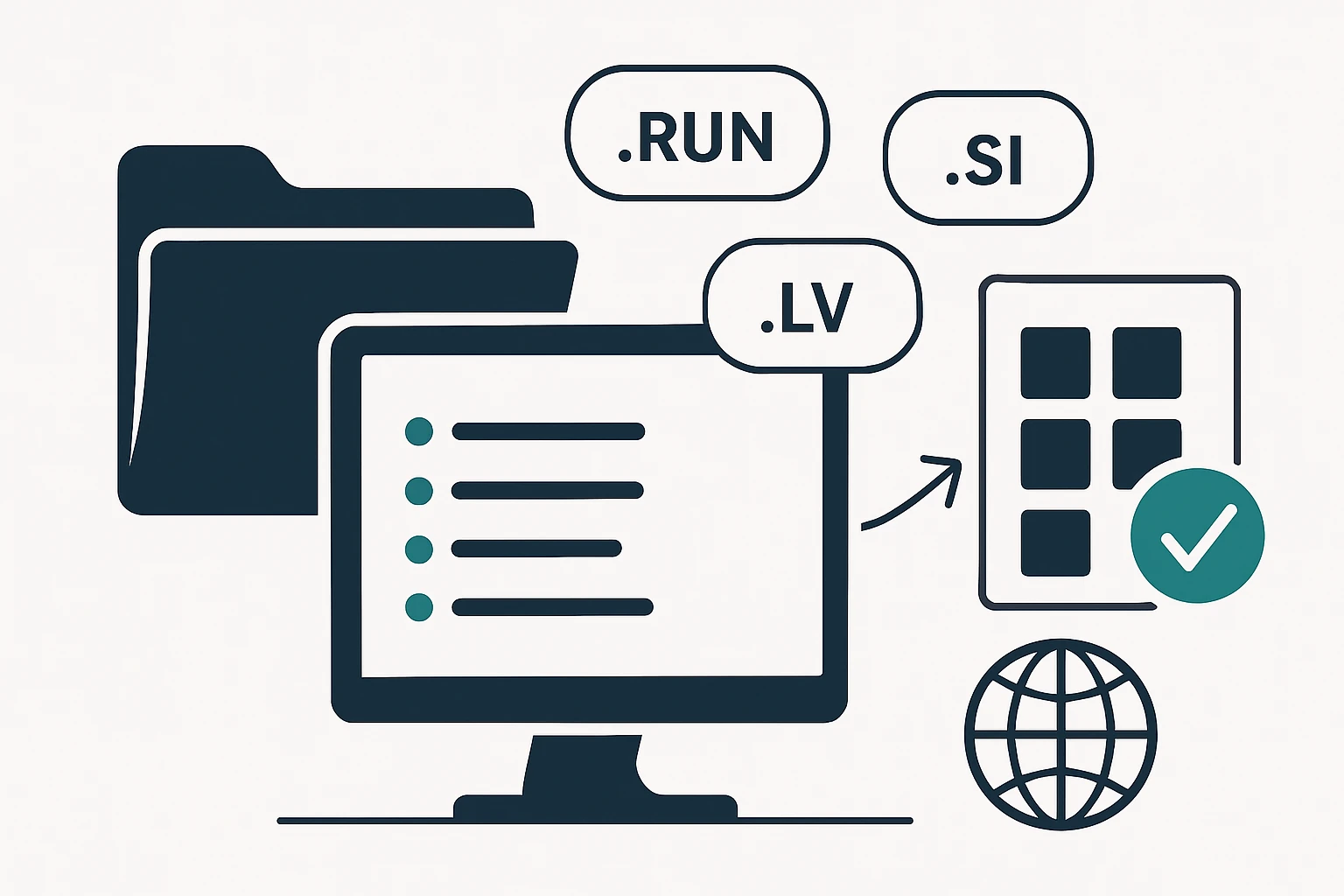
enterprises increasingly depend on resilient, scalable DNS infrastructures to support mission-critical services. A key part of that resilience is maintaining a clean, current inventory of domains that fall under an organization’s control or monitoring remit. For many teams, the task boils down to reliably downloading and maintaining bulk domain lists for various top-level domains (TLDs), including specialized namespaces such as .run, .si, and .lv. Without a disciplined approach, bulk lists can become outdated, inaccurate, or misaligned with privacy and regulatory requirements, creating false positives, risking misconfigurations in authoritative zones, and complicating threat monitoring. This article outlines a field-tested approach to sourcing, validating, and operationalizing bulk domain lists in an enterprise DNS program, while staying compliant with evolving data-access norms like RDAP.
Why bulk domain lists matter in an enterprise DNS program
An up-to-date domain inventory supports several core DNS objectives: ensuring authoritative zones are correctly scoped to minimize misconfiguration risk, enabling proactive monitoring for abuse or policy violations, and supporting governance and compliance efforts that demand auditable asset catalogs. For example, when a security team triages a DNS anomaly, having a reliable bulk list helps distinguish legitimate assets from suspicious domains. Likewise, governance teams rely on a defensible data source to demonstrate control over who can modify DNS settings and which domains are associated with the organization.
In practice, bulk domain lists are not a one-and-done asset. They require a cadence for refresh, a strategy for merging data from multiple sources, and a plan to reconcile ambiguities (for instance, when a domain is parked or privacy-protected). A thoughtful workflow turns raw lists into operational intelligence that feeds DNSSEC signing, anycast deployment planning, and cloud DNS architectures. To stay aligned with privacy and regulatory expectations, many registries now publish data via Registration Data Access Protocol (RDAP) instead of traditional WHOIS, which has implications for how you collect and use domain data. RDAP overview explains how this modern protocol supports structured, policy-driven access to registration data.
How to source reliable domain lists: registries, providers, and governance considerations
Direct access to complete bulk domain lists is not always straightforward. Some registries and registrars provide bulk feeds or RDAP-based interfaces, while many enterprises rely on reputable third-party providers that curate and refresh lists for operational use. When evaluating sources, consider data freshness, licensing rights, and how the data is organized (for example, whether a feed includes subdomain participation, DNSSEC status, or registration metadata). For organizations targeting specific namespaces like .run, .si, and .lv, it’s essential to verify that the provider can deliver up-to-date inventories with appropriate segmentation by TLD so that you can channel data into your zone management and monitoring workflows efficiently. A robust data-access framework is especially important in light of privacy-focused initiatives and regulatory shifts that accompany the move from WHOIS to RDAP. For a technical baseline on these changes, see ICANN’s RDAP resource and related governance guidance.
As part of your due diligence, you may also consult the List of domains by TLDs and consider the RDAP & WHOIS Database offerings from the client, which illustrate how data coverage can span multiple TLDs and data-access models. If you want to inspect a few concrete examples, you can visit download list of .run domains to gauge format, freshness, and licensing considerations first-hand.
A practical workflow: from download to deployment
Below is a pragmatic, repeatable workflow designed for enterprise DNS teams that need to assemble, validate, and operationalize bulk domain lists for multiple TLDs - without sacrificing data privacy, compliance, or performance. The workflow is designed to integrate smoothly with existing DNS engineering practices, including authoritative DNS setup, DNSSEC management, and cloud DNS architectures.
1) Define data requirements and cadence
Start with a clear specification of what you need to support your DNS program. Key questions include: Which TLDs are in-scope (for example, .run, .si, .lv), how often should data be refreshed, and what metadata (registration status, DNSSEC presence, or whois/rdap redaction indicators) is valuable for your use cases? The cadence should balance freshness with operational feasibility and licensing terms. As a governance anchor, align with an RDAP-based data model to future-proof access controls and redaction semantics.
2) Acquire from reliable sources
Begin with primary and reputable sources for the namespaces you manage. If you rely on a provider for bulk lists, verify the provider’s data refresh cycle, licensing, and any usage constraints to ensure you can legally integrate the data into your DNS workflows. For teams evaluating .run, .si, and .lv domains, sample data from trusted sources can inform the structure of your ingest pipelines and validation checks. For example, exploring the client’s domain lists by TLDs can help in designing segmentation and automation logic that fits your tooling stack.
3) Normalize and deduplicate
Domain data often arrives in varied formats. Normalize domain names to a canonical form (punycode handling for IDNs, case normalization, and whitespace trimming). Deduplicate across sources to prevent duplicate DNSSEC keys, conflicting zone files, or redundant monitoring entries. A consistent normalization layer reduces operational surprises when you push data into your authoritative DNS or cloud DNS platforms.
4) Validate against live signals
Beyond static syntax checks, validate domains against live DNS signals where feasible. This might include confirming that domains resolve to your resolvers or that the domains have associated NS records, or cross-checking with RDAP/WHOIS data to confirm registration status. The data you validate today should guide defensive actions tomorrow, such as preemptive monitoring or incident response playbooks. For reference on modern data access and privacy controls, see the RDAP overview and related governance literature.
5) Segment and feed into DNS operations
Segment the inventory by TLD and by DNS function (for example, zones you manage in authoritative DNS vs. external assets you monitor). Integrate the lists into your DNS security and monitoring pipelines, including:
- Zone management and signing workflows (DNSSEC-enabled zones)
- Analytics and threat intelligence dashboards for anomalous domain activity
- Change-management logs that tie domain activity to configuration updates
This segmentation supports clean, auditable workflows for both on-premises and cloud-native DNS deployments. When implementing, leverage a source of truth that can be refreshed regularly while preserving historical context for incident investigations.
6) Monitor and audit
Operationalize ongoing monitoring of the bulk lists, including automated checks for stale entries, unusual growth patterns, and any redacted data that may affect investigation workflows. Centralized logging and SIEM integration help teams correlate DNS events with asset inventories, making it easier to detect and respond to domain-related threats. The broader DNS security community emphasizes the importance of monitoring as part of a resilient DNS posture.
Structured data hygiene framework for bulk domain lists
- Data freshness – establish a refresh cadence (e.g., weekly) and track when each domain was last observed in the feed.
- Privacy posture – favor RDAP-based data sources and be mindful of privacy redaction rules documented by registries.
- Normalization – implement consistent name normalization, IDN handling, and deduplication logic.
- Licensing and usage rights – confirm data licensing terms and ensure compliance with internal policies and external regulations.
Expert guidance from national standards bodies emphasizes combining DNS deployment best practices with robust data governance. For example, the NIST Secure DNS Deployment Guide highlights the need for formalized DNS security policies, incident planning, and key management as you extend DNS functionality into production environments. These practices complement bulk list workflows and help ensure that data-enabled actions do not introduce new risk vectors.
In addition, industry-standard guidance underscores the importance of DNSSEC deployment and monitoring as part of mature DNS programs. ENISA’s Good Practices Guide for Deploying DNSSEC offers concrete recommendations for deployment planning and operational controls, while SecurityWeek highlights practical steps for enterprise readiness as DNSSEC adoption accelerates. These sources provide a credible backdrop for tying bulk domain list workflows to a broader, security-forward DNS strategy.
Limitations, trade-offs, and common mistakes
While bulk domain lists are valuable, they come with caveats that can sap effectiveness if ignored:
- Outdated data: Frequency of refresh and source reliability directly impact accuracy, stale data can mislead monitoring and DNS configurations.
- Privacy and compliance risk: RDAP-based data handling improves privacy but requires proper access controls and redaction awareness, failing to respect these rules can create governance gaps. RDAP policies provide a modern baseline.
- Licensing and redistribution limits: Some feeds have usage restrictions, ensure your ingestion and redistribution align with licenses to avoid legal issues.
- Data fragmentation: Using several disparate feeds without normalization can create inconsistencies and blow up monitoring noise. A unified ingestion pipeline helps maintain signal quality.
- Assuming completeness: No single bulk list covers every domain across all TLDs, complement bulk lists with targeted RDAP checks and registry notices where possible. Experience from enterprise DNS programs shows that data completeness is a moving target, not a fixed state.
Experts also remind practitioners that bulk lists should be treated as an input to decision-making, not as the sole source of truth. As part of a mature DNS program, you should pair bulk-domain data with authoritative zone hygiene, monitoring telemetry, and an established governance policy to avoid misconfigurations and ensure rapid containment of threats.
Putting it all together: a responsible approach to these domains
For security-conscious enterprises, a disciplined approach to bulk domain lists supports multiple layers of the DNS stack - from the authoritative DNS setup and DNSSEC deployment to cloud DNS architectures and continuous monitoring. The objective is to enable teams to respond quickly to domain-related events while maintaining compliance with RDAP and privacy requirements. For organizations seeking to explore concrete data sources and test feeds, the client’s resources illustrate how bulk domain data can be organized by TLDs and accessed via a unified interface. See the client’s domain-list resources at List of domains by TLDs and the accompanying RDAP & WHOIS Database for a practical example of data coverage and access models.
Conclusion
Bulk domain lists are a practical instrument in the DNS engineering toolkit, enabling scalable inventory management, threat-aware monitoring, and governance-backed operations. By combining fresh, well-structured data with a disciplined ingestion and validation workflow - and by aligning with RDAP privacy standards and DNSSEC best practices - enterprise DNS programs can enhance security, reliability, and compliance without sacrificing agility. For teams ready to experiment with namespace-specific lists (such as .run, .si, and .lv), leveraging reputable data sources and grounding the workflow in established standards will yield the strongest, most auditable outcomes.
Expert note: Industry guidelines consistently advocate tying data hygiene to a comprehensive DNS security program - one that includes policy-driven access to domain data, robust monitoring, and careful key management for DNSSEC. This alignment is what makes bulk domain lists a durable asset rather than a one-off convenience. For organizations seeking formal guidance, consult the NIST DNS deployment guidelines and ENISA’s DNSSEC best practices as anchors for your program.