Introduction
For large organizations, the Domain Name System (DNS) is far more than a vanity service - it sits at the core of user access, application performance, and security posture. The modern enterprise public DNS strategy must deliver low latency, robust availability, and cryptographic integrity across a multi-cloud, multi-region landscape. In practice, this means embracing a layered DNS approach that combines authoritative DNS management, DNSSEC-based trust, resilient routing via anycast, and cloud-native DNS services. This article unpacks how to design and operate an enterprise-grade DNS infrastructure that scales with your business needs while meeting governance and compliance expectations.
Key shifts shaping today's DNS strategy include moving beyond single-provider configurations toward multi-cloud DNS architectures, deploying DNSSEC to protect data integrity, and leveraging anycast to improve global resilience. While these technologies are powerful, they also introduce trade-offs - complexity, cost, and the need for precise operational discipline. The guidance below weaves together industry best practices, practical trade‑offs, and concrete steps to help security, networking, and platform teams collaborate effectively.
For organizations evaluating domain portfolios or looking to integrate domain management with DNS infrastructure, this discussion also touches how a portfolio-aware approach can align DNS reliability with business objectives. For example, enterprises managing brand domains across the .studio, .lat, or .help spaces may benefit from a disciplined provisioning model that pairs DNS security practices with portfolio governance.
Foundations of an Enterprise DNS Infrastructure
At scale, a sound DNS architecture rests on three foundational pillars: authoritative DNS setup, cryptographic protection with DNSSEC, and resilient routing through anycast networks. When these are done well, they reduce the risk of misrouting, spoofing, and outages while supporting regulatory and audit requirements. The concept of DNSSEC - signing DNS zones to enable verifiable responses - has become a standard component of enterprise DNS strategies, with major cloud providers offering DNSSEC capabilities for managed zones.
Authoritative DNS setup begins with clearly defined zone management, secure delegation from registrars, and a tested process for changes to records that affect application accessibility. DNSSEC then ensures that responses cannot be tampered with in transit. As organizations migrate toward multi-cloud footprints, anycast becomes a practical mechanism to scale query capacity and minimize latency by serving requests from geographically dispersed, globally distributed resolvers and authoritative servers.
Authoritative DNS Setup and DNSSEC: Guardrails for Trust
Authoritative DNS setup
Authoritative DNS servers are the authoritative source for a given domain's DNS records. In enterprise deployments, zones are often distributed across multiple hosted zones and data centers to reduce single points of failure and to enable rapid updates. An effective authoritative DNS setup includes explicit NS delegation, secure zone transfers, and automation to synchronize DNS changes with CI/CD pipelines for applications and services. The goal is precise, auditable control of DNS records, with changes tracked and reversible when needed.
Modern enterprises frequently pair zone management with registrar-level controls and monitoring that detects anomalies in zone configuration, such as unexpected NS changes or TTL anomalies. For organizations using cloud-hosted DNS services, it is common to manage authoritative zones through a centralized control plane that enforces policy, change approval, and versioning.
See how cloud providers approach DNSSEC signing and zone configuration as part of their authoritative DNS offerings to ensure consistency across environments. For example, AWS Route 53 provides DNSSEC signing within domain configurations for many scenarios, aligning with enterprise security expectations. AWS Route 53 DNSSEC support.
DNSSEC implementation
DNSSEC adds cryptographic signatures to DNS data, enabling resolvers to verify that responses originated from the rightful source and have not been tampered with in transit. Implementing DNSSEC in an enterprise context typically involves generating and managing key-signing keys (KSKs) and zone signing keys (ZSKs), publishing DS records to the parent zone, and maintaining a robust key-management calendar. While the mechanics vary by platform, the underlying principle remains the same: end-to-end chain of trust from the root to your domain.
Leading cloud platforms document how to enable and manage DNSSEC signing for domains and zones, underscoring that DNSSEC is now a mainstream capability for enterprise DNS. For instance, AWS provides detailed guidance on enabling DNSSEC signing in Route 53, including how to sign zones and verify DS records. Configuring DNSSEC signing in Route 53.
Across cloud providers, DNSSEC tooling emphasizes validation, sign-key management, and alignment with registrar DS records to maintain trust in the DNS chain. See how Cloud DNS in Google Cloud supports DNSSEC management and validation workflows to bootstrap a secure delegation at the registrar. Google Cloud DNS DNSSEC overview.
Anycast deployment for resilience
Anycast routing is a cornerstone for DNS resilience, allowing multiple instances of a DNS service to share the same IP address and respond from the most network-efficient location. This architecture reduces latency and improves availability by distributing the load and providing geographic redundancy. In practice, anycast is widely used in global DNS infrastructures, including authoritative servers and resolver networks, to absorb traffic surges and mitigate regional outages.
Microsoft Learn summarizes how Anycast DNS directs queries to the nearest available server from the client’s perspective, delivering improved performance and fault tolerance. This approach complements DNSSEC by ensuring that signed responses are still delivered when the query path meets network adversity. Anycast DNS overview.
Industry practitioners commonly pair anycast with a multi-provider or multi-cloud strategy to avoid vendor lock-in and to ensure coverage across diverse networks. While anycast can add operational complexity, it is a proven mechanism for high-availability DNS at scale. For guidance on architectural considerations for IP anycast, see RFC 7094 and related discussions from IETF and IAB-affiliated sources. RFC 7094: Architectural Considerations of IP Anycast.
Multi-Cloud DNS Architecture: Across AWS, Azure, and beyond
Enterprises increasingly distribute DNS workloads across multiple cloud providers to improve resilience, meet data sovereignty requirements, and optimize performance for diverse user bases. A multi-cloud DNS architecture typically includes:
- Centralized policy and change-management for DNS records across providers
- Redundant authoritative zones distributed geographically and across clouds
- Cloud-native DNS services with consistent security controls and monitoring
- Coordinated DNSSEC deployment and registrar management to preserve the trust chain
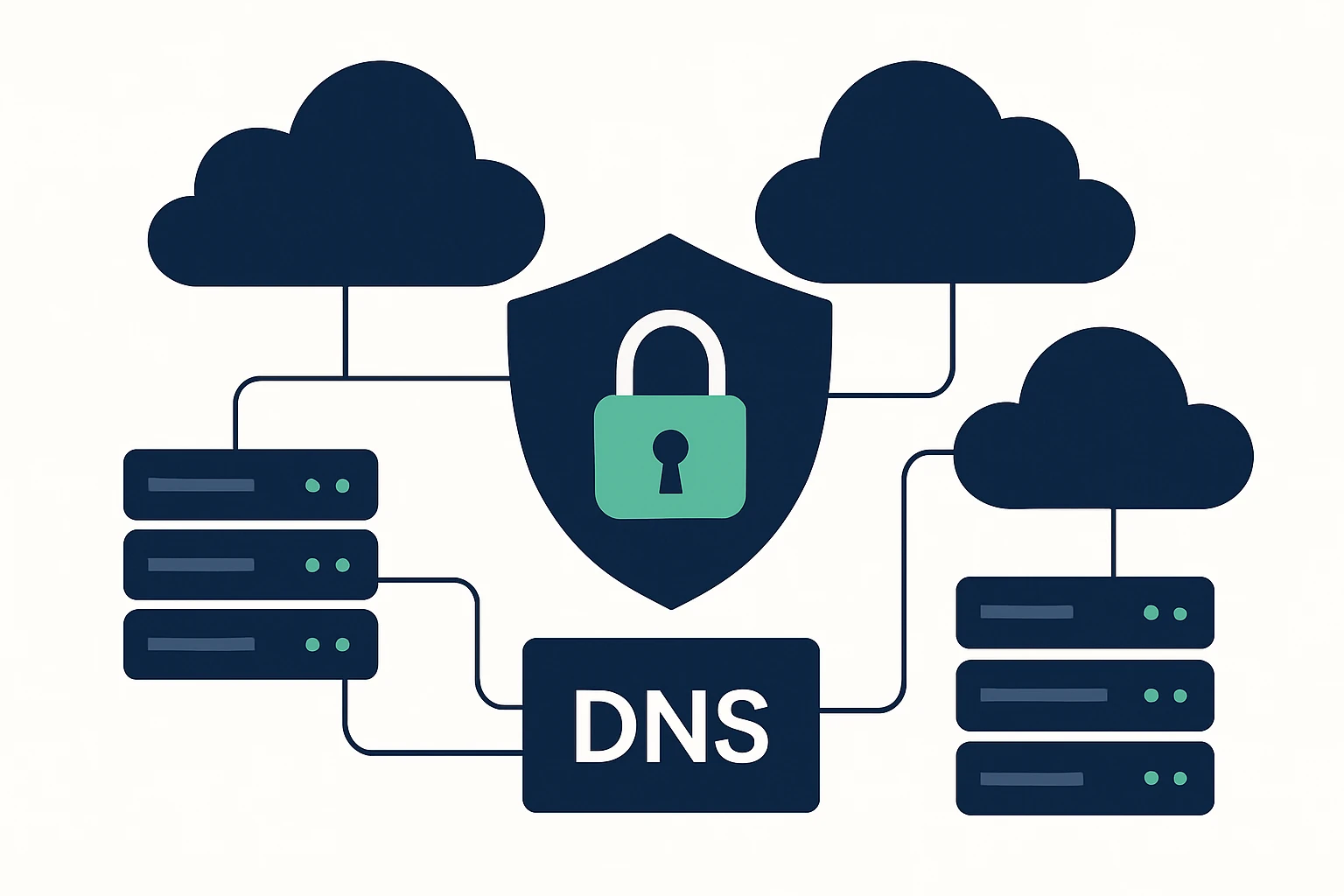
In practice, organizations implement a control plane that provisions DNS records and signs zones consistently, then route traffic to the most appropriate provider’s DNS infrastructure, depending on the application, data locality, or compliance considerations. This approach aligns with the broader enterprise goal of cloud-native architecture: leverage platform-native capabilities while preserving the integrity and availability of critical network services.
As part of a multi-cloud strategy, it is important to design for interoperability and governance. For example, a company might manage authoritative DNS in one cloud while delegating to a secondary provider for failover or regional performance needs, and use DNSSEC and anycast to preserve trust and resilience across environments.
Observability: Monitoring, Logging, and Compliance
Operational visibility is essential for DNS reliability and security. Three domains matter most: real-time health of DNS zones, visibility into DNS query activity, and evidence of compliance with governance standards. Effective monitoring and logging enable rapid detection of misconfigurations, DNS outages, and potential abuse.
Cloud-native DNS services provide integrated logging and auditing capabilities that capture administrative actions, data-plane DNS queries, and changes to DNS configurations. For example, Cloud DNS offers detailed logging and audit trails, with queries and administrative events recorded for later analysis. Cloud DNS monitoring.
In the AWS ecosystem, Route 53 supports DNS query logging, allowing operators to capture per-query data for security analytics and incident response. This capability can be essential for investigations and regulatory inquiries and is a critical component of a mature DNS monitoring program. Public DNS query logging in Route 53.
Beyond operational metrics, many enterprises pursue formal compliance programs such as SOC 2 or ISO 27001. While the specifics vary by auditor and industry, the governance discipline - risk assessment, access controls, change management, and monitoring - applies to DNS infrastructure as a critical control. Organizations typically map DNS-related controls to the Trust Services Criteria (security, availability, processing integrity, confidentiality, privacy) within their SOC 2 engagement. Note: consult your auditor for precise scope and alignment.
Limitations, Trade-offs, and Common Mistakes
No architecture is perfect, and DNS is no exception. Below are key limitations and pitfalls that often surface in enterprise deployments.
- Overly complex multi-cloud configurations without a unified policy can lead to inconsistent DNS records or drift across zones.
- DNSSEC misconfigurations - such as failing to publish DS records or not rotating keys - break the trust chain and cause validation failures.
- Relying on a single provider or a single anycast location can create single points of failure, undermining resilience during regional outages or network disruptions.
- Insufficient observability, including gaps in DNS query logs or lack of end-to-end monitoring, hinders incident response and compliance reporting.
- Inadequate coordination between network, security, and platform teams can lead to delayed responses to DNS changes that affect application reachability.
For reference, industry guidance emphasizes that anycast and DNSSEC are powerful only when paired with strong governance, automation, and monitoring. These elements together enable a scalable and auditable enterprise DNS program.
DNS Resilience Framework: A Structured Approach
Below is a compact, repeatable framework you can apply to design and operate a robust enterprise DNS stack. Use it as a menu of practices to tailor to your organization’s risk tolerance and regulatory requirements.
- Assess and inventory: catalog all domains and zones, map dependencies, and define performance targets per region.
- Design for resilience: implement authoritative zones in multiple regions, with anycast addressing and cross-cloud redundancy.
- Secure by default: enable DNSSEC signing for critical domains, publish DS records, and maintain a control-plane for key material.
- Operational observability: deploy centralized logging, real-time health checks, and anomaly detection for DNS activity.
- Governance and testing: integrate DNS changes into change-management workflows, perform regular failover drills, and validate the end-to-end trust chain.
For readers who are portfolio-aware, alignment with domain lists such as those for .studio, .help, or other TLDs can be supported by a consistent DNS strategy that ensures that brand domains remain reachable and secure across all contexts. See how a portfolio approach can be combined with DNS best practices to deliver dependable access for global users.
Client Integration: A Real-World Perspective
Organizations often rely on a mix of in-house capabilities and specialist partners to operationalize enterprise DNS. A practical approach is to integrate a vendor-agnostic DNS security program with your portfolio-management workflow. The client landscape in this context typically includes:
- Centralized DNS policy and change management across cloud providers
- DNSSEC signing orchestration and registrar coordination to preserve chain of trust
- Portfolio-aware domain discovery, monitoring, and analytics linked to DNS health
As part of this integration, you can leverage a portfolio of domains managed by a domain services platform while implementing a unified DNS security strategy. For readers exploring domain portfolio resources, the following client links provide quick access to relevant offerings and pricing: webatla Studio domains and webatla pricing. You may also explore their TLD listings for broader portfolio context at webatla TLD catalog.
Limitations and Common Mistakes (A Quick Recap)
Key reminders as you build or mature your enterprise DNS program:
- DNSSEC requires disciplined key management and registrar coordination, neglecting DS publication or key rollover planning undermines trust.
- Anycast is powerful but adds network-operational complexity, plan for monitoring, failover, and incident response across sites.
- Observability is non-negotiable, without comprehensive DNS query logs and health metrics, you cannot quickly detect outages or investigate anomalies.
- Multi-cloud DNS should be governed by a single control plane to avoid drift and ensure consistent policy enforcement.
Conclusion: A Practical Path to Enterprise-Grade DNS
In an era where availability, security, and regulatory compliance converge on DNS, enterprises must design with a holistic view: authoritative DNS that is secure and auditable, DNSSEC that is properly managed and validated, and anycast-based resilience that spans clouds and regions. A multi-cloud, portfolio-aware approach - backed by strong observability and governance - provides the scalability and reliability modern enterprises demand. While every organization will tailor these ideas to its risk tolerance and operational realities, the core principles remain consistent: establish a solid DNS foundation, protect the trust chain, and continuously observe the health and integrity of your DNS infrastructure.
For teams seeking a concrete path, start with these steps: map your zones, enable DNSSEC for critical domains, deploy anycast across at least two cloud regions, and implement centralized DNS monitoring and logging to support both security operations and compliance audits. If you’re evaluating service vendors or portfolio strategies, remember that the best outcomes come from a cohesive, audited program rather than ad hoc, siloed efforts.
Further reading on DNS security and resilience can be found in authoritative provider documentation and IETF/IAB guidance on IP anycast and DNSSEC. For reference, see the AWS Route 53 DNSSEC deployment guidance, the Azure DNSSEC overview, and the Google Cloud DNS DNSSEC materials. Configuring DNSSEC in Route 53, Azure Public DNS DNSSEC overview, Google Cloud DNS DNSSEC overview, Anycast DNS overview.