Introduction: why enterprise DNS solutions demand more than uptime
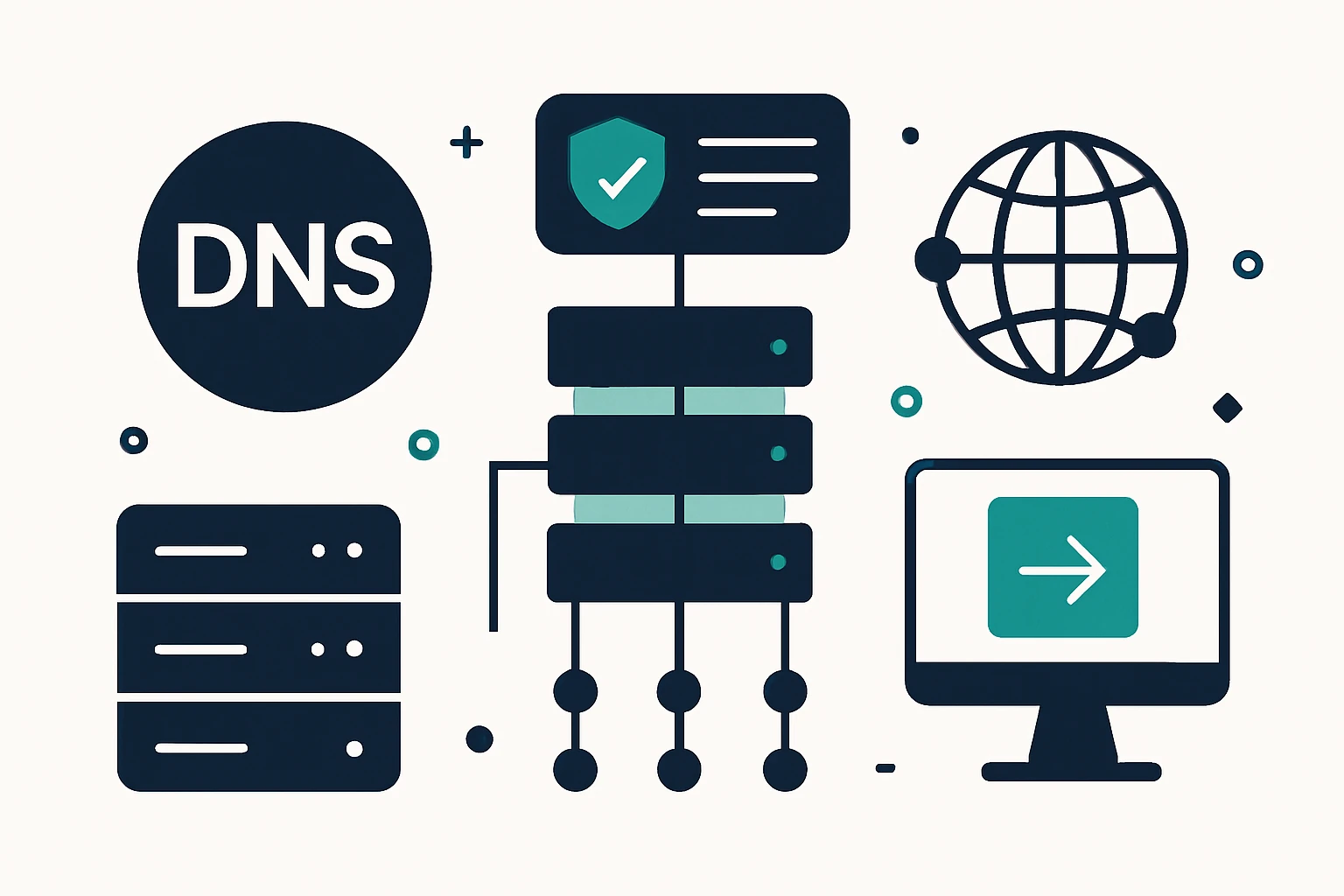
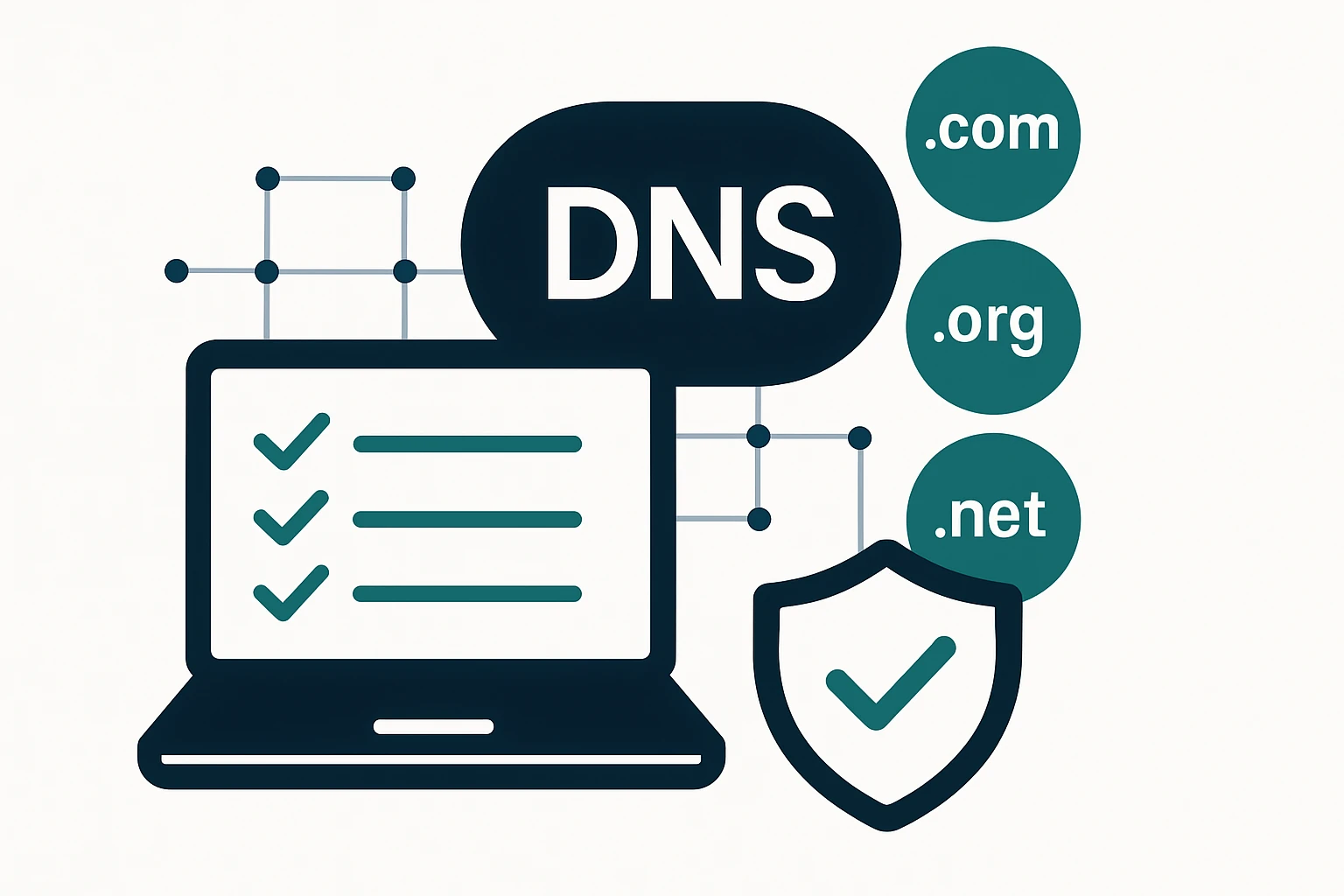
In large organizations, the DNS layer is more than a service for resolving names - it is a critical infrastructure component that underpins security, user experience, and regulatory compliance. An outage or a misconfigured zone can cascade into customer impact, delayed transactions, and missed SLAs. For enterprises, a holistic approach to DNS design - covering authoritative DNS, DNSSEC, anycast deployment, and cloud-native architecture - delivers both resilience and governance, not just availability. The challenge is to translate these concepts into a pragmatic blueprint that aligns with security controls, cloud adoption, and multi-provider strategies. This article outlines a practical architecture rooted in industry best practices and demonstrates how to operationalize enterprise-grade DNS without sacrificing performance or compliance. Primary keyword: enterprise dns solutions.
Evidence from leading cloud and security practitioners shows that resilient DNS requires deliberate design choices - ranging from signing zones (DNSSEC) to distributing queries across globally dispersed servers (Anycast) and integrating DNS with cloud-native workflows. For example, modern cloud DNS best practices emphasize low latency, high availability, and well-instrumented observability, these are not optional add-ons but core enablers of enterprise-grade DNS. See industry guidance from Google Cloud and AWS on DNS best practices and availability. (cloud.google.com)
To ground the discussion, consider how enterprise DNS solutions can be stitched together with existing security and compliance programs (SOC 2, ISO 27001) while maintaining operational agility in multi-cloud environments. An evidence-based approach combines architectural patterns with robust monitoring, secure key management, and disciplined change control. The following sections present a concrete blueprint, a practical framework you can adapt to your organization’s risk profile and regulatory requirements.
Core components of an enterprise DNS solutions stack
Authoritative DNS: secure setup and separation of duties
At the heart of every enterprise DNS solution is a robust, authoritative DNS service that serves as the source of truth for zone data. Best practices call for clear separation of duties between zone administration, operations, and security engineering. This reduces the blast radius of misconfigurations and supports tighter access controls around zone signing, zone transfers, and record management. When designed with multi-site replication and strict change-control policies, authoritative DNS can deliver consistent responses even under regional outages. Cloud-native DNS platforms further support automated recovery workflows and role-based access control, helping teams enforce least privilege during day-to-day management. Expert insight: large enterprises benefit from explicit separation between zone authors and operators to minimize human error in production namespaces. (cloud.google.com)
DNSSEC deployment: what to sign, and how to manage keys
DNSSEC is not merely a technical ornament, it provides cryptographic assurance that the data a resolver receives is exactly what the zone owner published. Across enterprise zones, signing the zone and protecting private keys - with proper cryptographic lifecycle management, hardware security modules (HSMs), and routine key rotation - significantly improves trust in responses. ICANN’s DNSSEC deployment guidance emphasizes resilience and proper key management as core controls in building a secure DNS ecosystem. Adopting DNSSEC at scale often involves policy-driven signing schedules, automated key rollover, and robust incident response for key compromise scenarios. Limitation to anticipate: key management complexity grows with the number of signed zones, and automation is essential to avoid human error. (dnssec-deployment.icann.org)
Anycast deployment: routing for resilience and performance
Anycast DNS architecture - distributing identical name server instances across multiple geographic locations - provides both resilience against localized outages and lower latency by steering queries to the nearest responsive PoP. Industry best practices highlight anycast as a foundational technique for DNS resiliency, with providers leveraging global footprints and routing to absorb DDoS pressure while preserving availability. AWS’s guidance on Route 53 demonstrates concrete patterns like shuffle sharding and anycast striping to preserve service continuity during large-scale incidents. Organizations should design their anycast deployments with consistent monitoring and inter-PoP synchronization to prevent split-brain scenarios during rapid failovers. Trade-off: while anycast improves availability, it requires careful operational discipline to ensure consistent policy enforcement across PoPs. (docs.aws.amazon.com)
Cloud DNS architecture: multi-cloud, hybrid, and modern workflows
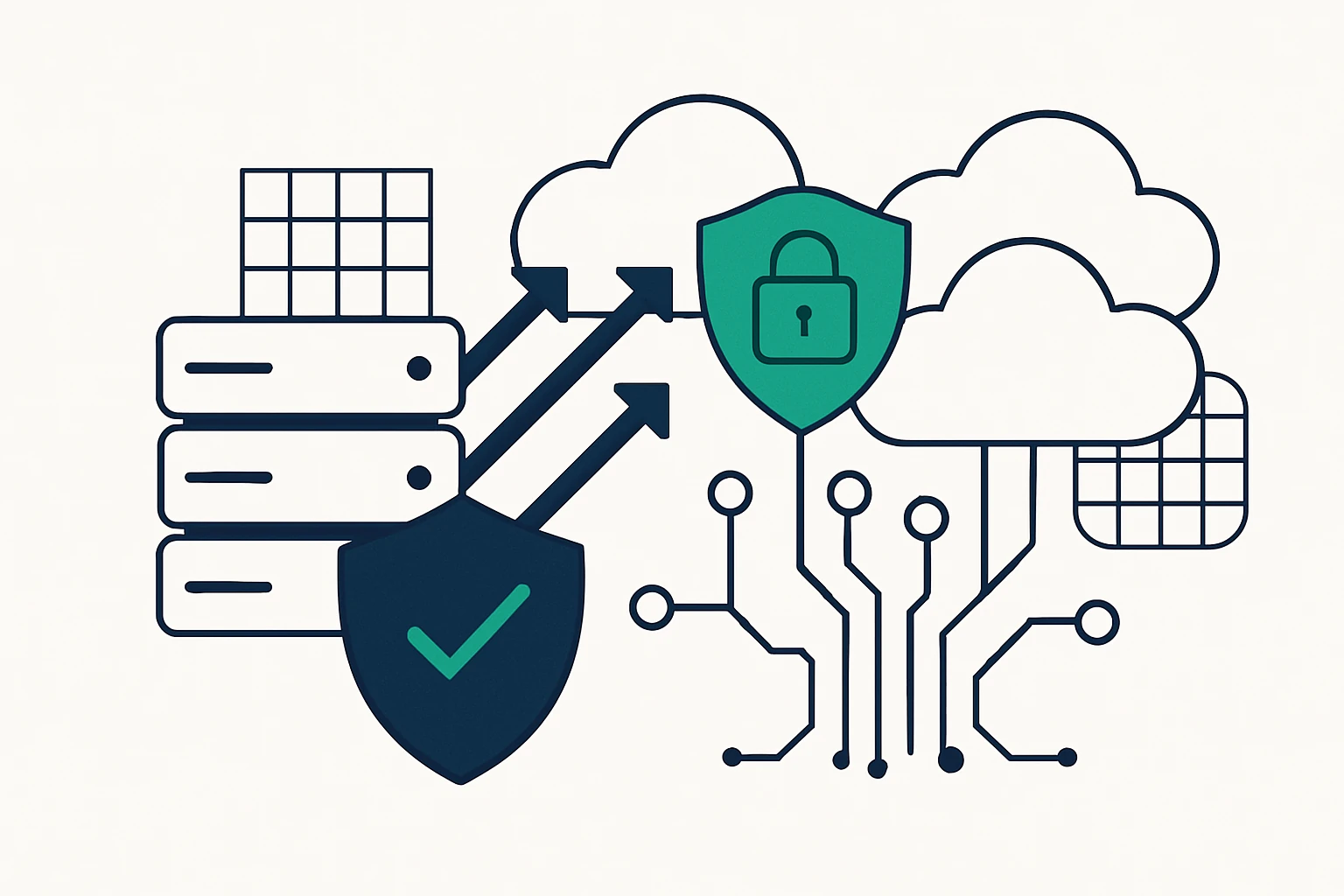
Cloud-native DNS architectures enable scalable, auto-healing resolution services that integrate with cloud security controls, identity providers, and telemetry pipelines. A multi-cloud DNS strategy reduces dependency on a single provider and supports region-specific data residency and compliance requirements. Google Cloud’s best practices emphasize configuring private zones for internal resource visibility, along with leveraging public zones for global resolution to balance access control and performance. Enterprises increasingly orchestrate DNS data as part of their broader cloud infrastructure (CI/CD, infrastructure as code, and policy-as-code) to ensure reproducibility and faster recovery.
In practice, successful cloud DNS architectures align with the organization’s deployment model - whether fully cloud-based, hybrid, or multi-cloud. The key is to enable consistent policy enforcement across all domains and to provide a uniform surface for observability and incident response. Note: cloud-native DNS should be evaluated not just for performance, but for operational guardrails that meet your security and privacy requirements. (cloud.google.com)
Operational excellence: monitoring, logging, and observability
DNS monitoring: metrics that matter
Operational visibility is essential for detecting anomalies, diagnosing misconfigurations, and validating performance goals. Modern DNS monitoring covers availability, latency, and zone integrity, as well as cross-provider health across multi-region deployments. Instrumentation should include synthetic tests, real-user monitoring where feasible, and alerting thresholds aligned to business impact. The Google Cloud DNS monitoring guidance illustrates the kind of metrics and instrumentation that scale with enterprise needs.
Adopting a consistent monitoring model across providers helps ensure that a regional failure or a cloud outage does not mask broader control gaps. Real-world pitfall: monitoring that only covers uptime, without transaction-level visibility, can miss subtler issues that affect user experience. (cloud.google.com)
DNS logging: scope, retention, and security
DNS logs are a rich source of security and reliability signals. Practical architectures balance the value of exhaustive logging with the realities of storage, privacy, and data protection obligations. Organizations should implement meaningful sampling and event-based logging (for example, tracking NXDOMAIN responses, unusual query patterns, or newly observed domains) to reduce noise while preserving actionable intelligence. When logs are stored in the cloud or in centralized SIEMs, encryption at rest and controlled access are essential to protect sensitive data.
From a operations perspective, logs should support incident response, threat hunting, and compliance reporting. The discipline of log lifecycle management - rotation, archival, and eventual deletion - helps meet retention policies and data minimization principles. Common mistake: logging every query can overwhelm storage and operators, focus on security-relevant events and performance anomalies. (cloud.google.com)
Observability and incident response
Observability extends beyond logs to include traces, metrics, and runbooks that codify how to respond to incidents. A mature DNS observability program integrates with broader security operations to correlate DNS activity with network telemetry, threat intelligence feeds, and application layer signals. The aim is to shorten mean time to detection and to standardize containment and recovery procedures across cloud and on-premises environments.
Automation and playbooks reduce reliance on single point experts and improve repeatability during outages or DDoS events. Industry guides emphasize this alignment between DNS operations and organizational incident response processes as a cornerstone of enterprise resilience. Note: ensure runbooks reflect multi-provider failover paths and include a fallback to a validated, offline recovery plan. (cloud.google.com)
Compliance and governance: aligning with SOC 2 and ISO 27001
enterprises increasingly seek controls that support SOC 2 and ISO 27001, recognizing that robust DNS controls contribute to the overall information security program. Compliance considerations span access control, change management, key management (for DNSSEC), and evidence-friendly monitoring. Aligning the DNS program with broader governance frameworks helps reduce duplicative effort and ensures traceability across policy, procedures, and testing. While no single control set covers all DNS specifics, a mature DNS program integrates risk assessments, vendor controls, and third-party validation as part of the ongoing compliance lifecycle.
As organizations pursue certification or attestation, mapping DNS-related controls to SOC 2 criteria and ISO 27001 Annex A controls helps identify gaps and prioritize remediation. The combination of DNSSEC, well-governed access, and comprehensive logging supports many of the evidence requirements that auditors look for in modern security programs. Limitation: governance frameworks differ in wording and scope, teams must tailor mappings to their control environment and audit scope. (dnssec-deployment.icann.org)
Structured approach: a practical DNS resilience framework
Below is a compact framework you can apply to design, implement, and operate an enterprise-grade DNS stack. It is deliberately concise to serve as a reference model for senior engineers and security leads, while remaining adaptable to different vendor ecosystems.
- Secure authoritative DNS with role-based access control, strict change management, and segmented zones to minimize blast radii.
- DNSSEC-enabled zones with automated key management, regular rollover, and secure key storage (prefer hardware security modules where feasible).
- Anycast deployment across multiple geographic PoPs with consistent policies and health checks, capable of absorbing attacks and regional failures.
- Cloud-native integration using public and private zones, IaC-driven configurations, and policy-as-code to ensure reproducibility and speed of recovery.
- Observability-driven operations with consolidated dashboards, anomaly detection, and runbooks spanning multi-provider environments.
- Compliance-by-design mapping to SOC 2 and ISO 27001 controls, with traceable evidence, secure logging, and audit-ready reporting.
The framework above helps teams translate architectural choices into measurable outcomes - reliable resolution, stronger security posture, and auditable governance. As the ecosystem evolves, you can incrementally adopt enhancements (e.g., more aggressive DNSSEC signing schedules or extended anycast footprints) without overhauling the entire stack.
Limitations and common mistakes to avoid
Even well-planned architectures encounter trade-offs and pitfalls. Here are a few to watch for when maturing an enterprise DNS program:
- Underestimating key management complexity: DNSSEC security hinges on disciplined key lifecycle management. In practice, many organizations struggle with key rollover automation and secure storage, plan for hardware-backed key material and automated rotation schedules. Expert note: automate lifecycle as much as possible to avoid manual errors during rotations.
- Over-reliance on a single provider: A pure single-provider approach risks regional outages or vendor-specific incidents. A layered approach that combines public and private zones and, where appropriate, multi-provider DNS helps maintain availability with guardrails and tested failover paths.
- Excessive logging without governance: Logging everything can strain storage and privacy compliance. Focus on security-relevant events (e.g., unusual query patterns, suspicious domains, NXDOMAIN bursts) and ensure data minimization and encryption at rest.
- Ignoring multi-cloud observability: Without unified visibility across providers, troubleshooting becomes onerous. Instrumentation should normalize metrics, logs, and traces across platforms to avoid silos.
These common mistakes are well documented in industry guidance and can undermine even the best-designed DNS stack if left unaddressed. Practical mitigation includes automation, policy-driven configurations, and cross-functional governance reviews that include security, networking, and compliance teams.
Putting it into practice: where to start
A pragmatic path to an enterprise-grade DNS program starts with an assessment of current capabilities and gaps. Consider the following steps as a blueprint for a staged rollout:
- Inventory and segmentation: map zones, authoritative servers, and control points, segment duties for authors, operators, and security personnel.
- Baseline monitoring and logging: implement core metrics (availability, latency, query volume) and secure log pipelines to a centralized repository with access controls.
- DNSSEC planning: identify candidate zones for signing, establish key management policies, and pilot automated rollover in a sandbox before production.
- Anycast and multi-region readiness: design PoP distribution, failover criteria, and health checks, ensure runbooks exist for regional outages.
- Compliance alignment: map DNS controls to SOC 2 and ISO 27001 criteria, gather artifacts during quarterly reviews and audits.
As you progress, integrate the DNS program with broader cloud and security governance efforts, rather than treating DNS as a standalone service. This harmonizes terminology, tooling, and reporting across the organization. For teams exploring domain inventory and multi-TLD coverage, see how enterprise-grade DNS planning can intersect with cataloging domains by TLDs and other facets of your digital asset management strategy. DNS Enterprises LTD page and List of domains by TLDs illustrate how domain catalogs can complement a resilient DNS strategy.
Conclusion: a resilient, compliant, cloud-native future for enterprise DNS
Enterprise DNS is a strategic capability - not a tactical service. By combining authoritative DNS with DNSSEC, Anycast, and cloud-native architectures, organizations can achieve low-latency responses, strong integrity guarantees, and robust business continuity even in the face of sophisticated threats. A disciplined approach to monitoring, logging, and governance closes the loop between operational excellence and regulatory assurance. As the ecosystem continues to evolve, the core principles remain clear: design for reliability, automate the security lifecycle, and align DNS controls with SOC 2 and ISO 27001 to build trust with customers, partners, and regulators. If you are building or maturing an enterprise-grade DNS program, you can anchor your journey in the framework outlined here and tailor it to your organization’s risk posture and cloud strategy.