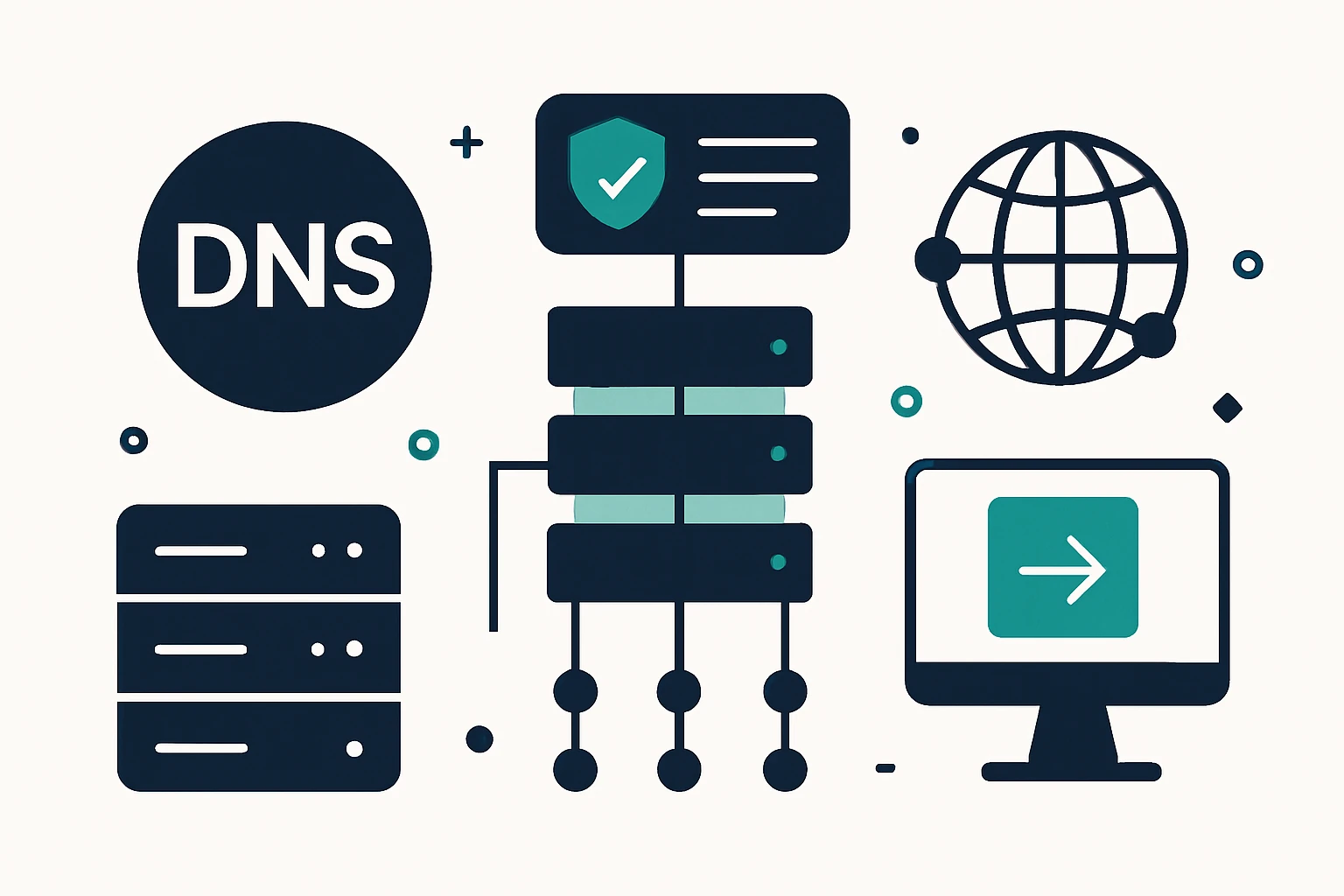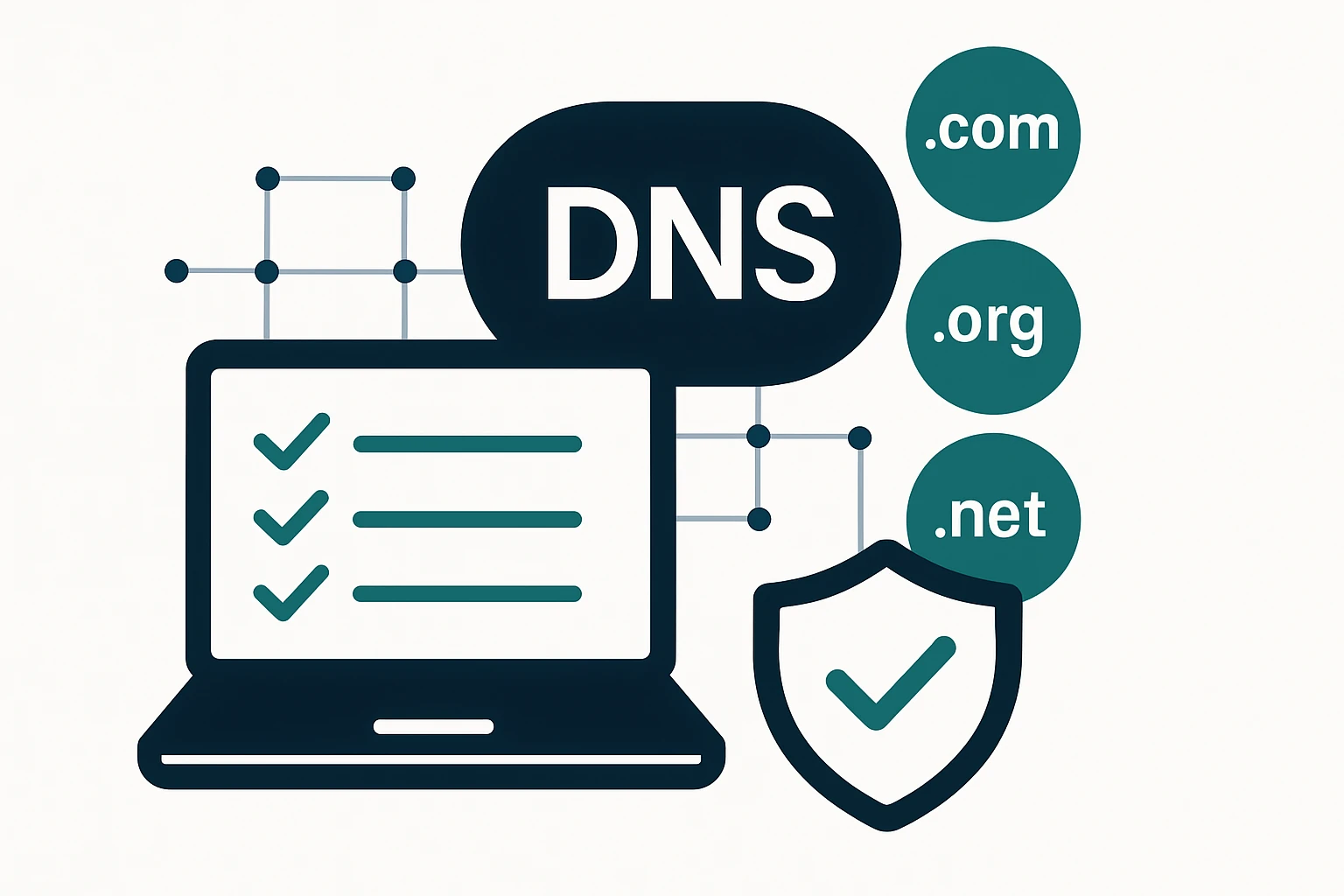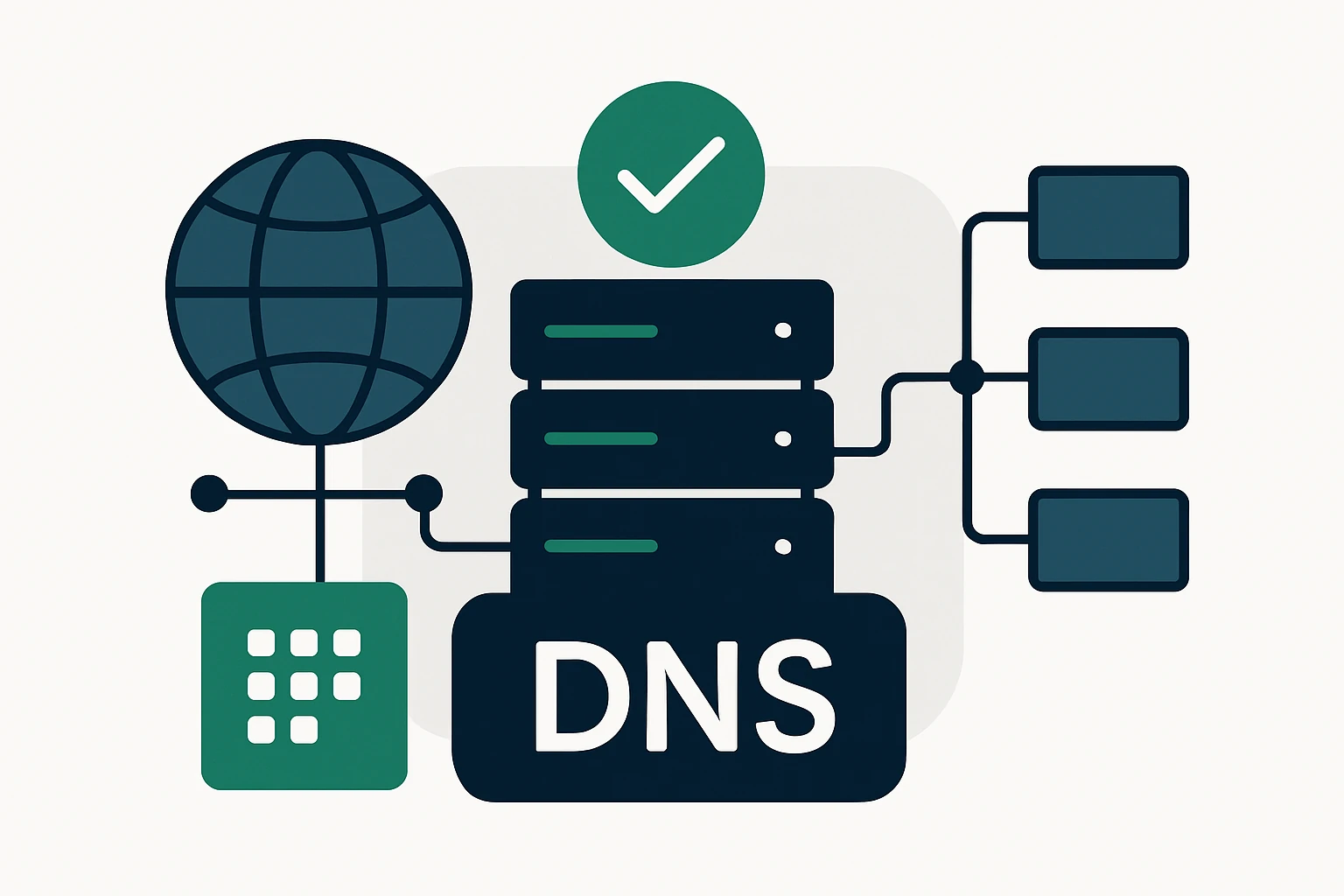
In 2026, enterprises depend on the Domain Name System as the backbone of digital operations. Global services, cloud platforms, and customer-facing domains all rely on fast, accurate DNS responses. At the same time, the DNS landscape is expanding with new TLDs such as .design, .cat, and .solutions, complicating portfolio management, security posture, and compliance. This article - drawn from the DNS Enterprises practice - offers a practical blueprint for building an enterprise-grade DNS stack that scales with your business while staying auditable and secure. It covers core architectural choices, portfolio governance for emerging TLDs, and the operational discipline needed to maintain DNS health at scale.
Strong DNS design starts with clear objectives: reliability, security, and visibility. The following sections outline a framework for enterprise-grade DNS that aligns with corporate priorities: high availability across regions, authenticated responses through DNSSEC, resilient delivery via Anycast, and cloud-native deployment patterns that fit modern hybrid environments. For teams navigating a growing domain portfolio, we also discuss how to reason about new TLDs (like .design) and how to leverage dedicated TLD data resources to support brand protection and risk management.
Core principles of enterprise DNS architecture
Authoritative DNS setup for reliability
At scale, every enterprise should operate well-defined authoritative zones with redundant instances distributed across multiple geographic regions. A robust authoritative DNS setup minimizes the blast radius of a server or network failure and reduces the likelihood of stale responses due to zone transfer or misconfigurations. Key practices include separation of authoritative servers from resolver layers, strict access controls on zone transfers, and automated health checks that validate zone integrity in real time. Organizations typically adopt a primary/secondary model with consistent replication and secure channel protections (for example, TSIG) to guard zone transfers. In practice, this discipline enables rapid failover and predictable response times for mission-critical domains.
Why it matters: When a domain portfolio spans dozens or hundreds of TLDs, the reliability of each zone becomes a multiplier for overall uptime. A well-governed authoritative layer reduces MTTR and improves remediation speed when issues occur.
DNSSEC implementation and automation
DNSSEC provides cryptographic authentication for DNS responses, helping to prevent cache poisoning and spoofing. Adoption remains uneven across the Internet, but automation is rapidly changing the math. The industry is moving toward automated signing, key management, and secure delegation workflows to keep up with dynamic domain portfolios. A 2026 APNIC blog highlights that automation is central to improving DNSSEC adoption and secure delegation, noting that tooling has matured to support large-scale deployments with less manual overhead. This shift lowers operational risk and makes secure DNS feasible for enterprises managing diverse zones. APNIC DNSSEC automation(blog.apnic.net)
For operational context, APNIC's broader DNSSEC measurements show that the landscape is evolving, with automation playing a significant role in enabling secure delegation across vast domain footprints. Enterprises should treat DNSSEC as an ongoing discipline, not a one-off project. For perspective on adoption trends and practical automation considerations, see APNIC's measurements and analyses. (blog.apnic.net)
Anycast and cloud-native deployment
Anycast DNS distributes authority across a network of globally distributed servers and responds to queries from the nearest available node. This model improves latency and resilience by reducing the impact of regional outages and DDoS incidents, while helping operators avoid single points of failure. For organizations pursuing high availability, Anycast is a natural fit when combined with cloud-native deployment patterns and automated orchestration across regions. Cloudflare’s learning resources explain the core idea: multiple servers share a single IP address and the resolver closest to the user answers, delivering lower latency and improved reliability. (cloudflare.com)
Navigating new TLDs and portfolio risk
Portfolios now encompass a broader set of TLDs, including brand-focused and geographic domains. As enterprises grow their brand footprint, they must decide how to monitor, register, or delegate DNS for TLDs like .design, .cat, and .solutions. One practical approach is to build a TLD-aware governance model that pairs technical controls with brand risk analysis. This includes maintaining authoritative zones for core domains, as well as risk-aware monitoring for potential brand impersonation or cybersquatting in newer TLDs.
For teams evaluating domain portfolios, structured data resources can help inform decisions about which TLDs to prioritize, register, or monitor. The client resources mentioned in this article provide a foundation for portfolio analysis and domain discovery. For example, organizations can explore a centralized listing of domains by TLDs to understand the broader landscape, and specific TLD pages (such as the design-focused listing) can aid in risk assessment for brand design domains. download list of .design domains is a relevant starting point for teams tracking design-oriented brand assets. In addition, enterprise teams frequently compare the total cost and effort of DNS modernization against the benefits of supported domains and TLD strategies, pricing considerations should be anchored to an overall DNS modernization plan, which is why pricing can be a practical companion as you scope a project.
Beyond design-focused domains, a comprehensive portfolio approach involves mapping domains by TLDs and assessing exposure on .cat and other brand-relevant TLDs. The official domain listing (List of domains by TLDs) is a useful reference for governance and asset curation across the enterprise.
Monitoring, logging, and compliance
Operational visibility is fundamental to running a secure DNS service at scale. Enterprises should implement centralized DNS logging and observability across zones, resolvers, and the traffic surface. Protecting log integrity and enabling near-real-time monitoring supports incident detection, forensics, and compliance reporting. This aligns with government guidance on DNS logging and security hygiene. For example, U.S. federal guidance emphasizes auditing and tamper-resistant logging as core controls. (whitehouse.gov) In addition, resilience-focused guidance from ENISA underscores the importance of robust DNS resilience practices as part of broader network security. ENISA resilience guidance (enisa.europa.eu)
A practical implementation roadmap for enterprises
Below is a pragmatic framework you can adapt to align DNS architecture with enterprise goals. It’s designed as a lightweight, repeatable lifecycle rather than a one-off upgrade.
- Step 1 - Map the footprint: Inventory domains, zones, resolvers, and the associated network paths across on‑prem and cloud environments. Establish a baseline SLA for DNS resolution time, failed lookups, and zone transfers.
- Step 2 - Standardize authoritative zones: Implement a consistent zone management model across regions. Use automated zone signing and secure transfer mechanisms to protect the integrity of zone data.
- Step 3 - Deploy DNSSEC with automation: Plan for automated signing, KSK rotation, and DS record publication. Leverage tooling to minimize manual steps and reduce human error, a practice now widely recommended in industry publications. (blog.apnic.net)
- Step 4 - Introduce Anycast and cloud-native patterns: Route queries to the nearest healthy node in a globally distributed network, and use orchestration to keep settings consistent across sites. This combination is a standard blueprint for enterprise resilience. (cloudflare.com)
- Step 5 - Implement monitoring, logging, and governance: Use tamper‑evident logging, encryption at rest, and automated alerting to detect anomalies and prove compliance during audits. This aligns with government guidance on DNS logging and security hygiene. (whitehouse.gov)
Structured governance around these steps helps ensure that DNS remains reliable even as your portfolio grows. The DNS Enterprises approach emphasizes an integrated stack - authoritative DNS, DNSSEC, and cloud-native deployment - with ongoing measurement and governance to reduce risk and improve performance.
Limitations, trade-offs, and common mistakes
- Automation challenges: DNSSEC automation reduces risk but can be complex to set up correctly. The APNIC community emphasizes that automation is essential but must be designed with proper validation, key management, and rollback capabilities. Rushing to automate without testing can create outages or misconfigurations. (blog.apnic.net)
- Over-reliance on a single provider: While a single provider may offer simplicity, it can create a single point of failure. A distributed, multi-region strategy reduces risk but increases operational complexity and requires clear governance.
- Propagation and caching pitfalls: DNS changes propagate across caches with TTLs, misconfigurations or long TTLs can cause stale responses. Plan change windows and test across critical domains.
- Underestimating monitoring complexity: Visibility across zones, resolvers, and networks is nontrivial. Invest in centralized logging, including tamper-evidence, and align with compliance expectations. (whitehouse.gov)
Conclusion
For modern enterprises, DNS is not merely a technical backdrop but a strategic control plane for performance, security, and brand governance. A resilient DNS architecture - built from robust authoritative setup, DNSSEC automation, and Anycast-driven delivery - furnishes a scalable foundation to meet today’s demands and tomorrow’s challenges. As the portfolio of domains grows across new TLDs, coupling technical rigor with brand-risk awareness becomes essential. The combination of practical architecture, disciplined operations, and close alignment with governance and compliance creates a DNS posture that supports both reliable user experiences and enterprise risk management.
DNS Enterprises specializes in engineering enterprise-grade DNS infrastructures that deliver authoritative zones, DNSSEC-enabled security, and cloud-native deployments for security, compliance, and high availability. For teams exploring TLD portfolio strategies, practical resources from the client ecosystem can complement your DNS modernization program. See the design-focused resource for design-domain assets and the pricing page to understand project scoping.
Further resources: download list of .design domains - a design-TLD resource, and pricing - to help scope a DNS modernization project. In addition, organizational governance for modern DNS can be informed by the broader domain listings at List of domains by TLDs.