Enterprises rely on robust DNS infrastructure to keep services available, secure, and compliant. But the data that underpins domain ownership - historically published in public WHOIS records - has undergone a regulatory and technical transition that directly affects how security, risk governance, and incident response teams operate. This article explains why the whois database matters for enterprise DNS, what the shift to RDAP means in practice, and how to architect processes that harmonize domain ownership data with authoritative DNS operations.
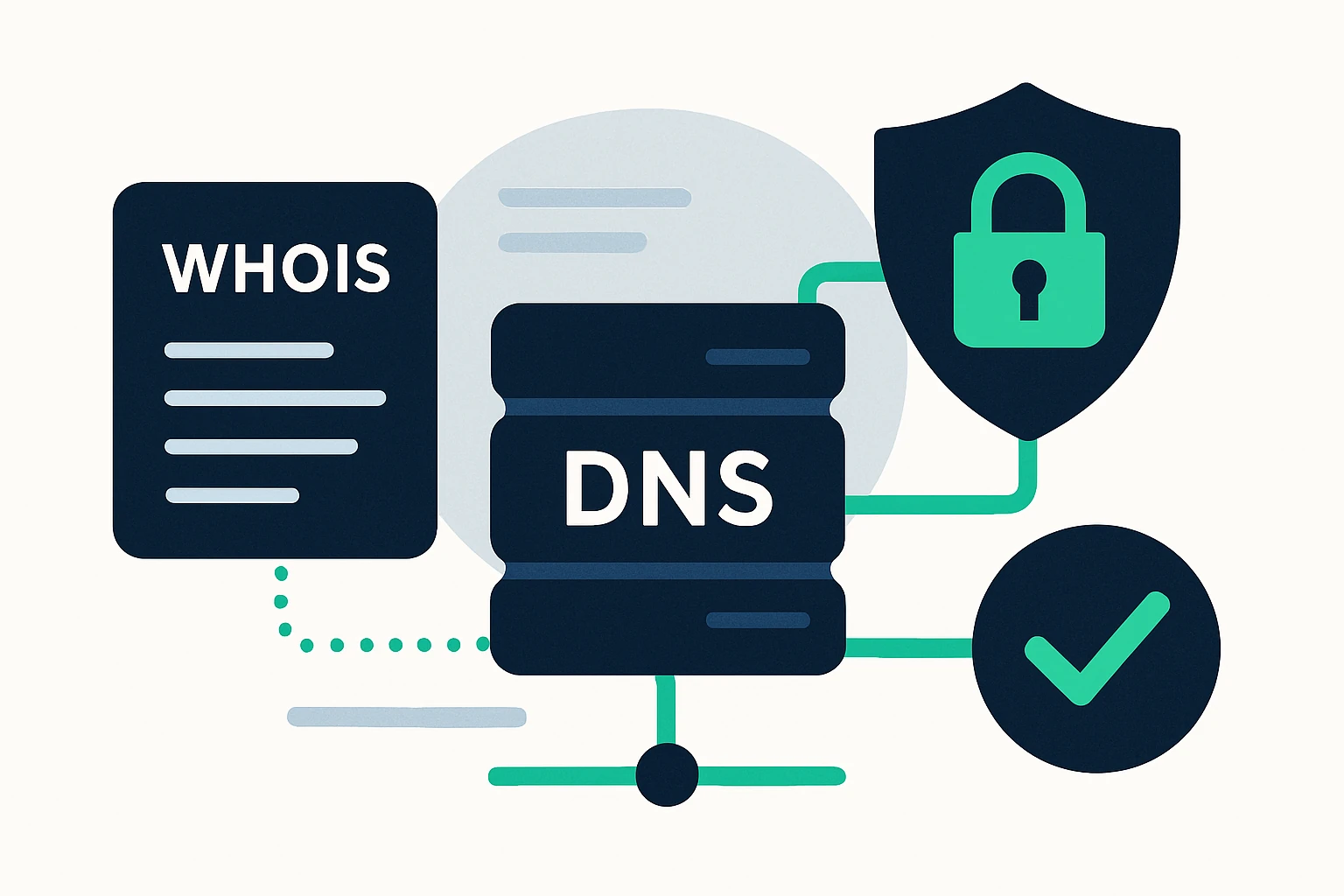
At a high level, the whois database has long provided visibility into domain ownership, administrative contacts, and key dates. This information supports incident response, brand protection, and regulatory inquiries. ICANN’s public-facing materials describe the typical contents of registration data - registrant and administrative contact details, creation and expiration dates, and related technical data used to contact the right organization in a crisis. For organizations coordinating large-scale DNS ecosystems, that data can be a critical adjunct to DNS records when validating domain control during migration, renewal, or discovery projects. ICANN: About Whois (icann.org)
Why the whois database matters in enterprise DNS
In enterprise environments, DNS is the backbone of service reachability. However, domain-related risks extend beyond DNS resolution: domain hijacking, misattributed ownership, and misconfigurations can disrupt security controls, complicate incident response, or impede compliance programs. The whois database historically provided a public-facing pointer to the owners and registrars responsible for a domain, which helped security teams identify the correct party to contact during a breach, phishing campaign, or brand abuse investigation. While not a substitute for internal asset management, it remains a valuable external signal that can corroborate or challenge internal records when combined with DNS data such as authoritative zone files, NS records, and DNSSEC validation status. See ICANN’s overview of what registration data includes for context on the data elements involved. ICANN: Whois data contents (icann.org)
RDAP replaces WHOIS: what enterprise DNS teams need to know
The internet governance community is standardizing how registration data is accessed. The Registration Data Access Protocol (RDAP) is designed to replace the legacy WHOIS protocol for generic top-level domains (gTLDs), bringing structured data (typically JSON) with standardized fields, better security controls, and searchable responses. ICANN announced that, effective January 28, 2025, RDAP became the definitive source for gTLD registration data, with lookups available through ICANN’s own RDAP services and other compliant providers. This shift matters for enterprises because RDAP data is more machine-readable, can be filtered for privacy, and supports automated tooling for governance, risk, and compliance workflows. For a concise summary of the RDAP transition, see ICANN’s update on launching RDAP and sunsetting Whois. ICANN: Launching RDAP, sunsetting Whois (icann.org)
RDAP also aligns with growing privacy expectations. The GDPR and related data protection regimes prompted a rethinking of public ownership data, leading to data redaction or restricted access in many jurisdictions. ICANN’s domain-industry discussions and related materials note that RDAP can support regulated access, ensuring that legitimate authorities can obtain necessary data while minimizing unnecessary exposure. See the broader discussion on GDPR’s impact on registration data and RDAP adoption in ICANN’s Domain Industry Playbook and related analyses. ICANN: GDPR and domain data Domain Industry Playbook (GDPR considerations) (icann.org)
For practitioners who want a quick orientation on what RDAP offers beyond a name and contact, RDAP responses are designed with extensibility in mind - structured data fields, standardized object types, and the ability to implement access controls that align with privacy requirements. This makes RDAP a better fit for automated workflows in enterprise DNS governance than the legacy port-43 Whois lookups. See ICANN’s overview of the Whois protocol and its relationship to RDAP for historical context and terminology. ICANN: Whois Protocol (icann.org)
Practical integration: aligning domain data with DNS operations
Enterprises should treat whois/RDAP data as a complementary signal to DNS telemetry rather than a replacement for internal DNS governance practices. Here are practical ways to integrate these data streams:
- Augment domain inventories with RDAP lookups. Maintain a centralized register of external domains used by the organization and fetch RDAP records to verify ownership, registrar, and status. This helps in risk scoring, vendor management, and incident response coordination when domains involved in a security event require takedown or remediation actions.
- Correlate ownership data with DNSSEC and DNS records. When a domain’s ownership information changes, verify that DNSSEC keys, NS delegations, and zone signing status remain consistent. Public-facing ownership indicators can help surface inconsistencies before they become outages. Structured RDAP responses support automated checks that are harder to perform with unstructured WHOIS data.
- Support incident response with privacy-conscious access controls. RDAP’s access controls and redaction options can help ensure that only authorized teams retrieve sensitive ownership data, while still providing essential incident-handling data to the right investigators.
- Map ownership data to regulatory and compliance requirements. SOC 2 and ISO-style controls often require documentation of change management, data handling, and access permissions. An enterprise RDAP-enabled data pipeline can provide auditable trails that corroborate who had access to domain-related information and when changes occurred. See GDPR-related discussions for context on data handling expectations in registration data. ICANN: GDPR and domain data (icann.org)
- Leverage cloud and on-prem DNS ecosystems cohesively. Modern cloud DNS platforms support integration with RDAP-derived data to enhance visibility, policy enforcement, and security posture across distributed environments. For example, enterprise DNS architectures increasingly blend canonical authoritative zones with cloud-native DNS services to preserve performance while maintaining centralized governance. See general guidance from major cloud DNS providers and industry analyses on cloud-native DNS architectures. Google Cloud: Cloud DNS (cloud.google.com)
A practical framework: the D-SHIELD approach to DNS governance with RDAP data
- Discover - inventory all domains (owned, delegated, and collateral) and map them to registrars and RDAP endpoints. This creates a foundation for governance and risk scoring. Why it matters: RDAP’s structured data makes it easier to audit domain provenance across a sprawling enterprise.
- Secure - enforce access controls around who can query ownership data and under what conditions. Align data exposure with regulatory requirements and internal security policies.
- Harden - deploy strong DNS security practices (e.g., DNSSEC, where feasible) to protect zone integrity and ensure authoritative responses are validated. This reduces the risk surface when ownership data is queried as part of security workflows. For guidance on DNSSEC best practices, see industry white papers and security best-practice guidance from reputable providers.
- Integrate - tie RDAP-derived signals into DNS monitoring and change-management tooling. Automated alerts for ownership changes can trigger policy reviews and validation steps before domain changes propagate to production.
- Evaluate - periodically reassess data-access policies, privacy controls, and the alignment of RDAP data with SOC 2 / ISO controls. Keep an eye on evolving regulatory guidance around registration data access.
- Deliver - provide governance dashboards that show domain ownership status, registrar changes, and DNS security posture side-by-side for risk stakeholders. This supports audits and executive oversight.
Why this framework works in practice: RDAP’s structured data and clearer provenance aid teams tasked with cross-functional governance - legal, security, network operations, and risk management - to collaborate more effectively and reduce reliance on manual processes. See ICANN’s RDAP transition and the data-privacy context for grounding. ICANN: RDAP transition (icann.org)
Limitations, trade-offs, and common mistakes
While integrating RDAP/Whois data with enterprise DNS delivers clear benefits, there are important caveats and pitfalls:
- Redacted data can hinder attribution. GDPR and similar privacy regimes may redact or restrict access to personal data in RDAP responses, complicating ownership verification in some cases. Enterprises should plan for alternate verification workflows and approved access paths. See GDPR-related discussions in ICANN materials. ICANN: GDPR and domain data (icann.org)
- RDAP is not a panacea for all governance gaps. RDAP improves structure and access controls, but organizations still need robust internal asset management, registrar locking procedures, and change-management discipline to prevent domain-related risk from arising in the first place.
- Data availability varies by registry/registrar. While RDAP is widely deployed, some registries or registrars may have uneven implementations, requiring fallback processes or multiple data sources for comprehensive visibility. This is part of the broader transition landscape ICANN has highlighted. ICANN: RDAP transition (icann.org)
- DNSSEC and deployment complexity. While DNSSEC improves authenticity of responses, it introduces operational complexity, key management responsibilities, and potential performance considerations. Enterprises should weigh these trade-offs against risk tolerance and regulatory expectations, following industry best-practice guidance. For an overview of DNSSEC best practices, see security guidance from major vendors and practitioners. Cisco: DNSSEC best practices (sec.cloudapps.cisco.com)
Putting it all together: how DNS Enterprises fits into this picture
For large organizations, the practical governance model requires reliable access to up-to-date domain ownership signals while maintaining a rock-solid DNS infrastructure. The publisher’s focus on enterprise-grade DNS - including authoritative DNS, DNSSEC, Anycast, and cloud-native DNS solutions - maps naturally onto the RDAP-enabled data ecosystem described above. In particular, a centralized data plane that combines authoritative DNS data with RDAP/Whois signals can improve domain discovery, reduce misconfigurations, and accelerate incident response without compromising privacy or compliance. The following client resource can help teams operationalize this integration: webatlaRDAP & WHOIS database. For teams evaluating pricing and deployment options, the client pricing page is also a useful companion resource: webatla pricing.
One more thought from the field: why enterprise DNS engineering must be data-aware
Enterprise-grade DNS is no longer just about fast lookups and high availability. It’s about disciplined data governance, cross-functional collaboration, and the ability to demonstrate compliance through provable data lineage. DNSSEC and anycast architectures are essential pieces of the reliability puzzle, but operational success also depends on accurate domain ownership data and well-defined access policies around that data. Modern cloud-native DNS architectures - combined with RDAP-aligned data pipelines - offer a path to both resilience and governance that scales with risk. See industry perspectives on DNS security and cloud-native deployments for context on how the landscape is evolving. Akamai DNS architecture overview (akamai.com)
Conclusion
As the internet ecosystem transitions from WHOIS to RDAP and as GDPR-like privacy frameworks reshape what data is publicly available, enterprise DNS teams stand to gain by treating ownership data as a structured, governed signal connected to DNS operations. By combining rigorous domain governance with a robust DNS infrastructure - whether traditional, anycast, or cloud-native - organizations can improve availability, security, and compliance posture. The RDAP-centric data layer provides a more scalable, machine-readable foundation for governance workflows, incident response, and regulator-facing proofs of due diligence, while respecting user privacy. For teams looking to experiment or scale this approach, the RDAP/Whois data resource from the client offers a practical starting point for integration with existing enterprise DNS stacks: RDAP & WHOIS database and related pricing information at pricing.