Introduction: The reality of enterprise DNS governance
For large organizations, the DNS backbone is more than a routing mechanism, it is a strategic control plane for security, compliance, and uptime. Enterprise DNS solutions must not only answer queries quickly but also reflect governance policies, detect anomalies, and support ongoing audit requirements. A key, often overlooked, input to this equation is the quality and provenance of domain lists used for monitoring, blocking, or branding protection. Poorly sourced lists lead to blind spots, false positives, and operational toil that undermines both risk management and user experience.
One practical way to strengthen DNS governance is by curating domain lists from trusted data sources, validating them before they are pushed into the resolver or firewall policy, and continuously refreshing them in a controlled, auditable manner. This approach aligns with broader DNS infrastructure engineering goals - secure authoritative DNS setup, robust DNSSEC implementation, and scalable cloud DNS architecture - so that policy decisions are enforced consistently across on-prem and cloud environments. For context, the DNS standards and best practices around DNSSEC provide a formal foundation for secure zone data, while protective DNS guidance emphasizes the role of threat intelligence in reducing exposure.
In this guide, you’ll learn how to frame the problem, validate sources, and operationalize domain lists in a way that respects privacy, licensing, and compliance requirements. We’ll also show how to integrate these inputs with practical DNS engineering patterns, including anycast deployment and cloud-native DNS services. References to established standards and guidelines are included to help you align with industry best practices.
Section 1: Why domain lists matter for enterprise DNS governance
What domain lists can (and cannot) do for security and governance
Domain lists are a form of threat intelligence and governance input. When used responsibly, they help identify exposure (domains registered in your brand’s name by third parties), surface lookalike domains that could be used in typosquatting, and support threat-blocking policies at network egress. But lists are not a silver bullet. Public lists vary in accuracy, update cadence, and licensing, and unchecked use can lead to legitimate domains being blocked or, conversely, malicious domains slipping through. This tension between coverage and accuracy is a central trade-off in DNS security services and in dns infrastructure engineering as a discipline.
Two core practices reduce risk: first, validate lists against authoritative sources and registrant data, second, implement a governance workflow that requires change control, impact analysis, and rollback plans before applying lists to production DNS policies. These concepts map cleanly to the broader goal of dns monitoring and logging as a feedback mechanism for policy effectiveness. For reference, the core DNSSEC standards underpin the integrity of zone data, while best-practice guidance from national security bodies emphasizes careful handling of threat intelligence and protective DNS deployments. See RFCs describing DNSSEC foundational concepts and ICANN’s DNSSEC overview for context, and note the ongoing emphasis on validation and security in the wider ecosystem.
Key takeaway: domain lists are most effective when treated as one tool among several in a layered DNS security program, not as a single determinant of policy.
Section 2: Sourcing options - public lists, threat feeds, and data provenance
Public domain lists: opportunities and caveats
Public domain lists - such as those cataloged by various registries or research projects - can be a valuable starting point for coverage. For example, lists annotated by top-level domain (TLD) operators and registries may be used to surface newly registered domains or to track trends by geography or technology. However, relying on any single feed without verification risks false positives and license or privacy concerns. A defensible approach combines public data with provenance checks and a documented licensing model that supports dns compliance (SOC 2, ISO 27001, etc.).
Operational teams often start with a few representative TLD lists to illustrate the workflow before expanding to broader feeds. The goal is to create a defensible data intake process that includes host validation, duplicate removal, and timestamped updates. For practical data handling, consider how these lists align with your cloud dns architecture and how they feed into authoritative dns setup across hybrid environments.
Popular explicit examples (and how to use them responsibly)
Among the keywords commonly encountered in enterprise data projects are phrases like download list of .info domains, download list of .nl domains, and download list of .br domains. These references point to public or semi-public aggregates that can augment threat intelligence or brand monitoring programs. Use these inputs as part of a broader policy library, not as the sole determinant of access decisions. Always validate the data against registrant information and verify licensing terms before integrating into production policies. When used properly, domain lists can help detect exposure and support more granular, risk-based blocking policies without harming legitimate traffic.
As you evaluate sources, keep a running inventory of data quality attributes: freshness, coverage, accuracy, licensing, and privacy considerations. You can further enhance reliability by cross-referencing with more authoritative sources and by incorporating domain reputation signals from protective DNS services. This is consistent with best-practice guidance that emphasizes threat intelligence feeds while cautioning against relying solely on any single feed. For enterprise-grade deployment, you’ll want to align these inputs with your dns security services and monitoring pipelines, ensuring that changes are auditable and reversible.
Data provenance: validating the source of truth
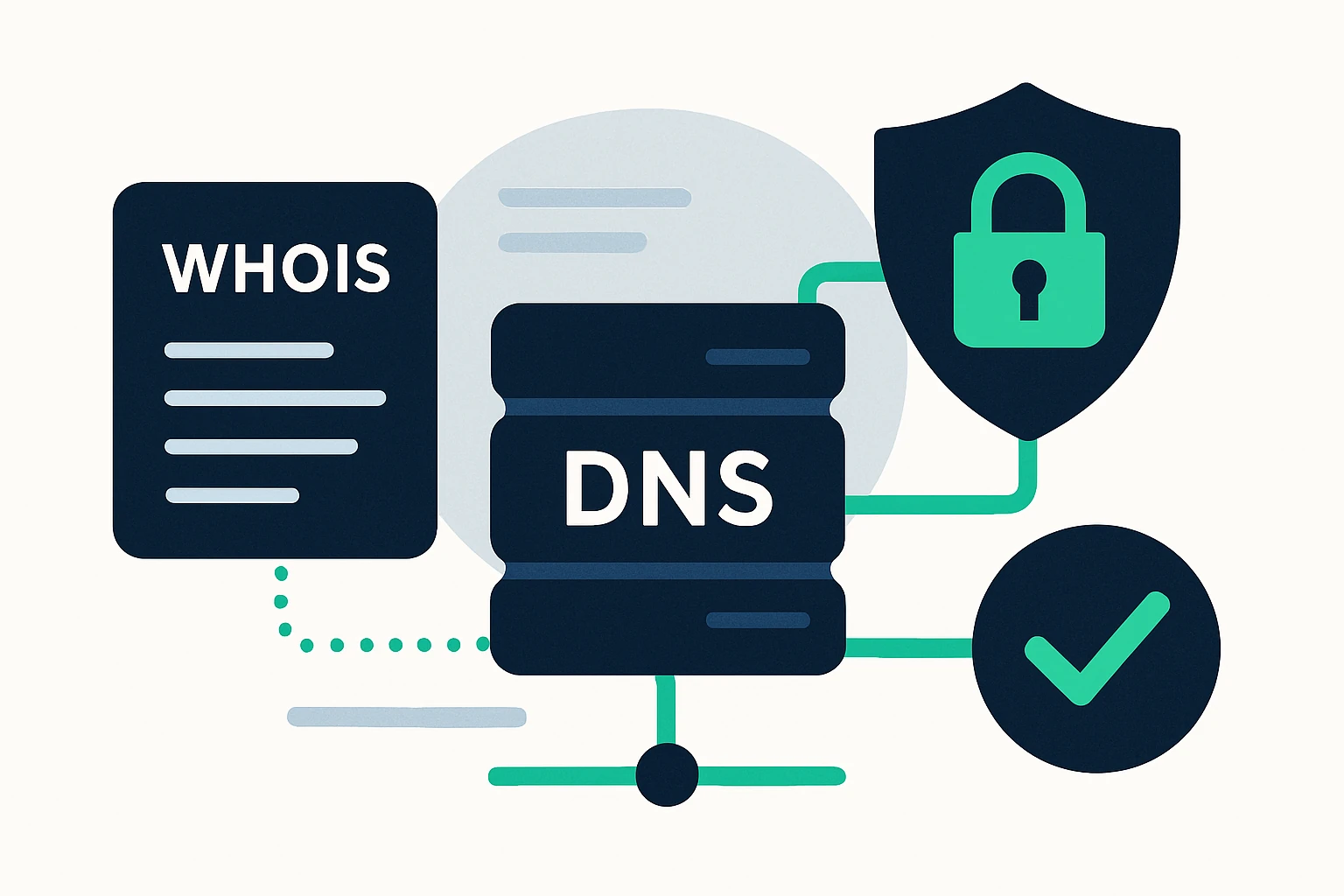
Data provenance matters as much as data quality. In practice, provenance means knowing where a domain list came from, how it was collected, when it was last updated, and under what license it can be used. A transparent provenance chain supports compliance with governance standards and simplifies incident response. A reliable data stack often integrates with RDAP/WHOIS databases to verify registrant information and to flag anomalies (for example, domains registered under a brand-name alias without authorization). See how organizations can leverage domain data responsibly before pushing lists into production. RDAP & WHOIS Database can be a useful reference point for validating registrant data in large-scale DNS operations.
Foundational standards and guidelines provide a framework for these practices. DNSSEC, defined in its core RFCs, establishes the trust model for signed zone data, while global guidance emphasizes how to validate DNS responses and manage data provenance as part of a secure DNS program. See RFC 4033 and its companions for a precise definition of the DNSSEC model, and consult ICANN’s DNSSEC overview for deployment considerations. RFC 4033 • DNSSEC overview.
Section 3: Integrating domain lists into the DNS engineering stack
Turning lists into value requires a disciplined integration plan that aligns with enterprise DNS practices. The integration should be framed around three pillars: secure authoritative DNS setup, resilient cloud DNS architecture, and robust dns monitoring and logging. Below is a practical approach that keeps governance, security, and performance in balance.
1) Data intake and normalization
Implement a repeatable ingestion pipeline that normalizes domain entries (case folding, punycode normalization, and canonicalization of trailing dots). Include metadata fields such as source, license, update frequency, and a unique identifier per domain entry. Normalize against registrant data when possible to minimize false positives and to enable precise incident response.
2) Verification and staging
Before you apply any list in production, verify a representative sample in a staging environment. Validate that the domains resolve as expected, check for legitimate services that could be disrupted, and confirm licensing terms. The staged approach is essential to avoid inadvertent outages caused by overly aggressive blocking policies. If you use a threat-feeds approach, implement a “watchlist” that can be escalated to a blocking rule only after human review or automated risk scoring.
3) Policy integration with DNS services
Translate verified domain entries into concrete DNS policy actions. In a hybrid environment, you may enforce rules in multiple layers: recursive resolvers, firewall gateways, and protective DNS services. For example, enterprises often rely on managed DNS services, private resolvers, and cloud DNS platforms to enforce consistent rules across on-prem and cloud. A well-designed policy layer supports dns compliance with SOC 2/ISO controls, and ensures that changes are versioned and auditable. See how enterprise-grade DNS data products can complement your existing investment in dns security services and dns monitoring.
4) Data provenance and auditing
Maintain an auditable trail of all ingested domain data, updates, and policy changes. Logging and event correlation are essential for incident investigations and for satisfying governance audits. Tie your DNS data pipelines to your SIEM or observability stack so you can trace policy decisions to specific data sources and licensing terms. This is a core capability of modern dns infrastructure engineering and aligns with best practices highlighted in protective DNS guidance from national security bodies.
Section 4: The structured framework for evaluating domain-list sources
To avoid ad-hoc decisions, adopt a simple, repeatable framework for evaluating each domain-list source. The following structured block balances data quality, governance, and operational risk.
- Source type: Public list, threat feed, registry export, or proprietary data product. Consider how the source fits into your overall policy library and whether licensing is compatible with your organization’s governance posture.
- Data quality and recency: How fresh is the data? What is the update cadence? Are there known false positives or common misclassifications? How often are entries re-validated?
- Licensing and privacy: Is there a clear license? Are there restrictions on redistribution or commercial use? Are there privacy concerns when mapping registrant data to domain entries?
- Provenance and traceability: Can you trace entries back to a source with an auditable lineage and evidence of verification?
- Impact on DNS policy: What is the acceptable risk profile for blocking or monitoring the listed domains? What is the rollback path if a domain is incorrectly blocked?
Applied thoughtfully, this framework helps you compare sources on equal footing and reduces the risk of policy drift. For teams building an enterprise-grade DNS program, the framework supports disciplined decisions that pair well with domain-data catalogs by TLD and with data-provenance resources like RDAP & WHOIS Database to validate registrant information.
Section 5: Limitations, trade-offs, and common mistakes
Limitations and trade-offs to consider
- Data freshness vs. performance: Frequent updates improve coverage but increase processing overhead for DNS resolvers and firewalls. Plan for staged deployment and delta updates to minimize disruption.
- False positives and service impact: Aggressive blocking can degrade user experience. Maintain a risk-based scoring system and allow-list known-good domains where appropriate.
- Licensing and compliance: Some feeds prohibit redistribution or commercial use. Maintain an auditable license log and align with SOC 2/ISO controls for data handling.
Common mistakes to avoid
- Relying on a single source: Diversify data sources and triangulate with registrant data or threat intelligence to reduce blind spots.
- Skipping validation: Always validate domain entries in a staging environment before production rollout, otherwise, you risk blocking legitimate services.
- Ignoring DNSSEC and logging integration: Treat DNSSEC validation and comprehensive logging as first-order requirements, not optional enhancements. See established guidance on DNSSEC and logging for enterprise deployments. DNSSEC overview, NIST SP 800-81 for general logging considerations, and protective DNS guidance from national authorities.
Section 6: Practical integration sample (short framework)
Here’s a compact, repeatable framework you can adapt in your organization. It emphasizes the three core pillars of enterprise DNS engineering: authoritative DNS setup, anycast DNS deployment, and cloud DNS architecture, all while maintaining governance discipline over domain lists.
- Ingest – Collect domain lists from diverse sources with provenance metadata, normalize entries and flag licensing terms.
- Validate – Run domain-ownership and resolution checks in a non-production sandbox, verify impact on critical services.
- Apply – Push validated domains to policy engines in a controlled, auditable manner, monitor effects via DNS logs and SIEM correlation.
For teams that rely on dynamic DNS services or cloud-native DNS platforms, this framework maps cleanly onto multi-cloud architectures and supports consistent governance across environments. If you need a data-provenance reference point while building these workflows, consider RDAP & WHOIS Database as part of your verification layer. For a broader view of how enterprise-grade DNS data products are priced and provisioned, review the pricing page.
Conclusion: A mature, governable approach to domain lists in enterprise DNS
Domain lists are a valuable tool when used with discipline. By combining diverse sources, validating provenance, and integrating with a structured DNS engineering program, you can reduce risk, improve visibility, and sustain compliance across complex networks. The result is a more dependable DNS posture that supports high availability, security, and operational resilience - without compromising performance or user experience. This approach aligns with established DNSSEC guidance and protective DNS best practices, ensuring your enterprise remains robust in adversarial environments. For teams seeking a scalable path to operationalize these ideas, explore how the client data and DNS-infrastructure capabilities described here can complement your existing dns infrastructure engineering and security programs.