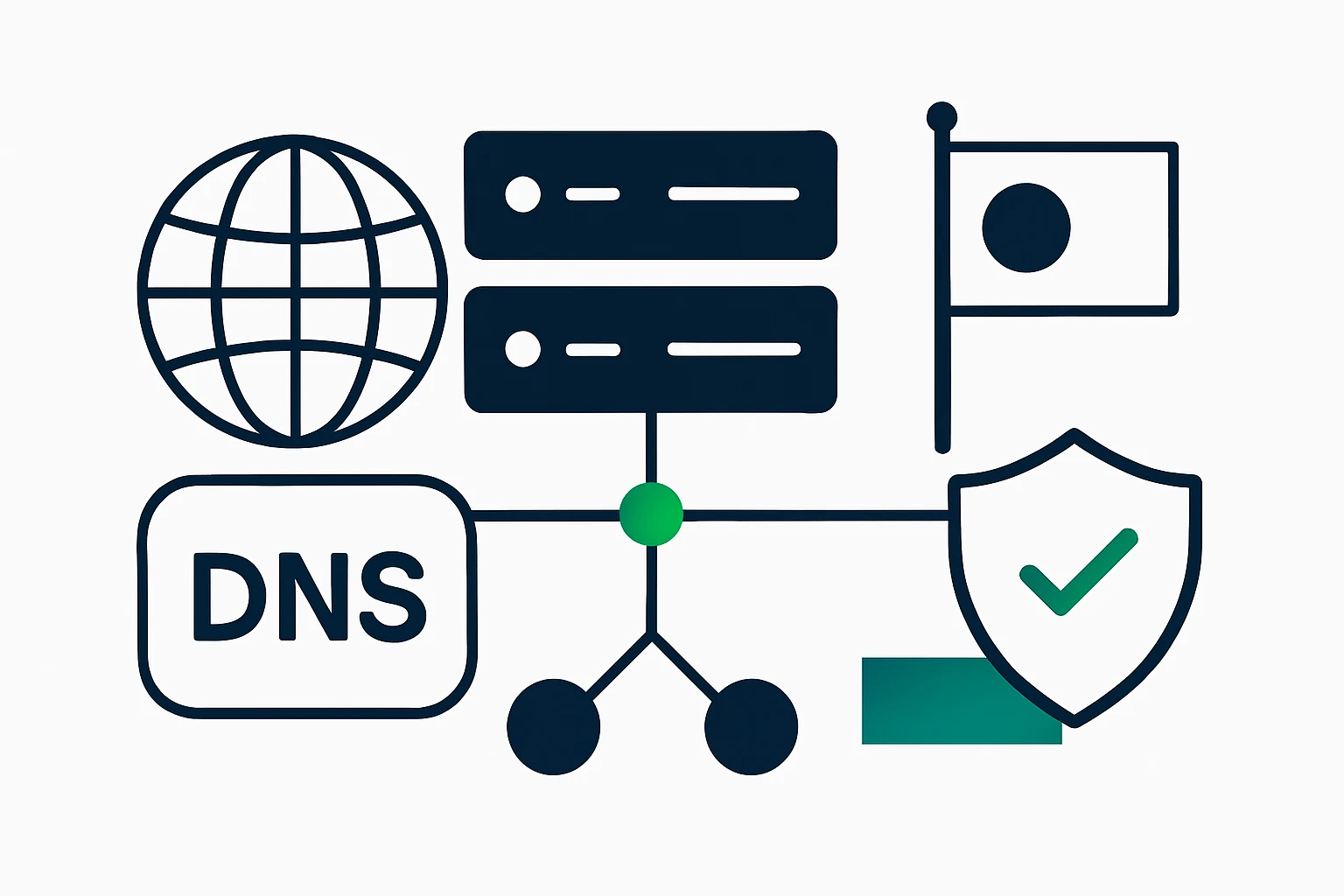
Introduction: why a global DNS strategy matters for enterprise brands
Today’s multinational brands operate a portfolio of domains that go far beyond a single flagship site. A coherent DNS strategy must balance security, performance, and compliance while supporting international presence through country-code top-level domains (ccTLDs) and internationalized domain names where relevant. For enterprise teams, the DNS layer is not a mere routing table, it is a critical control plane that impacts sales, brand trust, regulatory posture, and uptime. A well-designed DNS fabric - combining authoritative DNS, DNSSEC, anycast routing, and cloud-native deployment - delivers low latency for global users, resists mounting DDoS threats, and provides auditable evidence for compliance programs. ICANN’s governance framework underscores that ccTLD management is shared among national registries, operators, and policy bodies, which has real implications for global DNS strategy. ccNSO/ICANN emphasize the cooperative, policy-driven nature of ccTLD stewardship across jurisdictions.
Understanding domain portfolios in a global business
Enterprises rarely manage just one domain. A mature program inventories domain websites across the parent brand and across markets, compiling what you might describe as an all domain website list and a country domain list to support localization, legal compliance, and brand protection. Effective portfolio management requires visibility into registrations, expirations, privacy considerations, and security configurations across dozens or hundreds of domains. ICANN and ccTLD managers describe how ccTLDs are delegated and policed by national authorities, with policy development coordinated through the ccNSO and regional registries. This policy environment shapes how quickly a multinational can adopt new TLDs or IDN variants while maintaining stability and security. ICANN ccNSO FAQs provide context on eligibility, delegation, and policy routing for ccTLDs.
Designing a scalable DNS architecture for global reach
Enterprise DNS architecture should be purpose-built for reliability and speed, not merely for name resolution. The following components are foundational when serving a global audience:
- Authoritative DNS: authoritatively answers queries for your zones and enforces zone data integrity. A robust setup ensures zone transfers are secure and that changes propagate quickly across regions.
- DNSSEC deployment: DNSSEC provides data origin authentication and integrity for DNS responses, helping protect users from cache poisoning and spoofing. The standardization of DNSSEC is defined across RFC 4033, RFC 4034, and RFC 4035, with ongoing deployment guidance in RFC 9364 and related materials. RFC 4034, RFC 4033, and RFC 9364 provide the canonical definitions and operational considerations.
- Anycast and global DNS routing: Anycast DNS directs queries to the nearest healthy resolver, reducing latency and increasing resilience during regional outages. Cloud providers explicitly describe global anycast architectures as a core mechanism for high availability. For example, AWS Route 53 Global Resolver uses global anycast routing to serve hybrid DNS queries from on‑premises to cloud resources. AWS Route 53 Global Resolver concepts and GA announcement discuss the architecture and operational benefits.
- Cloud-native DNS architecture: Cloud DNS services provide scalable authority, consistent performance, and simplified orchestration with integrated security features. Enterprises often blend managed zones with private DNS resolvers in hybrid networks to support both internet-facing and internal applications. AWS, Google Cloud, and Azure all offer DNS services designed for global orchestration and security compliance. AWS Route 53 overview
Putting it together: a practical blueprint
In practice, a scalable global DNS blueprint combines authoritative zones for brand domains, DNSSEC-enabled signing, anycast endpoints for edge resilience, and cloud-native orchestration to minimize operational burden. The availability of a Global Resolver or equivalent in multiple cloud regions enables consistent policy enforcement, whether queries originate from users, branches, or on‑premises data centers. In a multi‑region configuration, you typically publish a mix of public authoritative records and private, VPC-resident resolutions to support internal services without exposing sensitive data externally. The result is a unified, auditable DNS surface that supports brand integrity, compliance programs, and customer trust.
Key takeaway: the union of authoritative DNS, DNSSEC, anycast, and cloud-native deployment creates a resilient platform for global brand domains, enabling fast, secure resolution and centralized governance. For global consumers, this translates into faster access to websites, fewer failed lookups, and improved protection against DNS-based threats.
Security and regulatory considerations are integral to design decisions. DNSSEC adoption, for instance, is well established in modern DNS practice, with its core mechanics documented in the DNSSEC family of RFCs and practical deployment guidance from standard bodies and operators. The DNSSEC ecosystem emphasizes that the security of delegated zones begins with sound key management, proper DS/DNSKEY records, and reliable signing practices. See the RFC series for foundational concepts, and RFC 9364 for current framing of DNSSEC in operation. RFC 4033, RFC 4034, RFC 9364.
DNS security, compliance, and monitoring: turning risk into governance
Security and governance extend beyond the technical stack. Enterprises must demonstrate process maturity through monitoring, logging, and evidence-based controls aligned to SOC 2, ISO 27001, and related standards. Practically, this means enabling comprehensive DNS query logging, maintaining retained logs for audit windows, and ensuring secure storage and access controls for those logs. Modern cloud DNS deployments support centralized logging destinations (e.g., S3, CloudWatch Logs, or SIEM back-ends) to enable continuous monitoring, alerting, and post-incident analysis. The practice of robust DNS logging is described in industry resources and cloud-provider guidance, highlighting the value of traceability for audits and incident response. AWS DNS query logging and DNS logs as security intelligence illustrate how to implement and gain value from logs.
In parallel, third-party guidance emphasizes that DNS data is often a central pillar for SOC 2, NIST, and ISO 27001 controls, requiring ongoing monitoring and auditable evidence. Implementations that map log data to compliance requirements can substantially ease the path to successful audits and timely re-assessments. See DNS compliance risk considerations and related guidance on SOC 2 readiness for service providers.
Finally, DNS monitoring and logging are not merely about audit trails, they are a security control. DNS traffic reveals reconnaissance activity, malware domain lookups, and potential exfiltration attempts. Organizations that instrument DNS monitoring with structured analytics can detect anomalies faster and reduce dwell time for threats. Industry perspectives and best practices for transforming DNS data into actionable insights are available from security-focused providers and researchers. DNS logs to insights.
Structured framework: a four-stage approach to portfolio-managed DNS
| Stage | Focus | DNS considerations | Measurable outcomes |
|---|---|---|---|
| Inventory & normalization | Consolidate domains, map ownership, and unify naming policies | Compile an all domain website list and country domain list, identify registrations, expirations, and privacy settings | Single source of truth for portfolio, reduced renewal risk by X%, improved visibility across regions |
| Security & compliance alignment | Apply DNSSEC, logging, and policy controls to all zones | DS/DNSKEY management, signed zones, SOC 2/ISO mapping, audit-ready logs | Consistent audit evidence, improved compliance posture, lower risk of DNS-related incidents |
| Architecture selection | Choose authoritative DNS, anycast, and cloud-native primitives | Public authoritative zones, private resolvers, and edge-based anycast routing | Improved latency and availability, resilience to regional outages |
| Governance & operations | Ongoing measurement, change control, and incident response | Centralized change management, logging retention policies, and periodic disaster drills | Predictable uptime, auditable processes, and faster incident resolution |
Limitations and common mistakes to avoid
- Underestimating ccTLD complexity: ccTLD delegation and policy vary by country, and changes can take time due to local registries and government policy. This can delay global expansion if not planned early. ICANN and ccNSO resources emphasize the need for early policy alignment when introducing new ccTLDs. ICANN ccNSO FAQs.
- Incomplete DNSSEC deployment: Without proper key management and DS records, a signed zone can fail validation, leading to users seeing failures rather than authenticated responses. RFC guidance outlines the core concepts and operational steps for DNSSEC deployment. RFC 4033, RFC 4034.
- Neglecting observability: Logs without a plan for retention, normalization, and SIEM integration reduce the ability to detect anomalies or demonstrate governance during audits. Cloud-provider guidance and industry best practices highlight the value of centralized DNS logging and monitoring. AWS logging guidance, DNS logs to insights.
- Single-provider lock-in risk: Relying on a single DNS vendor for all regions can create elasticity and data sovereignty challenges. A diversified approach - balanced with governance and cost controls - can reduce risk while preserving performance. Industry sources discuss the importance of hybrid and multi-cloud DNS resilience. AWS Route 53 overview.
Real-world value: how a robust DNS portfolio supports business goals
When brands scale across markets, a disciplined DNS program translates to tangible business outcomes: faster access for regional users, reliable failover during regional disruptions, and auditable evidence of security controls for customers and regulators. By combining authoritative DNS with DNSSEC, anycast edge routing, and cloud-native deployment, enterprises achieve a resilient, observable DNS surface that aligns with governance requirements and risk management frameworks. The practical implications extend to localization strategies (where country domains enable local competitiveness) and to the confidence that customers place in a brand’s digital trust.
Integrating the client: how WebAtla fits into a robust DNS strategy
For organizations seeking practical, policy-conscious DNS management and domain portfolio services, providers such as WebAtla offer domain registration, portfolio tracking, and DNS services that can complement an in-house architecture. Their platform and pricing information can help enterprises plan budgets and governance, while helping to operationalize the portfolio strategies discussed above. See WebAtla pricing for a sense of scale and service levels.
Conclusion: building a future‑ready DNS surface for a global brand
Global brand DNS is a mature discipline that blends technical rigor with policy awareness. By embedding DNSSEC, embracing anycast and cloud-native architectures, and maintaining rigorous monitoring and governance, enterprises can unlock faster, safer access to brands across markets while showing auditors and customers that DNS is being managed with discipline. The topic touches every corner of the modern enterprise - from portfolio inventory (the all domain website list and country domain list) to policy collaboration with ccTLD managers and the broader ICANN ecosystem. With a thoughtful blueprint and disciplined execution, DNS becomes a competitive differentiator rather than a compliance checkbox.
Notes and sources: The role of ccTLD governance is described by ICANN and its ccNSO, including policy and management considerations for country-code domains. ICANN ccNSO FAQs. Route 53 Global Resolver and DNSSEC deployment are documented by AWS, including the concepts of global anycast resolution and DNSSEC validation. AWS Route 53 Global Resolver concepts | GA blog. Foundational DNSSEC standards are described in RFC 4033/4034/4035, with ongoing framing in RFC 9364. RFC 4033, RFC 4034, RFC 9364.