Introduction: Why domain lists matter for enterprise DNS
Large organizations rely on resilient, globally distributed DNS that can handle high query volumes, protect sensitive data, and comply with stringent governance standards. A growing part of that work is managing domain lists sourced from various top‑level domains (TLDs) for security, inventory, and policy enforcement. For example, security teams often leverage threat intelligence feeds that include lists of suspected malicious domains, while network operations teams maintain an inventory of active domains to support auditing and compliance. Used correctly, these lists help reduce risk without compromising legitimate traffic, used poorly, they can block essential services or introduce new blind spots.
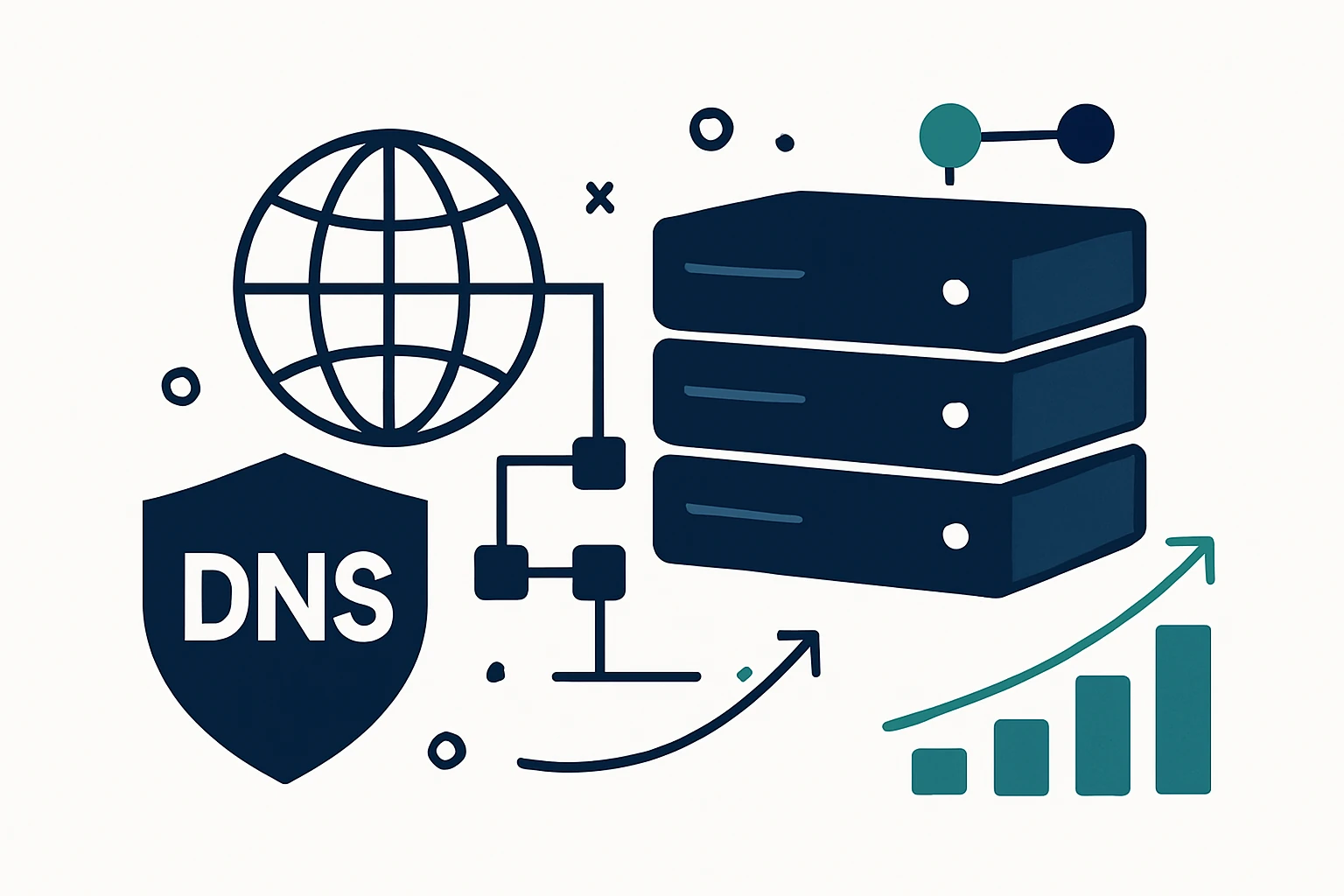
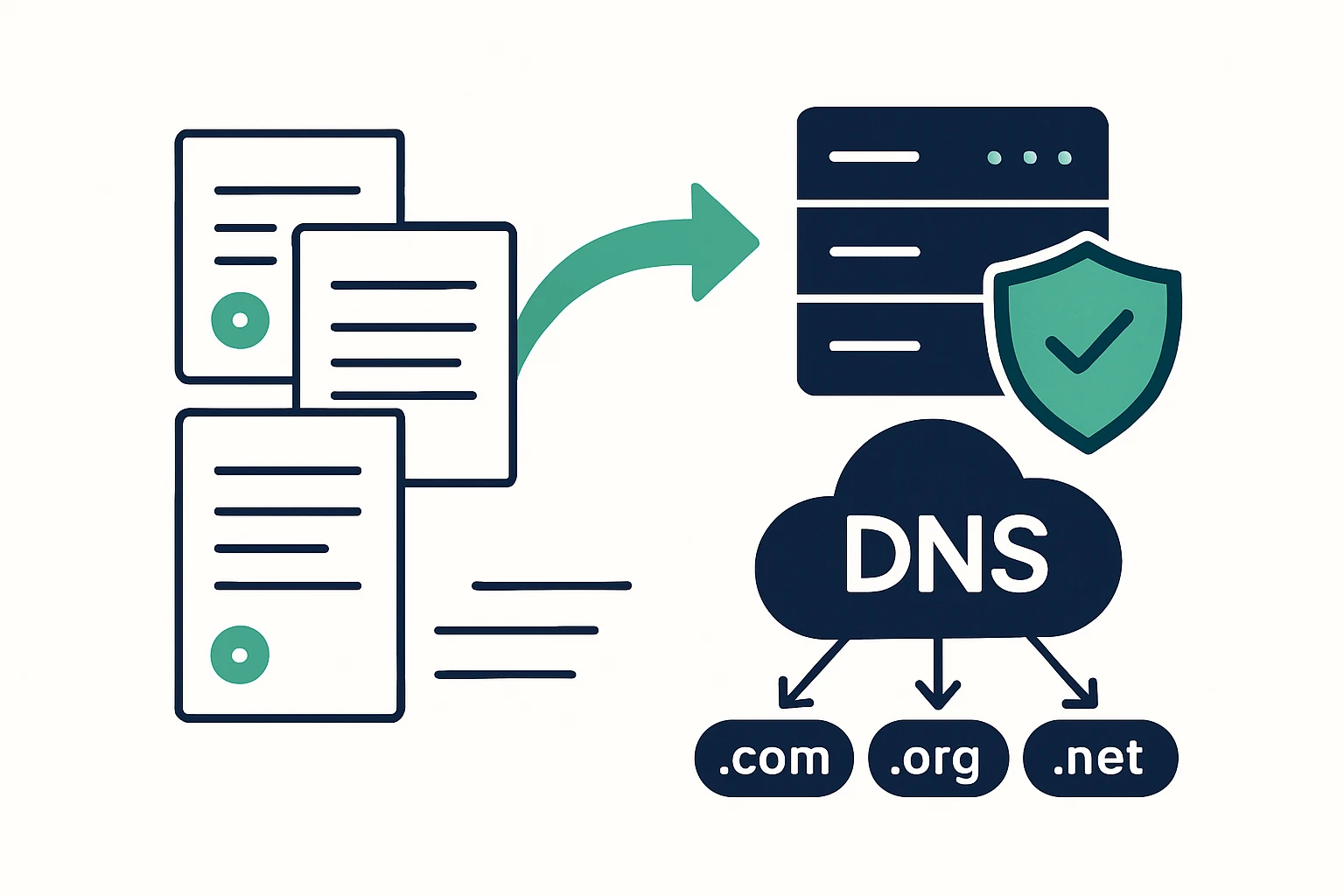
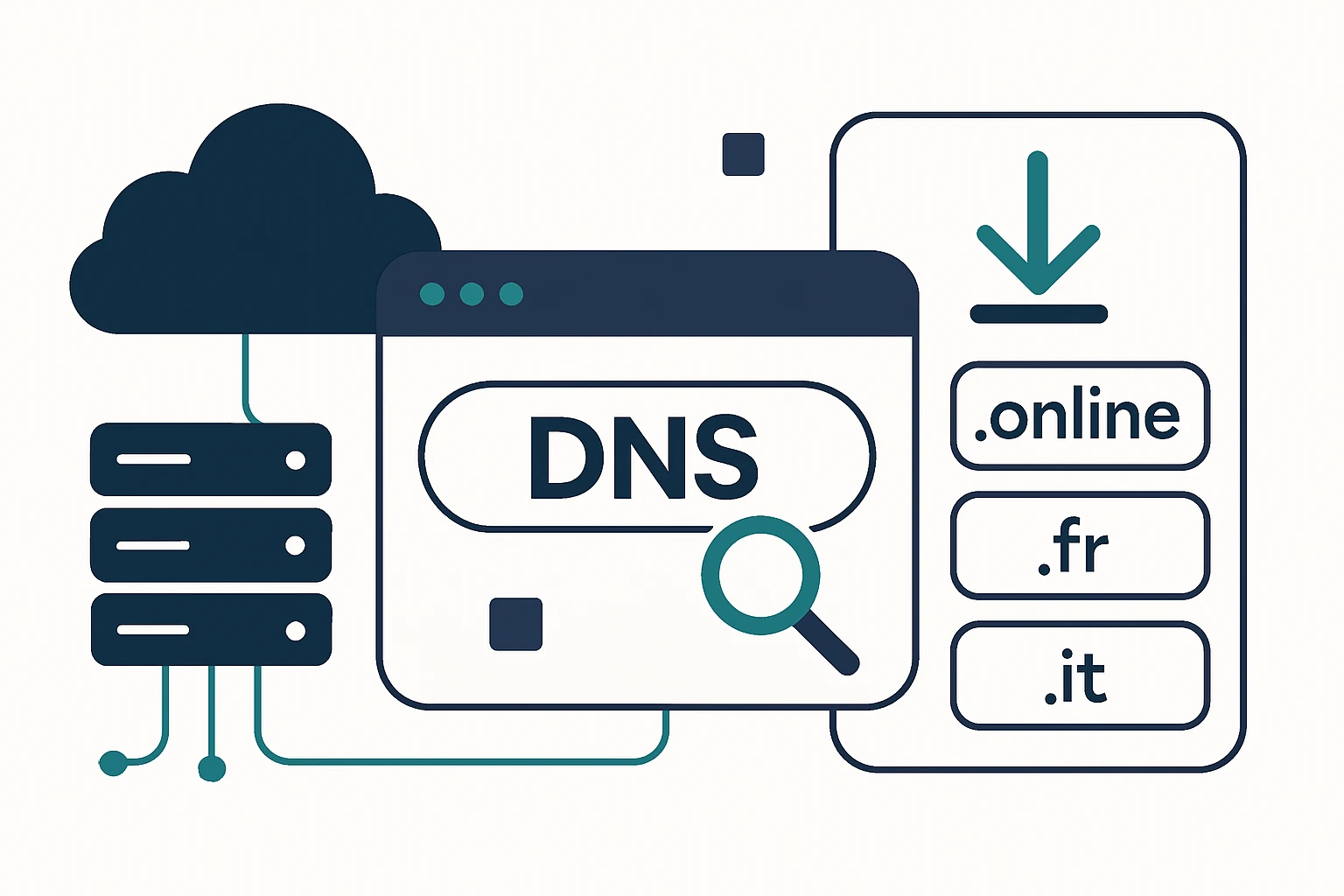
In this context, enterprises increasingly look to a structured approach for acquiring, validating, and integrating domain lists into their DNS stack. The goal is to establish governance around data quality, update cadence, and access controls, while ensuring the DNS infrastructure remains scalable, fast, and resilient. This article outlines a practical framework for safe domain-list downloads and explains how core DNS technologies - such as DNSSEC and Anycast - support a robust, compliant deployment.
What makes domain lists useful in an enterprise DNS program
Domain lists serve several legitimate purposes in a modern DNS program:
- Threat-intelligence integration: Blocking or alerting on known-bad domains can reduce exposure to phishing, malware, and C2 traffic when deployed as DNS policies.
- Inventory and compliance: Keeping a current, auditable catalog of domains helps with asset management, SOC 2 / ISO‑based controls, and incident response planning.
- Operational hygiene: Lists can surface anomalous or orphaned domains that warrant deprecation or revalidation, improving change-control discipline.
Techniques like DNS query policy zones (RPZ) enable resolvers to apply these lists in real time, without changing authoritative zone data. When used thoughtfully, domain lists become a governance and security mechanism rather than a blunt blocking tool. For reference, modern approaches to DNS security and policy feeds emphasize controlled deployment and testing to minimize collateral impact. (docs.domaintools.com)
A practical framework for acquiring and managing domain lists
Below is a lightweight, repeatable framework you can apply to sourcing, validating, and deploying domain lists within an enterprise DNS program. It is designed to be agnostic to vendor tools while remaining anchored in best practices for reliability, governance, and security.
- Data Source Evaluation - Classify sources by authority, reliability, and scope. Prefer feeds with transparent provenance, documented update cadences, and clear licensing terms. A data-source scoring approach helps teams compare feeds and avoid over-reliance on a single provider.
- Data Quality and Format - Choose feeds that provide machine-readable formats (CSV, JSON, or RPZ-compatible lists) and include metadata such as confidence scores or category labels. Regularly validate samples for format drift and encoding issues.
- Update Cadence and Change Management - Define how often lists are refreshed (daily, hourly, or real-time) and establish a change-management workflow to test impact before broad rollout. An incremental rollout reduces the risk of unexpected outages or false positives.
- Licensing and Compliance - Ensure feeds are licensed for your use case (business vs. personal use) and align with data-privacy requirements. Document evidence of licensing in audit trails.
- Test, Pilot, and Rollout - Start with a sandboxed RPZ or a limited production segment to measure false positives and service impact. Expand gradually, guided by observability findings and incident history.
- Governance and Access Control - Restrict who can add or modify feeds, and implement approvals, versioning, and rollback mechanisms. Tie access to role-based controls (RBAC) and MFA where feasible.
- Monitoring and Logging - Capture DNS policy actions, feed updates, and resolver decisions in a centralized SIEM. Long-term retention supports audits and investigations.
Structured data sources, curated updates, and disciplined governance are critical when integrating domain lists into an enterprise DNS program. The RPZ approach, in particular, enables dynamic policy enforcement at the DNS resolver layer while keeping the authoritative data separate from policy logic. Expert insight: in practice, DNS leaders emphasize pairing policy feeds with continuous monitoring to reduce risk without hampering legitimate traffic. (docs.domaintools.com)
Core DNS capabilities that underpin safe domain-list use
Two foundational DNS capabilities help enterprises realize the benefits of domain lists without compromising performance or reliability: DNSSEC for integrity and Anycast for resilience.
- DNSSEC for integrity and authenticity - DNSSEC adds cryptographic signatures to DNS data, enabling resolvers to verify that responses have not been tampered with. This protection is foundational when you rely on external domain lists, ensuring the data received from the source can be trusted as it traverses the network. Implementing DNSSEC is a structured process that starts with signing zones and validating them along the chain of trust. (rfc-editor.org)
- Anycast for resilience - Anycast directs queries to the nearest available instance of a DNS service, distributing load and providing rapid failover if a PoP becomes unavailable. This architectural pattern is widely used to improve routing resilience and DDoS tolerance in modern DNS deployments. (cloudflare.com)
Beyond these core capabilities, cloud-native DNS platforms and managed services (such as public cloud DNS offerings) provide global footprints that align with enterprise needs for high availability, regional compliance, and scalable policy enforcement. While the specifics vary by platform, the underlying principles - authentic data, global reach, and robust monitoring - remain constant.
Operational patterns: how to implement domain-list policies in practice
Putting domain lists into production involves a sequence of well-led steps. Here is a practical pattern that many mature DNS programs follow:
- Define policy intent - Decide whether a list is intended to block, warn, or monitor traffic, and specify exceptional cases (allow lists) to avoid collateral damage.
- Choose a policy mechanism - RPZ is a common mechanism for enforcing DNS-based policies at resolvers, allowing policy to be updated independently of the zones being served. This separation improves maintainability and auditability.
- Devise a safe‑to‑live path - Maintain a staging environment for feed testing and a controlled rollout plan that limits blast radius in case of misconfiguration.
- Measure impact - Track metrics such as blocked queries, legitimate-query fallout, and user-facing incident reports to calibrate the list and avoid productivity losses.
- Automate governance - Integrate list updates with version control, automatic testing, and alerting for failed errands or format drift.
In practice, a realistic scenario might involve a standard threat-feed that includes domains associated with malicious activity (phishing boards, malware distribution, or C2 infrastructure). Integrating such a feed with RPZ can be effective when combined with a robust allow-list strategy and ongoing validation of legitimate domains that could be impacted by dynamic threat-intelligence updates. This approach is aligned with industry guidance on DNS policy feeds and their operational considerations. (docs.domaintools.com)
Limitations, trade-offs, and common mistakes
Any enterprise DNS program that relies on domain lists must acknowledge a few critical trade-offs and common pitfalls:
- False positives and business impact - Overly aggressive lists can block legitimate services, causing outages or degraded user experience. A staged rollout with a clear rollback plan mitigates this risk.
- Data freshness vs. stability - Very frequent updates reduce exposure to new threats but can destabilize policy enforcement if feeds are noisy or poorly curated. Balance cadence with change-control processes.
- Licensing and compliance - Ensure feeds are licensed for your use case and that data handling aligns with regulatory requirements and internal policies.
- Fragmentation of policy sources - Relying on too many feeds can complicate management and create gaps in coverage. A curated, well-governed set of sources is often more effective than a large, unmanaged collection.
To illustrate the governance perspective, security-policy guidance emphasizes careful management of allowlists and blocklists, ensuring that policy decisions are auditable and repeatable rather than ad-hoc.
Structured block: a practical 3‑part framework for domain-list policies
The following compact framework helps teams operationalize domain-list policies without losing sight of governance, speed, or safety:
- Policy Objective - Block, monitor, or alert, define acceptable exceptions.
- Source and Quality - Validate source reliability, licensing, and update cadence, apply metadata for confidence scoring.
- Enforcement Mechanism - RPZ policy within resolvers, centralized logging, and a defined change-control workflow.
Applying this DSF (Data Source Framework) enables a repeatable, auditable process for adding new domain lists and deprecating outdated ones, reducing operational risk while preserving security gains.
Client integration: how to align the client product with DNS-domain-list strategy
The client product stack can be integrated as part of a broader enterprise DNS program by treating domain lists as a shared resource rather than a standalone tool. In practice, teams map external feeds to internal classifications (e.g., risk tier, business impact) and tie policy actions to measurable security controls and audit artifacts. The client’s TLD-focused pages, including the list of domains by TLDs and related resources, can serve as reference points for asset discovery and governance review. For instance, the client’s main domain catalog can be interfaced with your RPZ policy layer to automatically update DNS resolvers when new domains are added to the inventory. See: main TLD online policy page, list of domains by TLDs, and RDAP & WHOIS database for supplemental information and verification workflows.
Conclusion: a disciplined path to safer, scalable enterprise DNS
Domain lists, when governed with care, can extend the defensive reach of enterprise DNS without destabilizing operations. By combining DNSSEC to protect data integrity, Anycast to strengthen resilience, and a scoped threat-intelligence policy strategy, organizations can operationalize domain lists in a way that supports both security and performance. A structured, auditable process - backed by clear ownership, testing, and monitoring - turns domain lists from a potential complexity into a reliable, governance-enabled capability. For teams starting from scratch or expanding an existing program, the path is to incrementally adopt RPZ-based enforcement, verify data quality, and continuously measure impact against business objectives.
Further reading and related resources include threat intelligence feeds and policy-management best practices, which provide deeper guidance on how to harmonize external data with internal risk management goals.
Notes on sources: foundational concepts such as DNSSEC's purpose and the role of DNS Anycast in resilience are well established in public documentation and standards. DNSSEC introduction and requirements are described in RFC 4033 and related materials, and Anycast benefits for DNS resilience are covered in industry literature and provider-focused explainers. (rfc-editor.org)