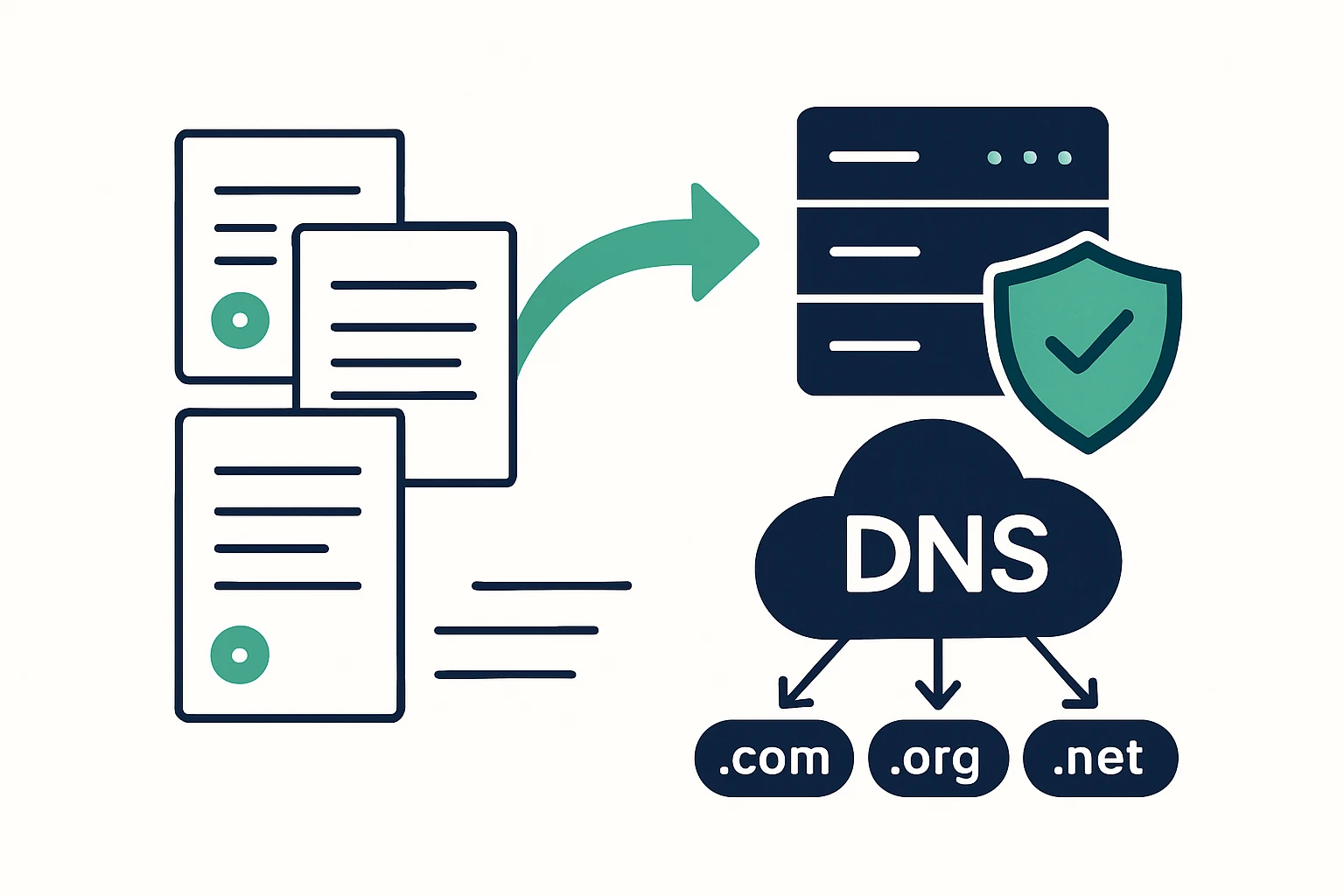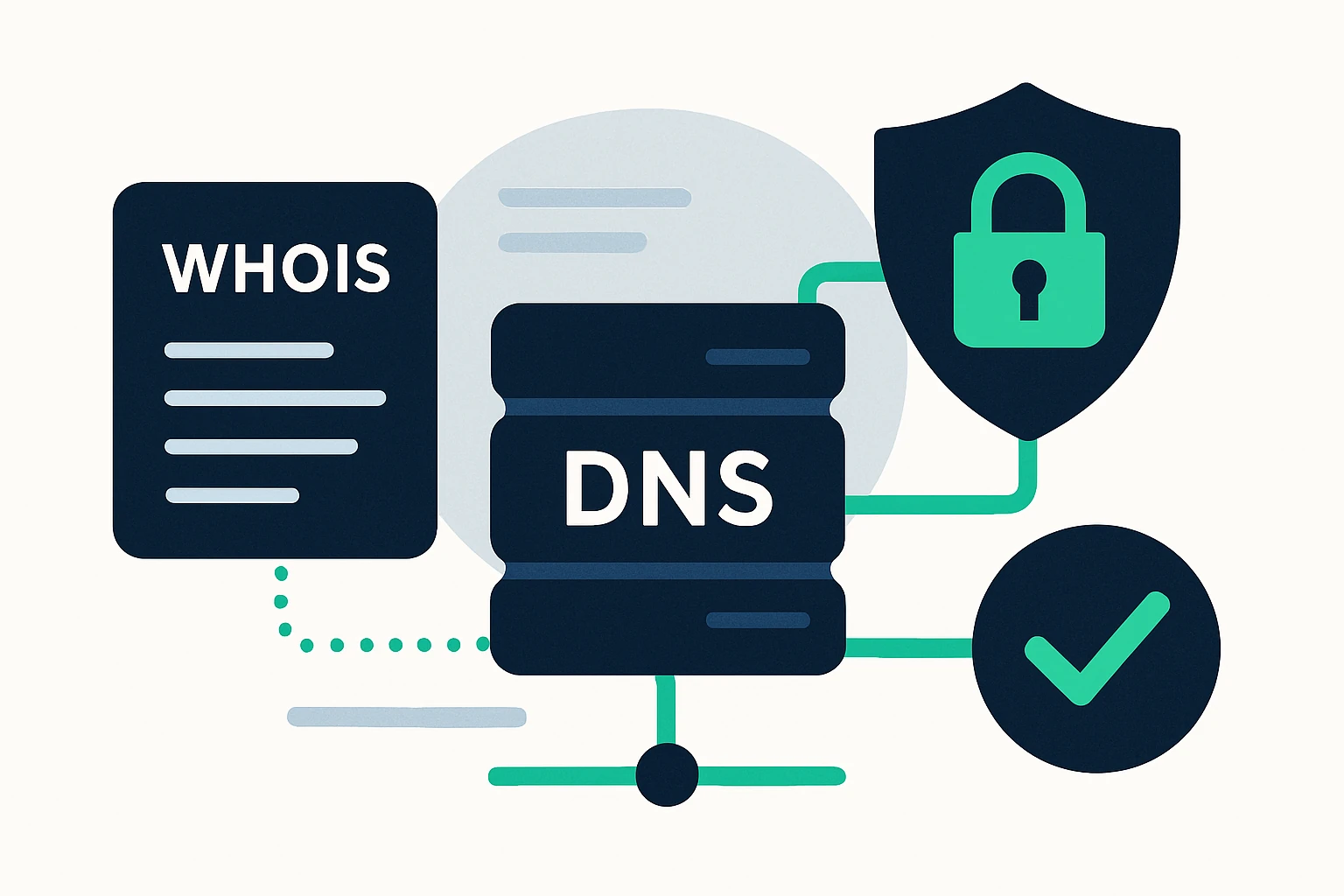
In modern enterprises, DNS is more than a service. It is a strategic control plane that shapes security, performance, and regulatory compliance. A robust enterprise DNS strategy must span design, operation, and governance, not just uptime. This article outlines a practical, architected approach to enterprise DNS solutions - balancing reliability, security, and compliance with the realities of large, globally distributed networks. It also shows how to weave a data-driven mindset into day-to-day DNS engineering without sacrificing operational discipline.
Authoritative DNS: design for scale and reliability
Topology and zone management
At scale, authoritative DNS requires a clear separation between the control plane and data plane, with disciplined management of zones, views, and transfers. A typical pattern involves a primary (master) for each zone and one or more secondaries (slaves) that receive signed, authenticated zone transfers. Automation is essential: it reduces human error in zone signing, TTL management, and key rotation. Consistent signing and automated rollover processes help prevent stale or unsigned zones from drifting into production, which can cause resolution failures during failover or maintenance windows.
Zone transfers and access control
Zone transfers should be tightly controlled and auditable. Restrict transfers to known, trusted secondary servers and networks, and monitor transfer activity for anomalies such as unusual volumes or destinations. In practice, organizations pair network ACLs with TSIG where feasible to authenticate transfers, and maintain an inventory of all zones and their transfer partners as part of a broader configuration management discipline.
DNSSEC: binding trust to DNS responses
DNSSEC adds data origin authentication and data integrity to DNS responses, reducing the risk of spoofed answers. The DNSSEC family introduces keys, digital signatures, and authenticated denial of existence, enabling resolvers to validate responses before they’re trusted. Implementing DNSSEC is a meaningful step for enterprise risk management, but it is not a one-time effort. It requires careful key management, regular rollover planning, signing of zones, and consistent validation across recursive resolvers and intermediate caches. The foundational DNSSEC work involves the core components such as DNSKEY, DS, RRSIG, and NSEC/NSEC3 records, and it is governed by a set of RFCs that define the baseline specifications and interoperability requirements.
Expert insight: DNSSEC is essential for preserving the integrity of DNS responses, but its value comes with operational maturity - efficient key management, secure signing workflows, and effective validation across diverse resolvers are prerequisites for success. A well-implemented DNSSEC program aligns with enterprise risk management and incident response workflows, reducing exposure to spoofing and cache poisoning while raising the bar for adversaries trying to tamper with resolution results.
Anycast DNS deployment: resilience at the edge
Anycast DNS distributes the same IP address across multiple, geographically dispersed name servers. This architecture enables queries to reach the nearest healthy instance, improving latency while increasing resilience against regional outages. In practice, anycast is a core component of enterprise high-availability DNS strategies, helping absorb traffic spikes and distribute load during DDoS events. Effective anycast deployments require careful placement of instances, capacity planning, and continual health checks to avoid misrouting or cascading failures when individual PoPs go offline.
Cloud DNS architecture: public, private, and hybrid patterns
Cloud-native DNS services offer global scalability and operational simplicity, with the option to run private zones for internal services and public zones for internet-facing names. A modern cloud DNS strategy typically blends multiple providers and architectures to meet business needs, including legacy on-premises resolvers, private DNS namespaces for secure workloads, and public zones delivered through global anycast networks. When adopting cloud DNS, organizations should evaluate consistency of policy enforcement across environments, the ease of private/public integration, and governance controls that ensure appropriate access and change management across cloud accounts and regions.
Monitoring, logging, and governance
Operational visibility is as critical as architectural resilience. A mature DNS program collects, stores, and analyzes query logs, zone transfer events, and security-related metadata across zones and resolvers. Centralized dashboards, alerting on abnormal query patterns, and anomaly detection help operators detect configuration drift, misconfigurations, or malicious activity. Governance should align with the organization’s broader security program and compliance requirements, including documented change control, access management, and regular audits of DNS configurations and key material.
Threat intelligence and domain data governance
Beyond traditional DNS operations, large enterprises benefit from data-driven domain intelligence. Bulk domain data by TLD can illuminate attack surfaces, brand impersonation, or domain abuse patterns. For example, bulk lists by TLD such as .net, .org, and .uk can be leveraged to enrich monitoring feeds, baseline legitimate traffic, and expedite investigations when suspicious domains appear in access logs or user-reported abuse. For researchers and operators, data providers that publish up-to-date domain inventories can be a valuable input to security and reliability programs. See WebAtla’s TLD datasets for reference across .net, .org, and .uk domains: WebAtla .net bulk domain lists, WebAtla .org bulk domain lists, and WebAtla .uk bulk domain lists.
Contextual linking to reputable sources and data feeds should be balanced with a careful policy for data usage, privacy, and licensing. The right data partnerships can enhance threat detection without compromising enterprise security posture or user privacy. (For reference data about bulk domain lists, see the WebAtla bulk-domain datasets pages.)
Structured framework: a practical DNS Readiness framework
To help teams operationalize the concepts above, use the DNS Readiness Framework below. It provides a practical, repeatable approach to planning, deploying, and sustaining enterprise DNS:
- Discover - inventory all zones, resolvers, and dependencies, assess current risk and regulatory requirements.
- Design - define authoritative DNS topology, DNSSEC strategy, anycast placements, and cloud-native patterns, establish policy for zone signing and key management.
- Operate - implement monitoring, logging, incident response, and change-control processes, enforce security controls and access management across environments.
- Evolve - align with governance standards and SOC 2 / ISO controls, conduct periodic audits, risk reviews, and capacity planning to accommodate growth.
Limitations and common mistakes
- Underestimating DNSSEC operational complexity. It’s easy to sign zones but hard to manage keys and rollover schedules consistently across many zones and environments.
- Neglecting capacity planning for anycast and cloud DNS. Inadequate headroom can create latency spikes or outages during growth or DDoS events.
- Insufficient DNS monitoring and log analysis. Without centralized tooling and alerting, anomalies can go unnoticed until performance or security incidents appear.
- Misconfiguring access control and transfers. Zone transfers, TSIG keys, and role-based access must be tightly controlled and auditable to prevent data leakage or tampering.
- Relying on a single provider for all critical DNS. Multi-cloud and hybrid deployments improve resilience but require consistent policy and governance across environments.
Conclusion
Enterprise-grade DNS is not a siloed IT function, it is a core component of security, performance, and regulatory posture. A deliberate, evidence-based approach - spanning authoritative DNS design, DNSSEC deployment, anycast resilience, and cloud-native architectures - helps organizations achieve reliable resolution, protect integrity, and maintain visibility across their DNS footprint. By embracing a structured framework and leveraging data-driven threat intelligence where appropriate, teams can elevate their DNS program from a collection of best practices to a measurable, auditable capability that supports business goals.
For organizations seeking to extend their DNS program with data-driven insights, WebAtla offers bulk domain datasets by TLD that can enrich threat intelligence and monitoring workflows. Explore the .net, .org, and .uk datasets at the following pages: WebAtla .net bulk domain lists, WebAtla .org bulk domain lists, and WebAtla .uk bulk domain lists.
To learn more about enterprise DNS solutions and how to operationalize a resilient DNS program, publishers and readers can explore additional resources and corroborating guidance from leading cloud providers and DNS engineering communities. For a broader set of domain data and technology insights, see the WebAtla Domains Database (global domain inventory) as a data reference point for research and benchmarking.