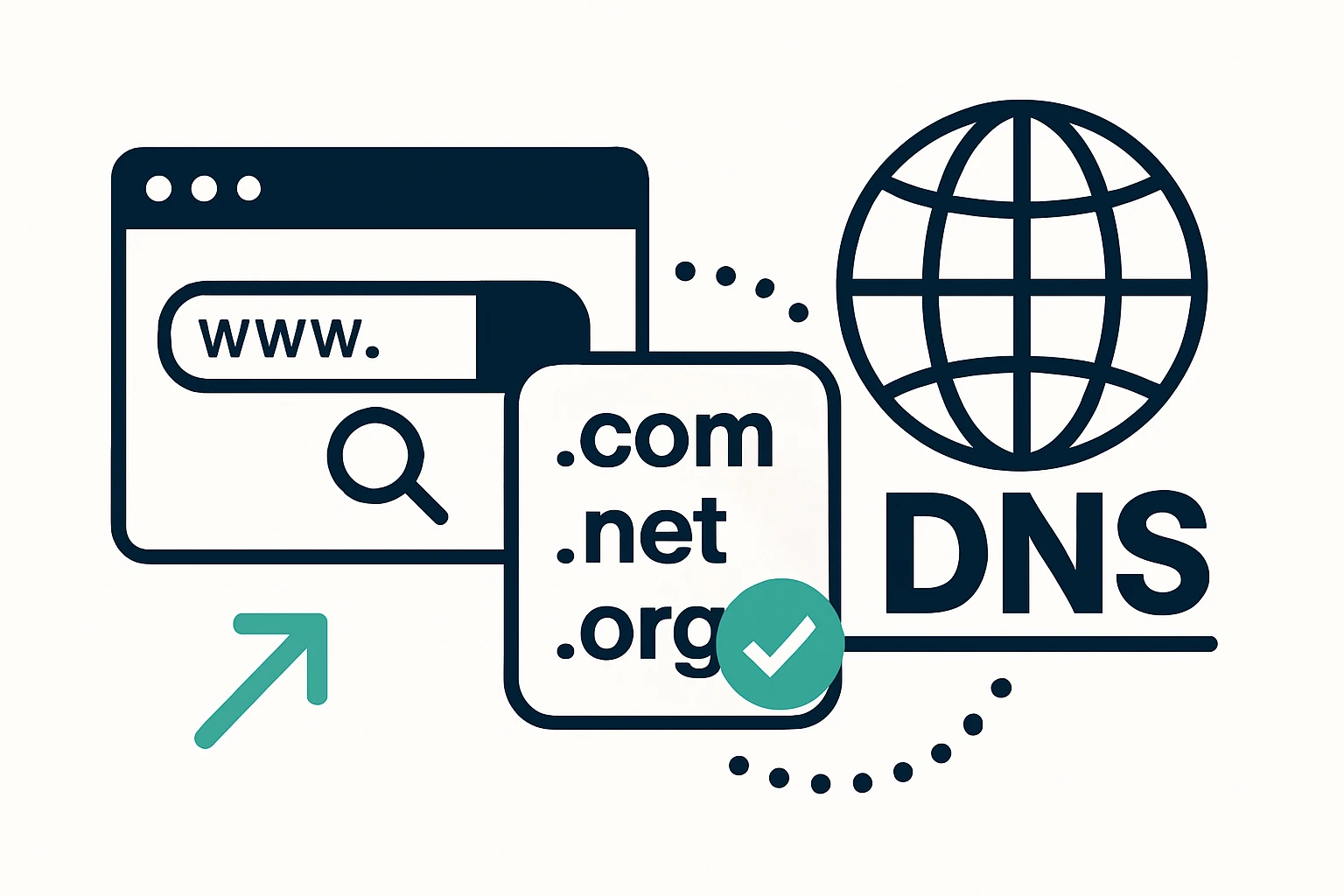
In a global enterprise, the choice of top level domain extensions (TLDs) is not a cosmetic branding decision - it shapes governance, compliance posture, and the resilience of the entire DNS namespace. The Domain Name System is the backbone that connects users, devices, and services to your applications. As organizations scale, they accumulate a diverse portfolio of domains across geographies and markets, and the question shifts from: “What looks best for our brand?” to: “Which TLDs will sustain secure, compliant, and high-performance operations at scale?” This guide explains how to evaluate, plan, and operationalize top level domain extensions in a way that aligns with enterprise DNS strategies and modern cloud architectures.
To anchor the discussion, it’s worth noting that TLDs are governed and delegated in a structured ecosystem. The authoritative records for top-level domains (including generic TLDs like .com and country-code TLDs like .uk) are maintained in the Root Zone Database, which is the canonical source of delegation data and registry operators. This foundation is essential when you design an enterprise DNS strategy that spans multiple TLDs. (iana.org)
Understanding Top-Level Domain Extensions: types, governance, and scope
What constitutes a top-level domain extension? In practical terms, a TLD is the suffix at the end of a domain name, such as ".com" or ".uk". The policy landscape around TLDs has evolved with ICANN’s program to introduce new generic TLDs (gTLDs) and to manage country-code TLDs (ccTLDs). The universe of TLDs includes both established and newly introduced strings, and ICANN’s New gTLD Program has significantly expanded the available pool of TLDs since the early 2010s. This expansion creates new opportunities for branding, geographic targeting, and policy alignment, but also adds complexity to DNS management and governance. (icann.org)
From an operational perspective, TLDs are delegated to registry operators and then managed by registries under contract with ICANN. The root-zone administration process and the ongoing maintenance of the root zone ensure that each TLD resolves correctly across the Internet. For enterprises, this means you may encounter a portfolio that includes traditional gTLDs (like .com and .net), country-code TLDs (ccTLDs such as .de or .uk), and possibly newer gTLDs (such as .hotel or .app) depending on your market strategy and risk tolerance. The Root Zone Database is the reference point for understanding who operates each TLD and how it is delegated. (iana.org)
Key takeaway: the structure of TLDs is not a fixed perimeter. It’s a dynamic landscape that reflects policy decisions, branding strategies, and geographic coverage. For this reason, enterprise DNS planners should treat TLD selection as a governance decision as much as a technical one. ICANN’s ongoing work on new gTLDs and policy development demonstrates that the namespace continues to evolve in ways that can affect routing, security, and compliance. (newgtlds.icann.org)
Why TLD choices matter for enterprise DNS architecture
Choosing which TLDs to support goes beyond customer-facing branding. It has real consequences for DNS architecture, security, and compliance. Here are the primary axes enterprises should consider when evaluating TLD extensions:
- Security and trust landscape: Different TLDs may be operated by different registries with varying security postures. DNSSEC deployment, registry-authenticated updates, and signing practices can differ across TLDs, affecting end-user trust and resolution reliability. DNSSEC, introduced as part of the DNS security extensions, is defined in RFCs 4033, 4034, and 4035 and remains central to ensuring authenticity and integrity in DNS responses. Understanding how each TLD supports DNSSEC and related security features is essential. (rfc-editor.org)
- Compliance and governance posture: Enterprises operating under frameworks like SOC 2, ISO 27001, or other regional data protection regimes should verify that the registries and their operators maintain appropriate controls for availability, confidentiality, and privacy. Aligning TLD selections with a formal security program helps ensure audit readiness and reduces compliance risk. For context, ISO/IEC 27001 provides the framework for an robust information security management system behind DNS services, including governance, risk management, and continuous improvement. (iso.org)
- Operational practicality and scale: Each TLD adds a zone to manage, with potential differences in zone file management, DNSSEC key management, and monitoring requirements. A broad TLD footprint can improve brand reach or geographic coverage, but it also expands the attack surface and operational overhead. In practice, many enterprises adopt a tiered approach: secure core TLDs for critical services and broader but carefully managed support for additional TLDs as business needs justify them. The root-zone and registry model described by IANA informs how these decisions map to operational reality. (iana.org)
- Brand protection and risk management: Expanding into multiple TLDs can help protect brands in new markets, but it also requires vigilance against domain squatting, typosquatting, and potential brand impersonation across a wider namespace. A deliberate strategy pairs brand portfolio management with DNS security and monitoring controls to prevent misuse and to enable rapid incident response.
From a technical perspective, the DNS resolution path remains consistent across TLDs, but the underlying registries and their policies can influence how quickly updates propagate, how zone transfers occur, and how DNSSEC keys are managed across different registries. When planning a multi-TLD deployment, align your operational practices with IANA/ICANN guidance and ensure that your tooling can handle diverse registry requirements without compromising performance or security. (iana.org)
A framework for evaluating TLD extensions in an enterprise DNS program
The decision to support a given TLD should be guided by a repeatable framework, not by ad hoc branding priorities alone. The following framework helps DNS architects balance governance, security, and operational realities - while keeping the strategy aligned with the publisher’s enterprise DNS focus.
- Governance and compliance alignment
- Check registry controls and transparency: Are security controls, incident response, and change management well-documented? Do they align with ISO 27001 or SOC 2 expectations?
- Assess data residency and localization implications for ccTLDs and regional markets.
- Verify that the TLD repertoire supports your internal policy for brand protection and trademark use.
- Operational viability
- DNSSEC readiness: Confirm that each selected TLD participates in DNSSEC signing and supports modern algorithm suites as documented by RFCs 4033/4034/4035 and ongoing RFC updates.
- Monitoring and logging: Ensure consistent visibility across all TLDs, with centralized logging, alerting, and audit-ready reporting for compliance programs.
- Automation compatibility: Confirm that your DNS orchestration and provisioning pipelines can handle multi-TLD zone creation, updates, and key management.
- Security posture and resilience
- Consider the contribution of each TLD to your threat model. A smaller, tightly controlled TLD set may reduce risk, while a broader set may improve resilience and availability if DNS resolution is impacted in one region.
- Plan for incident response and recovery across TLDs, including certificate provisioning and DNSSEC key rollover scheduling that respects each registry’s capabilities.
- Cost and complexity balance
- Forecast the total cost of ownership for managing multiple TLDs, including registrar fees, DNSSEC management, monitoring tooling, and staff time for risk governance.
- Balance business value against operational overhead, not every TLD is worth the ongoing effort if it does not meaningfully impact customers or risk posture.
Structured decision-making helps ensure that every TLD addition is justified by measurable benefits and that security/compliance controls scale with the namespace. The flow above is designed to be implemented within an enterprise DNS program that also incorporates authoritative DNS setups, Anycast strategies, and cloud-native DNS architectures that your client, WebAtla, provides guidance for. For teams seeking a practical, company-wide approach to TLD management, consider a phased rollout with defined success metrics and a clear governance boundary.
Structured decision block: a concise checklist you can reuse
- Inventory current and planned TLDs in your portfolio
- Assess DNSSEC support and registry security posture for each TLD
- Map TLDs to service criticality and data residency requirements
- Standardize monitoring, logging, and incident-response playbooks across all TLDs
- Plan certificate provisioning and automated renewal strategies per TLD
- Review branding and risk management implications for each TLD in your portfolio
Limitations and common mistakes to avoid
Even with a robust framework, several pitfalls commonly undermine multi-TLD strategies. Awareness helps you anticipate challenges and build guardrails into your DNS program:
- Over-portfolioing without operational discipline: Pursuing many TLDs without scalable processes for DNSSEC, monitoring, and incident response leads to gaps in security, compliance, and reliability. A measured approach with automation reduces risk.
- Neglecting DNSSEC coverage: Some TLDs lag in DNSSEC support or fail to rotate keys consistently, creating mixed trust signals for end users and validating resolvers. RFC 4033/4034/4035 outline the standard approach, stay current with RFC updates as the technology evolves. (rfc-editor.org)
- Inadequate governance documentation: If registry controls, change-management procedures, or incident-response processes are not clearly documented and auditable, audits will flag gaps in security controls and governance.
- Lack of data-residency planning: ccTLDs often come with residency expectations and localization considerations. Failing to account for these can complicate compliance in regulated environments.
Expert insight: thinking about TLDs as a portfolio
In practice, an enterprise DNS program benefits from treating TLD extensions as a portfolio rather than a simple branding asset. A disciplined portfolio view emphasizes selecting TLDs that align with risk tolerance, regulatory requirements, and customer geography, while ensuring that every active TLD is supported by robust automation, DNSSEC coverage, and comprehensive monitoring. This perspective helps teams avoid the trap of chasing every new gTLD for branding alone, which can inflate operational risk without delivering proportional value.
Practical implementation: bring your TLD strategy into your DNS operations
Integrating TLD decisions into day-to-day DNS operations means aligning portfolio governance with the technical realities of authoritative DNS, cloud-native architectures, and security monitoring. A practical approach includes:
- Centralized policy and change management: Establish a single policy layer for TLD approvals, security requirements (including DNSSEC), and branding considerations. This helps ensure consistency across teams and regions.
- Unified monitoring and incident response: Deploy cross-TLD observability that aggregates DNS query metrics, resolution latency, DNSSEC validation status, and anomaly alerts. Quick detection and response are critical for maintaining confidence in enterprise services.
- Cloud-native DNS architecture considerations: When you deploy in cloud-native environments, ensure that your anycast strategies, latency optimization, and zone management align across all TLDs to minimize tail latency and improve failover behavior. This is especially relevant when using global cloud DNS platforms and hybrid networks.
- Brand and risk governance: Maintain a watchlist for potential impersonation or squatting across newly introduced TLDs and implement rapid domain-control processes when needed.
For readers who want a practical starting point to explore TLDs within the WebAtla ecosystem, you can review the comprehensive directory of domains by TLDs and related information on the WebAtla TLD page. This resource is a useful companion as you map your enterprise’s TLD strategy to your DNS architecture. WebAtla TLD directory. If you’re evaluating pricing and resource allocation for a broader TLD rollout, the WebAtla pricing page provides a framework for budgeting the operational costs of multi-TLD management. WebAtla pricing.
Beyond the client-side perspective, IANA’s Root Zone Database remains the authoritative reference for the delegation status and governance of each TLD, while ICANN’s New gTLD program documents the policy context for new TLD introductions and governance considerations. For those who want to dive deeper into policy and registry governance, these sources are essential anchors for any enterprise DNS planner. (iana.org)
In summary, the choice of top level domain extensions is a strategic lever for enterprise DNS: it can improve geographic reach, enhance security posture, and support regulatory compliance - provided it’s paired with strong operational discipline and a clear governance framework. As the DNS landscape continues to evolve through ICANN policy and registry practices, ongoing alignment between business objectives and technical controls is essential.
Note: This article reflects a public-domain perspective on TLD strategy and integrates considerations relevant to enterprise DNS practice, including authoritative DNS setup, DNSSEC considerations, and cloud-native architectures. For a closer look at the practical implications of TLD portfolio management in your environment, see the WebAtla TLD directory and related resources.