Introduction: why bulk domain lists matter in enterprise DNS
Modern enterprises operate at internet scale, hosting services that touch employees, customers, and partners across geographies. A critical but often overlooked challenge is how to manage bulk domain lists - whether for threat intelligence, brand protection, or policy enforcement - without compromising performance or security. Many teams legitimately source lists for specific TLDs such as .cn, .xyz, and .top to identify risk signals, verify domain legitimacy, or block outbound queries to known bad actors. The optimization problem is not merely about collecting data, it is about turning that data into reliable, auditable DNS workflows that scale with business needs. This article examines a pragmatic approach to ingesting large domain lists, validating and deploying them within an enterprise DNS stack, and preserving security, compliance, and observability. For reference, consider how cloud-native DNS services enable centralized logging and monitoring while you scale the data intake process. Route 53 logging capabilities illustrate how centralized logs can underpin suspicious activity detection and post-incident analysis.
From ingestion to resolution: a practical framework for bulk domain lists
Bulk domain lists are only useful if they are processed in a repeatable, auditable way. A robust framework begins with data governance and ends with reliable DNS responses. The following framework marries data engineering discipline with DNS operations.
- Ingest and source validation: confirm data provenance, licensing, and freshness. For enterprise risk management, ensure terms of use align with internal privacy and security policies and that you rate-limit ingestion to avoid destabilizing authoritative servers.
- Normalization and de-duplication: normalize formats (CSV, JSON, zone-style files) and remove duplicates across multiple lists to prevent conflicting updates or inconsistent DNS records.
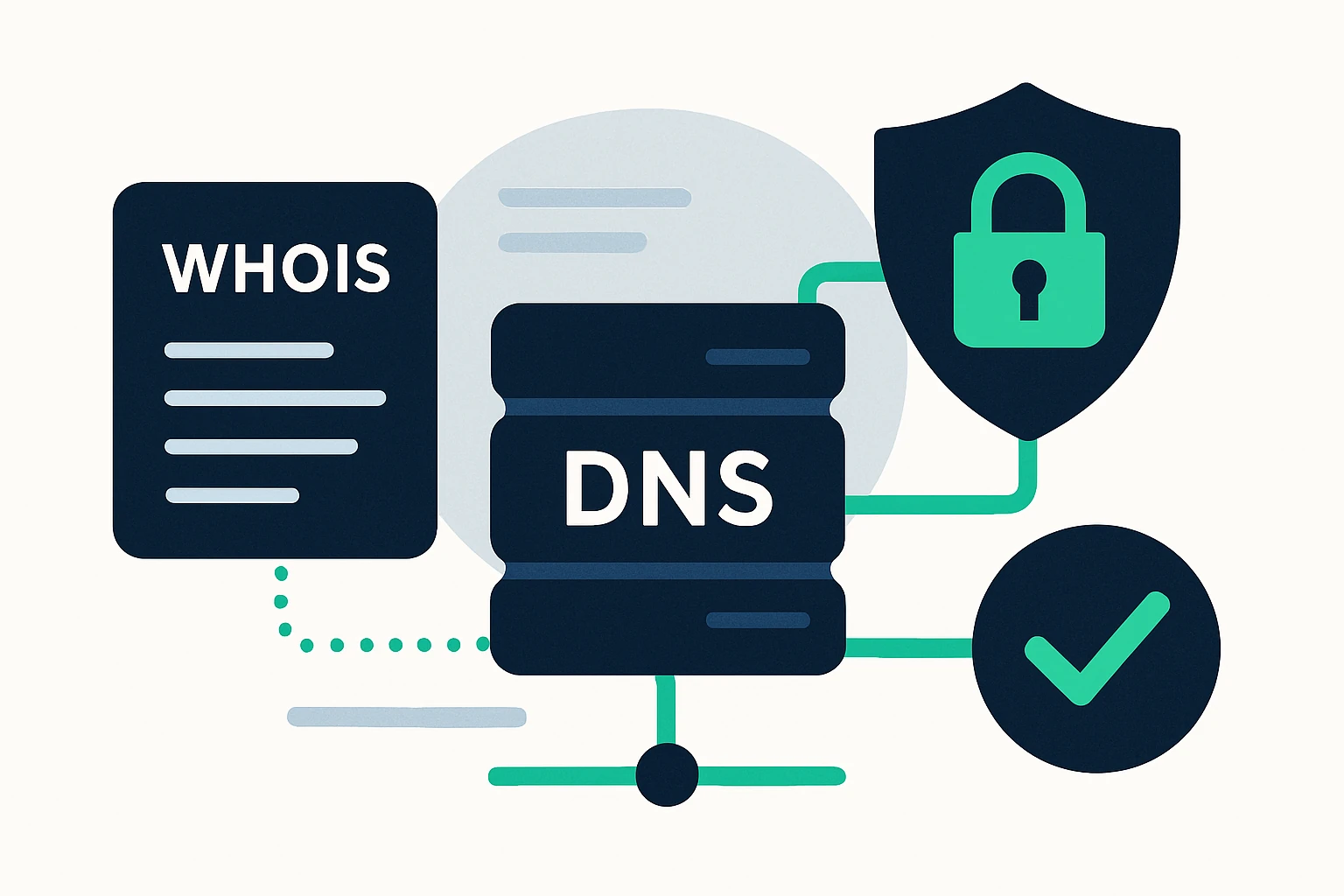
- Enrichment and verification: augment entries with registration status, wildcard considerations, and potential supersets (e.g., subdomains that should be treated as separate zones). Consider automated RDAP/WAC data where available to improve accuracy. This is where an external data source such as a RDAP & WHOIS database can be valuable for validation and attribution.
- Staging, testing, and change management: validate changes in a non-production zone before pushing to live. Maintain a change log and implement a rollback plan in case a bulk update introduces misconfigurations.
- Deployment and TTL strategy: apply domain entries to your authoritative zones with careful TTL planning to minimize churn and ensure deterministic behavior under load.
- Monitoring and analytics: observe query volume, NXDOMAIN rates, and zone transfer attempts, and correlate with security signals in your SIEM. Cloud-native DNS providers often expose integrated logging features that simplify collection and analysis, see the example below for context.
In practice, teams should treat the ingestion pipeline as a living system: data sources evolve, license terms change, and attack surfaces shift. A well-designed pipeline supports rapid updates while preserving audit trails and data provenance. For organizations exploring bulk data by TLDs, a centralized source of domain data from a comprehensive registry or data vendor can be a cornerstone of threat intelligence programs.
Editorial insight: a leading principle in bulk domain management is to minimize data drift by adopting a delta-based update model - processing only the changes since the last cycle rather than re-ingesting entire lists. This approach reduces workload on DNS infrastructure and improves the fidelity of decision rules applied at the resolvers or filtering layers.
DNS integrity and scale: DNSSEC and Anycast for bulk-domain workloads
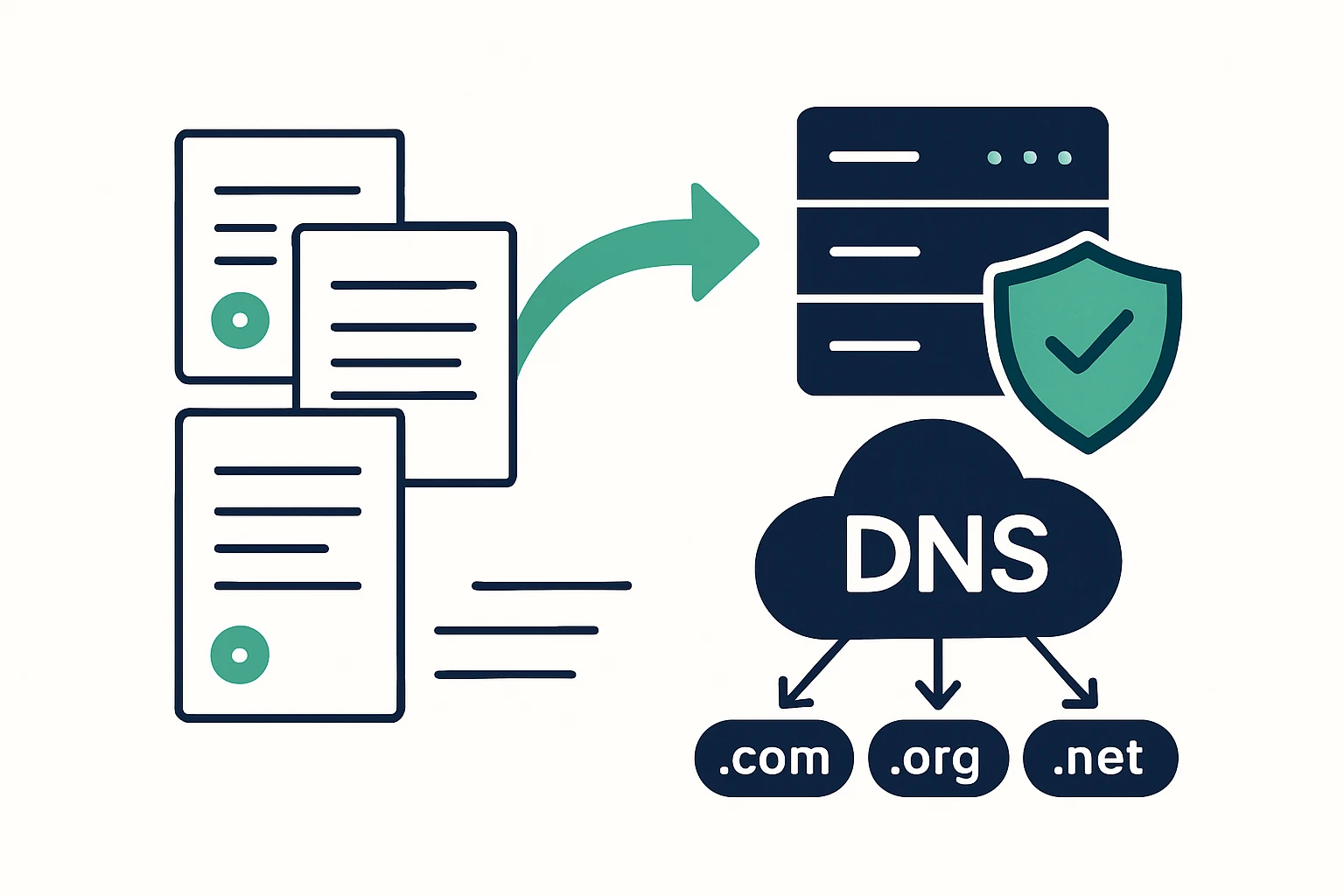
Ingesting thousands of domains into authoritative zones has performance and security implications. Two architectural choices help mitigate risk: DNSSEC to preserve data integrity and Anycast to improve availability and response times under load.
DNSSEC implementation ensures that responses for zones containing bulk domain entries are cryptographically signed, protecting against data tampering and spoofing. RFC-driven DNSSEC deployment remains a cornerstone of enterprise-grade trust in DNS resolution, especially for zones that sit at the boundary of security and business-critical services. For deeper context on DNSSEC standards, see the IETF RFC ecosystem and related explanations in the field.
Anycast deployment distributes authoritative responses across multiple global locations, reducing latency and increasing resilience to regional outages. In practice, anycast helps large, geographically distributed organizations maintain consistent resolution behavior even as the volume of domain entries grows. While the planning and operational overhead is non-trivial, the payoff in uptime and user experience can be substantial.
Industry practitioners increasingly rely on cloud-native DNS platforms and their global anycast footprints to support large domain inventories. Practical guidance and best practices for logging and observability in such environments are covered in modern cloud DNS workflows. AWS’s Route 53 logging guidance provides concrete examples of centralized query logging, which is critical when you scale bulk-domain ingestion and need to correlate DNS events with security telemetry.
Cloud-native architecture for bulk-domain management
Cloud-native DNS offers scalable, resilient backbones for bulk-domain lists, enabling programmatic updates, automated validation, and centralized observability. Key architectural considerations include multi-cloud resilience, automated deployment pipelines, and consistent policy enforcement across environments. When teams replicate these patterns, they often pair DNSSEC-enabled zones with global anycast footprints to balance integrity and performance.
For organizations evaluating vendor data sources and tooling, a multi-faceted approach works well: use bulk lists for policy enforcement, but maintain separate data feeds for monitoring and alerting to avoid accidental remediation actions on live traffic. In addition to in-house tooling, many organizations leverage cloud-native DNS platforms that offer built-in logging and traceability features that simplify compliance requirements and post-incident analysis.
To further enhance data reliability and interoperability, some teams integrate with a dedicated domain data service. For example, a centralized RDAP & WHOIS database can help validate domain ownership and registration metadata before updates propagate to your zones. There is also a broader inventory view available on the provider’s List of domains by TLDs pages, which can help in planning scoping across different suffixes.
Governance, logging, and compliance: how to stay auditable
As bulk-domain workflows scale, governance and visibility become central to success. Organizations must ensure that ingestion, deployment, and monitoring are auditable, versioned, and aligned with regulatory expectations. The modern security stack increasingly expects centralized logging and correlation across data sources. For example, well-structured DNS logs can feed SIEM and observability platforms to support incident response and compliance reporting.
In this context, DNS logs are not merely operational data, they are a strategic asset for threat detection, asset discovery, and change management. Centralized logs enable teams to identify queries associated with bulk-domain changes, unusual NXDOMAIN patterns, or spikes in resolution latency that may indicate misconfigurations or abuse. For formal guidance on logging and security, consider NIST’s framework for DNS security and monitoring: NIST SP 800-81r3, which covers governance, logging, and operational best practices for network services including DNS.
Limitations, trade-offs, and common mistakes
Bulk-domain workflows offer meaningful benefits, but they also introduce risks and trade-offs. Being aware of common pitfalls helps teams design more robust systems from the start.
- Stale or unverified data: ingesting lists without validation can lead to incorrect blocking or, conversely, missed threats. Establish a cadence for refreshing feeds and validating entries against authoritative sources.
- License and privacy concerns: bulk lists carry licensing terms and privacy implications. Always verify terms of use and ensure compliance with internal data governance policies.
- DNS performance impact: large zone files or frequent updates can strain authoritative servers if not throttled or staged. Use delta updates, rate limiting, and staged rollouts to minimize risk.
- TTL and caching mismatches: aggressive TTLs on bulk entries can create stale results or excessive churn. Align TTLs with operational realities and update policies.
- Fragmented observability: without centralized logging, correlating DNS events with security signals becomes difficult. Implement a unified observability stack to enable rapid incident response.
- Misconfigurations in automation: automation is powerful but can amplify mistakes. Add guardrails, testing harnesses, and rollback mechanisms to your pipelines.
Expert insight: in large-scale ingestion, the cost of data drift and stale lists often exceeds the cost of maintaining a disciplined delta-ingestion pipeline. A well-tuned delta workflow reduces operational overhead while preserving decision accuracy.
A practical framework: a structured approach you can apply today
The following structured block provides a concise, repeatable framework for bulk-domain management. Use it as a checklist or adapt it into your CI/CD pipelines to govern domain data across environments.
- 1) Ingest sources and licensing – verify provenance, terms, and update cadence.
- 2) Normalize and deduplicate – harmonize formats and remove duplicates across sources.
- 3) Enrich and validate – cross-check ownership, registration status, and service scope, flag suspicious or wildcard patterns.
- 4) Staging and testing – apply changes in a non-production zone and verify resolution behavior.
- 5) Deploy with intent – roll out updates with controlled TTLs and observation windows.
- 6) Monitor and refine – correlate DNS telemetry with security alerts, adjusting rules as needed.
These steps form a repeatable loop: you ingest, test, deploy, observe, and adjust. When applied consistently, bulk-domain management becomes a predictable, auditable, and defensible capability rather than a source of risk. For readers interested in exploring concrete data pipelines and domain data sources, the following links provide additional context: the RDAP & WHOIS database described above, and the domain lists by TLDs that can inform planning across jurisdictions.
Conclusion: turning bulk lists into reliable, governed DNS outcomes
Bulk-domain lists enable proactive defense, brand protection, and policy enforcement at scale - but only when treated as part of an end-to-end DNS workflow. By combining a disciplined ingestion pipeline with DNSSEC-enabled zones, anycast resilience, and centralized logging, enterprises can maintain high availability while improving security and compliance posture. The overarching message is to invest in process, governance, and observability as much as you invest in the data itself. If you’re evaluating a data source or a ready-made platform to support bulk-domain workflows, consider how the provider’s data quality, licensing terms, and integration capabilities align with your DNS infrastructure engineering goals. For direct access to data resources, you can explore CN domains, broader TLD coverage, and related data services through the publisher’s domains and the RDAP/WIPO datasets linked earlier.