Introduction: why every enterprise should care about all TLDs
Most organizations begin their digital journey with a familiar .com presence, yet the modern enterprise web and cloud strategy increasingly depends on a diverse portfolio of domain extensions. A robust DNS strategy that spans all top-level domains (TLDs) supports brand protection, regional reach, regulatory alignment, and operational resilience. When an organization publishes content or provides services from multiple geographies, the choice of TLDs can influence user trust, latency, and security posture. This article explains why exploring all tld domain extensions matters for enterprise DNS, how the ecosystem has evolved, and a practical framework to manage portfolios across gTLDs and ccTLDs. Evidence and best practices come from leading industry bodies that maintain authoritative TLD lists and DNSSEC deployment data.
For enterprises pursuing a comprehensive TLD strategy, a few non-negotiables emerge: centralized governance of DNS records and security, consistent naming conventions across domains, and visibility into how each TLD is deployed and secured. The landscape is dynamic: IANA and ICANN maintain the canonical lists of TLDs, and DNSSEC deployment across TLDs is progressing unevenly, creating both opportunities and risk for multi-TLD portfolios. Understanding the current terrain is the first step toward a scalable, compliant DNS architecture. (icann.org)
Section 1: Mapping the TLD landscape - what exists and why it matters
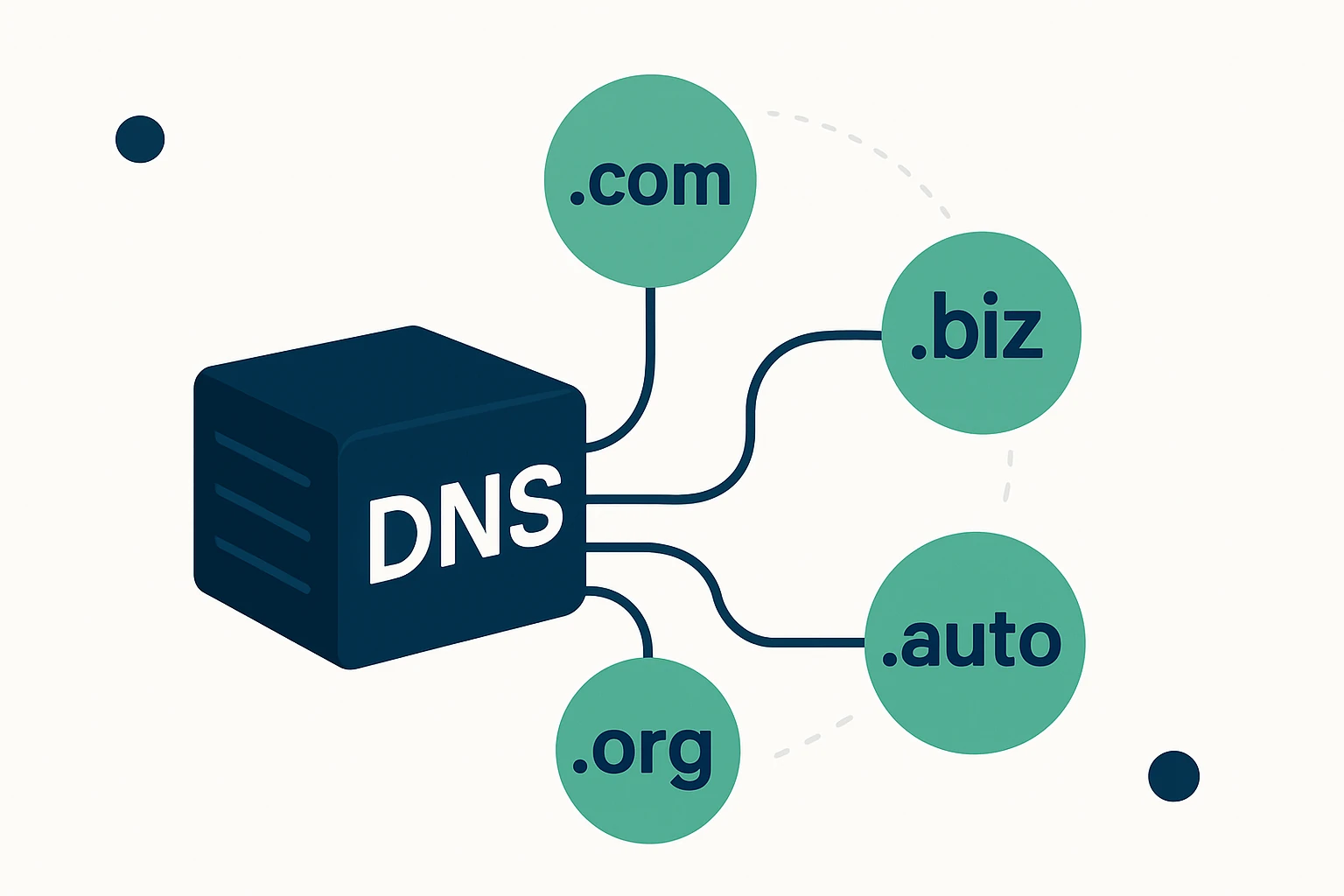
Top-level domains are categorized broadly into two families: generic TLDs (gTLDs) and country-code TLDs (ccTLDs). The IANA authority and ICANN work together to maintain the official list of TLDs, which continues to expand as new gTLDs join the root zone. As of recent years, the ecosystem includes hundreds of gTLDs beyond the legacy trio of .com, .org, and .net, with ongoing rounds for new gTLD applications illustrating the industry’s continued evolution. Enterprises tracking a global footprint often deploy domains across multiple TLDs to mirror branding, optimize regional presence, and meet local compliance requirements. The official registries and regulators provide the authoritative catalog of TLDs and their status. (icann.org)
ICANN and IANA pages emphasize that the TLD landscape is formally segmented into gTLDs and ccTLDs, with each category governed by distinct registry operators and policies. This segmentation matters for DNS operational planning, as different TLDs may offer varying security features, registration requirements, and DNSSEC support. Enterprises should map which TLDs are relevant to their markets, language and branding, while maintaining a scalable process for ongoing evaluation. (icann.org)
Section 2: DNSSEC adoption across TLDs - implications for multi-TLD strategy
DNSSEC (DNS Security Extensions) adds cryptographic signatures to DNS data, helping prevent certain classes of attacks, such as cache poisoning. Adoption across the global TLD ecosystem is not uniform, some TLDs support DNSSEC robustly, while others are still in transition. For enterprises, this means that unless DNSSEC is consistently deployed across all relevant TLDs, the security posture of a portfolio can become uneven. Vendors and regulators increasingly expect DNSSEC-enabled zones for sensitive or regulated services. Observations from industry programs show broad progress, but with uneven maturity across regions and registries. For planning, it matters to audit which TLDs you rely on and ensure DS records are properly managed when transferring between registrars or providers. (blog.apnic.net)
Industry bodies and training resources highlight practical steps to advance DNSSEC deployment, including automating key rollover, standardizing signing processes, and providing registrars with clear operational tooling. While progress is real, there is no one-size-fits-all path to full DNSSEC coverage across every TLD immediately, a pragmatic, phased approach often yields the best risk-adjusted outcomes. (archive.icann.org)
Section 3: Designing authoritative DNS across a multi-TLD portfolio
Authoritative DNS setup for a multi-TLD enterprise requires disciplined governance, consistent zone design, and resilient delivery. A centralized management model can reduce drift, but practical realities - regional teams, brand portfolios, and mergers - often necessitate distributed control with strong global policy.
Key design considerations include: naming harmonization to preserve brand integrity across domains, consistent TTL strategies to control cache performance, and reliable propagation planning when launching or transferring zones. Additionally, secure zone delegation and proper DS record management (for DNSSEC-enabled zones) are crucial when expanding into new TLDs or migrating registrars. A well-implemented architecture minimizes propagation delays and avoids certificate mismatches that can erode customer trust. Industry guidance points to the importance of a rigorous, documented change control process for DNS data across all TLDs. (icann.org)
Section 3.1: A practical framework for multi-TLD DNS governance
- Inventory: maintain an up-to-date catalog of all domains and their TLDs, ownership, and registrars.
- Standardize: apply uniform DNS naming and zone management policies across the portfolio.
- Secure: implement DNSSEC where supported, automate DS record handling during transfers.
- Monitor: establish centralized monitoring for DNS health, DNSSEC validation, and certificate status across TLDs.
- Govern: define global policies with regional guardians to ensure compliance with local laws and brand governance.
- Optimize: continually assess performance, cost, and risk trade-offs to refine the portfolio.
Such a framework helps align technical operations with governance, risk, and compliance processes (SOC 2, ISO 27001, etc.), and provides a repeatable model for expanding into additional TLDs as they mature. ICANN and IANA maintain the canonical lists enabling precise scoping for governance efforts. (icann.org)
Section 4: Portfolio realities - timing, cost, and risk trade-offs
Expanding DNS coverage across all tld domain extensions brings tangible benefits - brand protection in new markets, better regional reach, and resilience against registrar-specific outages. However, there are trade-offs: increased management overhead, potential DNS misconfigurations, and the need for ongoing DNSSEC maintenance across many zones. A measured approach often saves cost and complexity while delivering most of the risk reduction that a broader portfolio promises. Whitepapers and industry analyses emphasize prioritizing TLDs with strategic value (high brand visibility, high traffic regions, or regulated markets) before broad, wholesale expansion. For many organizations, a staged rollout paired with centralized tooling can deliver the best balance of control and agility. (authenticweb.com)
Section 5: A practical framework block - inventory, policy, and execution
Below is a compact, repeatable framework you can apply to manage all tld domain extensions in a scalable way. It is designed to be implemented with your DNS and registry tooling and to align with enterprise governance practices.
- Inventory - Build a live inventory of all domains by TLD, including registrar, DNS provider, DNSSEC status, and expiration dates.
- Policy - Create global policies for naming, certificate management, and DNSSEC deployment that apply across all TLDs while allowing regional exceptions where justified.
- Provision - Use automated workflows for provisioning DNS records, DS signing, and registrar transitions to minimize human error.
- Monitor - Centralized dashboards for DNS health, DNSSEC validation, and zone file integrity across all TLDs.
- Audit - Regular risk assessments and governance reviews to ensure alignment with SOC 2 ISO controls and regulatory requirements.
For teams evaluating the breadth of all tld domain extensions, this structured approach supports consistent decision-making while enabling future growth as new TLDs mature. External references and standards bodies provide the foundational guidance that informs this practice. (icann.org)
Section 6: Limitations and common mistakes to avoid
Even with a strong framework, several limitations remain and common mistakes recur in practice:
- Over-centralization without local nuance: Central governance is essential, but neglecting regional requirements can hamper performance and compliance.
- Inconsistent DNSSEC posture: Deploying DNSSEC selectively across a portfolio creates trust gaps and complicates troubleshooting during key rollovers.
- Fragmented tooling and credential management: Using disparate registrars or DNS providers without unified tooling increases risk of misconfigurations and outages.
- Propagations delays and TTL misalignment: Inconsistent TTLs across TLDs can lead to stale caches and service outages during transitions.
- Brand fragmentation: Failing to harmonize branding across TLDs can erode user trust and reduce the effectiveness of the overall portfolio.
Industry analyses emphasize the importance of practical steps - automation, standardized workflows, and ongoing education for teams responsible for DNS operations across a broad, multi-TLD footprint. They also point to the need for continuous evaluation of the portfolio against strategic business goals. (blog.apnic.net)
Section 7: The WebAtla advantage for a multi-TLD enterprise strategy
For organizations pursuing a comprehensive view of domain assets across all tld domain extensions, WebAtla’s catalog of domains by TLDs provides an actionable starting point to assess available inventory. A consolidated view of domains by country or by technology can help prioritize which extensions to acquire, and it can complement internal DNS governance by providing a single source of truth for branding and market strategy. As you plan expansion, consider integrating WebAtla’s domain catalog with your centralized DNS orchestration to maintain consistency across the portfolio. Additionally, a registry-agnostic approach can help you avoid lock-in and accelerate response to market shifts. List of domains by TLDs can be a practical reference as you map regional campaigns and product naming across the enterprise.
For a broader catalog, the other WebAtla resources cover domains by country and by technologies, which can inform risk and compliance analyses as you build your governance framework. List of domains by Countries and List of domains by Technologies can help align DNS strategy with regional data sovereignty and technology stacks.
Section 8: Expert insight and a note on scope
Expert input from DNS practitioners underscores that a mature TLD strategy blends governance discipline with technical rigor. A key insight is that the value of a multi-TLD portfolio often comes less from chasing every extension and more from intentionally selecting a core set of TLDs that align with brand protection, regional reach, and regulatory exposure, while keeping the portfolio manageable and auditable. This approach reduces risk, speeds time-to-value, and preserves the ability to evolve with the DNS ecosystem as new extensions mature. APNIC’s measurements of DNSSEC adoption across TLDs reinforce the need for phased, scalable deployment rather than a light-switch approach. (blog.apnic.net)
Conclusion: a pragmatic path to all tld domain extensions
As enterprises continue to globalize and digital services multiply, information security, performance, and governance across the domain portfolio become decisive competitive factors. A thoughtful, phased approach to all tld domain extensions - supported by centralized governance, automation, and DNSSEC where possible - delivers stronger brand protection, improved reliability, and better regulatory alignment. The canonical lists from IANA/ICANN and the measured insights from DNSSEC research offer a solid compass for planning. For organizations seeking to translate strategy into action, a clear framework, disciplined execution, and reliable inventory tools will keep DNS operations resilient in the face of ongoing ecosystem evolution.
References and further reading
For readers who want to explore the underlying ecosystem in more depth, the following resources provide authoritative information on TLDs, DNSSEC adoption, and governance:
- ICANN – List of Top-Level Domains: a current catalogue of all approved TLDs maintained in the root zone
- IANA – Qualifying top-level domain strings: criteria and process for TLD qualification
- APNIC – Measuring the use of DNSSEC: regional adoption and implications for operators